Generative AI has triggered a slow erosion of the assumption that has underpinned the very fundamentals of destination marketing, with new approaches emerging to build trust around content authenticity as reality is placed under question.
DTTT Knowledge Team
06 Oct 2026
In this piece
Tourism sells a promise long before anyone arrives. Photographs and videos do most of the persuading, since no traveller can test a place against the picture until they are already there. That arrangement worked for decades because the picture had to come from somewhere, taken by someone who had made the journey first.
Generative tools have removed that requirement. The result sits alongside commissioned photography in the same feed at the same resolution. What has followed is a slow erosion of the assumption that has underpinned the very fundamentals of destination marketing.
Any discussion about the role of AI in content creation has to begin by separating imagery from written content, since the two influence perceptions of trust in different ways. Visual media asserts something about capturing a moment and representing how a place looks, while written work asserts judgement around whether the reasoning holds.
The AI Content Dilemma
Much of the industry has responded by holding a firm line on imagery. A considerable number of DMOs now treat the absence of AI from their photography as a matter of professional integrity, on the reasoning that a place is sold on the truth of what a visitor will find when they arrive.
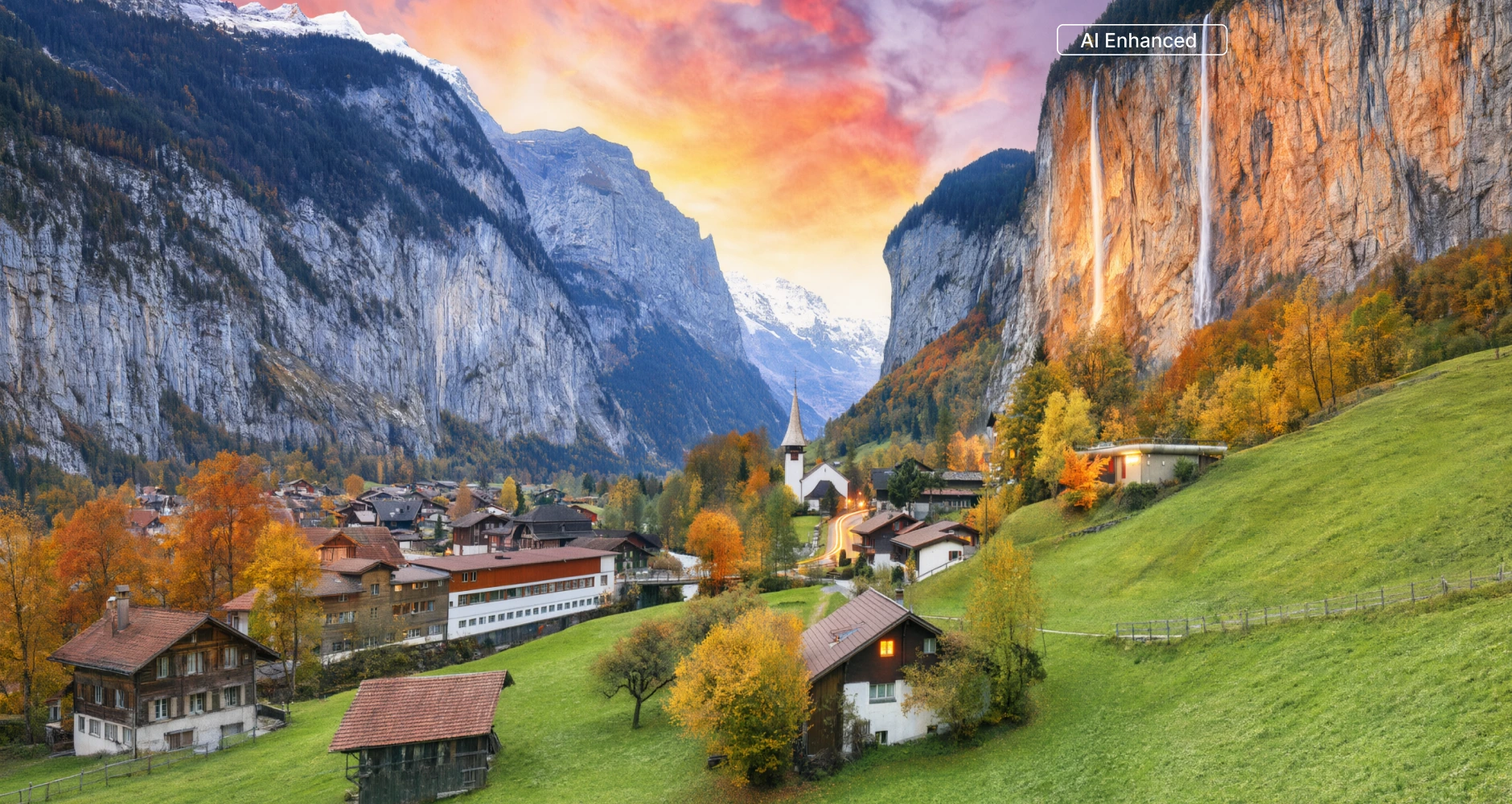
The position is complicated by how travellers now question the authenticity of photography, especially the dramatic scenery that is so evocative as to provoke an emotional response that motivates a traveller to visit. This is exactly the type of image that generative models learned from, having been trained on decades of exactly that photography. With photorealistic generative images abounding on the internet, the better the view, the more likely a traveller is to assume a prompt produced it.
Synthetic visuals have swiftly become a primary friction point, with 47% of British and Italian respondents to a Bókun survey identifying AI visuals as the ultimate deterrent when exploring travel experiences online. Research commissioned by Tennessee Tourism, however, found only 5% of American travellers could routinely identify a real image when it was shown alongside an AI-generated one, while 74% said they would not book a trip without seeing pictures first. Travellers are being taken in by places that do not exist while increasingly questioning photography of places that do.
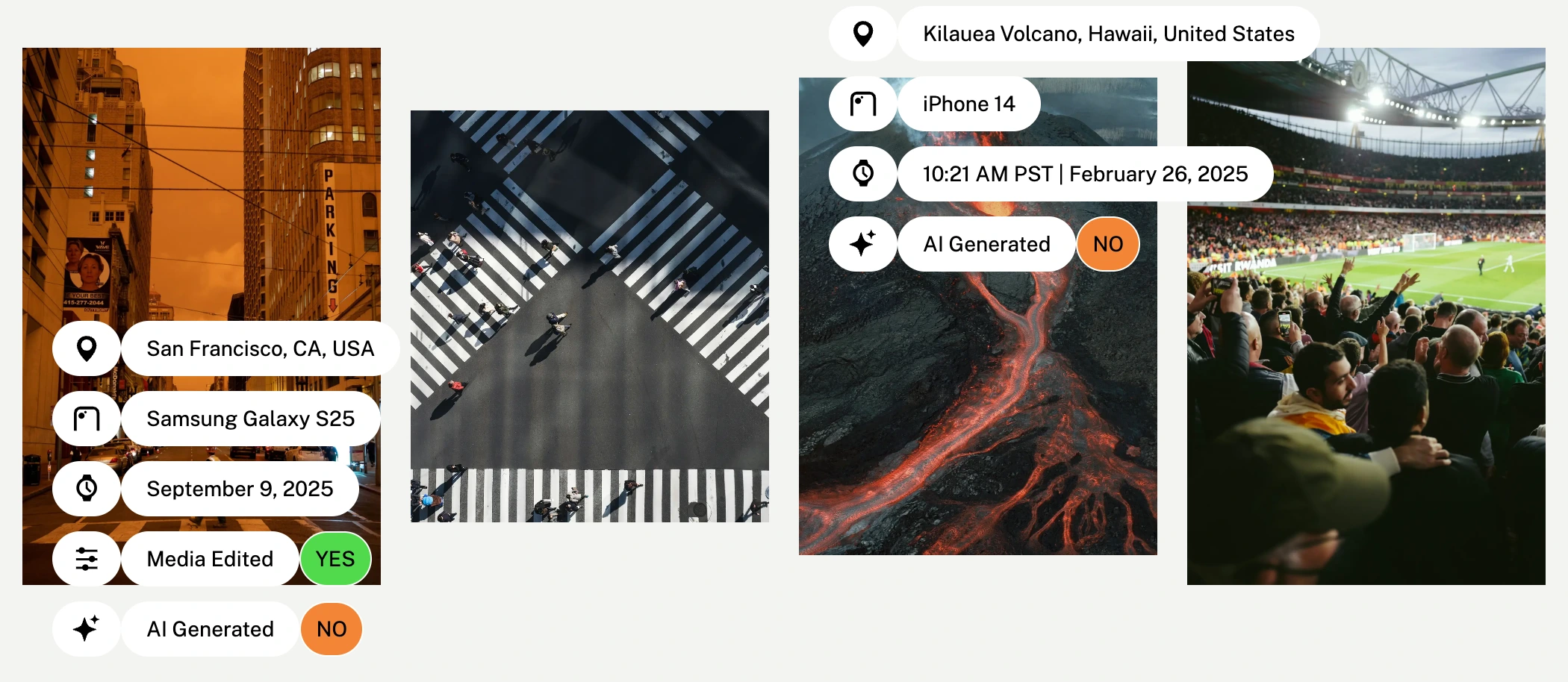
Tennessee's answer is a structural attempt to eliminate this uncertainty. Its Real Seal is a certified mark applied to photography, carrying content credentials and secure metadata that records who took the picture, when, on what camera and at what coordinates. Rather than banning AI from production altogether, Tennessee Tourism has fixed the point at which editing stops describing a place and starts inventing one. Colour correction, cropping, sharpening, basic cleanups and stylised art are permitted. Generative fill, structural alteration and AI style transfers are not. The distinction leaves room that a blanket prohibition would close off completely.
While having clear rules enables decision-making about what content can be produced, where this approach has potential to falter is on the demand side. A certified mark will only be successfully received by audiences if people know what it certifies. Tourism already has a cautionary example in sustainability labelling, with dozens of schemes that have little shared basis for comparison between them. Travellers cannot reliably tell them apart, so the marks end up functioning as reassurance rather than information. Scaling up authenticity seals will follow the same path if every destination issues its own, since five marks with five definitions produce a visual language of trustworthiness without a common meaning behind it.
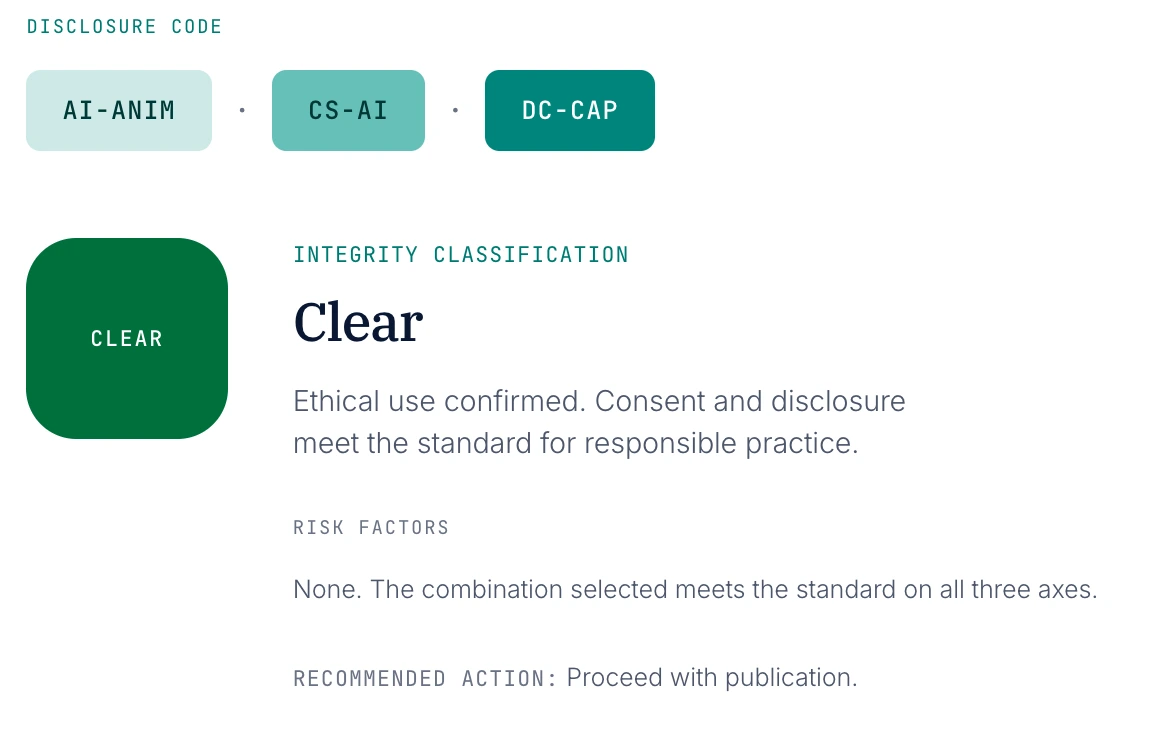
The DTTT's AI Content Integrity Model is an open framework designed to give DMOs a shared way of talking about three things that are equally important for assessing AI's usage in content creation:
What AI did to the asset
What permission exists from anyone recognisable in it
What the audience was told
Those three questions combine into a single classification, from Clear through to Not Recommended, plus a short code that travels with the file. The value shows up in the conversations it makes possible, since a marketing manager can better risk assess which content can be published based on something more than basic instinct. The sharpest of those conversations tends to be about consent, because a standard photography release says nothing about animating someone's likeness, and no amount of labelling repairs that once the work is published.
Understanding the broader impact of AI on how a destination's content is used by third parties is another legal area that now needs strengthening. A destination's image bank is a vital tool for most DMOs, yet its terms of use were mostly written before generative editing existed. Images are downloaded from Digital Asset Management (DAM) systems under licences, none of which anticipated a third party feeding the file into a model. In turn, destinations should now adjust the terms of use for these assets to comply with their own internal content management policies, with the restriction extending to derivative works. The same language belongs upstream in photographer contracts and agency deliverables. Enforcement will always be imperfect, though a contractual prohibition converts an unwanted use from a disagreement about taste into a clear breach.
The War on AI Slop
Social platforms have begun taking positions on the same problem. Their responses split along the same line, between what can be verified at the point of capture and what can't.
Video is where the tighter controls have landed. Snapchat stopped making wholly AI-generated videos eligible for recommendation on its Spotlight feed at the end of July, while content edited or enhanced using Snapchat's own AI tools stays eligible and carries a transparency indicator. The policy governs distribution rather than publication, so a fully generated clip remains on the platform, reaching a creator's existing followers. Divine, a new six-second video platform built on the Vine archive, has gone further by barring AI-made content outright and requiring every clip to be recorded inside the app, so the platform can confirm that a phone produced what the file claims. In taking this stance, it uses the ProofMode verification tool, which tracks the metadata associated with each video.
Written content has no such anchor, which has pushed platforms back onto human judgement. LinkedIn introduced a "seems like AI slop" reporting option on 30 July, letting members flag posts and comments on their feed. More than a million people used it within two weeks. As a community feedback mechanism, it is a way for members to shape their own feed and for the platform's algorithm to learn what readers find low in substance. A private notification is also being tested to let authors know when their posts are being read as over-reliant on AI. LinkedIn's own "enhance your post" tool is being deprecated in favour of a proofreader that corrects without rewriting.
Handing that judgement to readers has an obvious weakness. A reader sees polish and infers automation, with very little else to go on. Careful editing, house style, second-language writing and anything produced by a communications team working to a template all read as machine output under that test. Social commentators have also noted that the signal risks tracking disagreement or coordinated reporting as closely as it tracks content quality, which places a good deal of weight on a decision made in a second by someone with no view of how the work was made.
Based on the current state of direction, imagery and video assembled entirely from prompts will be quietly demoted, then filtered, then invisible outside an existing following, while material where a person captured something and used AI in the edit will keep its reach provided the underlying record is maintained. Written content faces a looser test but a less predictable one.
Watermarking as the Next Step
Regulation is now adding a technical layer for AI-generated content disclosure. Under Article 50 of the EU AI Act and its Code of Practice on Transparency, machine-generated output now needs to be clearly identified. Anthropic has set out how this works for Claude. Models launched from 2 August now weave an imperceptible watermark into generated text, which remains when that text gets copied and pasted and can survive a degree of editing. Generated image files carry a signed record of what produced them and whether they have been altered since.
The two techniques have contrasting objectives. That difference shapes what either can be asked to prove. A file record extends the verification model already working for photography, tying an image back to the process that made it. A text watermark carries no such context, marking the words themselves without saying anything about what they were built from or whether anyone checked them before publication.
Anthropic is candid about the limits. A detected mark shows that content passed through the model, not that the model wrote it. As people use AI for various purposes, a watermark can sit on work whose ideas, research and argument came from somewhere else entirely. The absence of a watermark also proves nothing conclusive, since a short passage can leave no detectable signal, a file's metadata can be altered or content could have been produced by a marking type that wasn't supported. Models that were already available before 2 August, for example, have until 2 December for the transparency requirements of the EU AI Act to become fully enforceable.
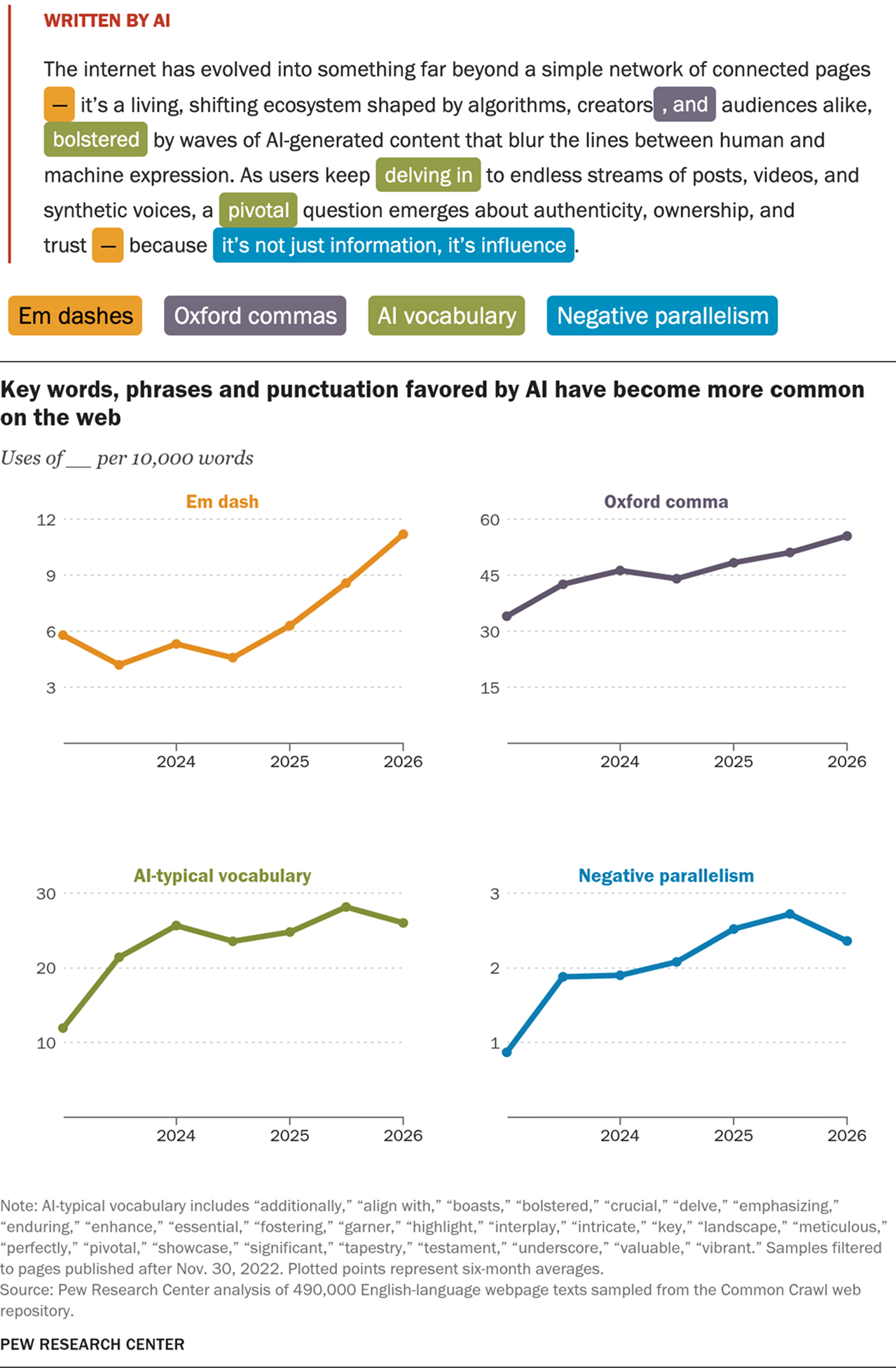
Content volume has turned this technical caveat into a strategic challenge. Pew Research Center analysis of webpages sampled from the Common Crawl archive found that signs of AI authorship appear in over one-third of pages published since ChatGPT's release, using a detection model trained on the linguistic patterns that separate machine writing from human writing. If that proportion of published material carries a watermark, it fails to help people categorise content based on its degree of trustworthiness.
Most organisations now use AI at some point in the drafting and editing process. Pretending otherwise is a short-lived position. Marking tells you a machine was involved, but it says nothing about whether the work was worth doing. That leaves a more uncomfortable set of questions for anyone publishing at volume. Does a piece of content have a purpose beyond filling a slot in an editorial calendar? Would anybody miss it if it did not exist? Is disclosure by itself enough to make the content worth a reader's time, or does it simply confirm what the reader already suspected?
Content repurposing is where a significant proportion of a DMO's AI use now happens, often without anyone actively deciding to use AI at all. A single campaign passes through several tools on its way to publication. The tools that handle this work, including scheduling platforms, video editors, asset management systems and content management systems, have quietly built generative features into their software. As watermarking obligations tighten, every one of those AI interactions becomes a point at which an asset can pick up a marker recording that a machine altered it. The consequence affects multi-channel distribution, since platforms are already treating those markers as authenticity signals, so a photograph taken on location can arrive on a feed carrying the same designation as material generated from a prompt, purely because it passed through an automated resize on the way. Teams working across a dozen channels rely on that automation to keep pace, which puts a destination in the position of trading reach against the speed its publishing schedule depends on.
What gets lost in a binary of marked and unmarked content is the part of the process that carries the most editorial weight. Specifying what a piece should say, supplying the evidence and supporting material, checking claims against sources, catching what is wrong and taking responsibility for publication are all human acts that leave no trace in the file. A researched article that passed through a model for minor editing carries the same signal as something produced entirely from one prompt with limited oversight. Detection can establish that a machine was involved. It cannot establish who decided what the content claims, which is what a reader is ultimately trying to work out. This is the underlying principle of the DTTT's AI Transparency Model.
Two obligations follow from all of this. Photography and video of places need their provenance recorded at the point of capture, because a claim of authenticity made after the fact carries very little weight. Written content needs an account of how it was made, describing what AI contributed and what people decided, published alongside the work and applied consistently enough that its absence becomes conspicuous.
The second obligation is more demanding, since it asks an organisation to describe its own process honestly rather than purely passing a technical test. A note explaining that a draft was produced with AI assistance and that a named editor verified the claims tells a reader something no watermark can.
Habits formed now will set the standard organisations are held to later. Those that start recording the provenance of their imagery and are transparent about their editorial process will gain the advantage of enhanced trust. This earned trust will likely be vital for SEO and GEO visibility in the years to come if AI watermarks start influencing the content that algorithms recommend. Having an AI Transparency Disclosure could easily become the natural counterweight if AI tools continue to be readily adopted.