Enhancing AI's Role as a Channel for Experience Discovery
OpenAI launched Businesses in ChatGPT in beta, giving companies an official way to manage how they appear inside that conversation. It marks the moment AI optimisation moves from being relatively informal experimentation to a recognised discipline.
DTTT Knowledge Team
13 Nov 2026
In this piece
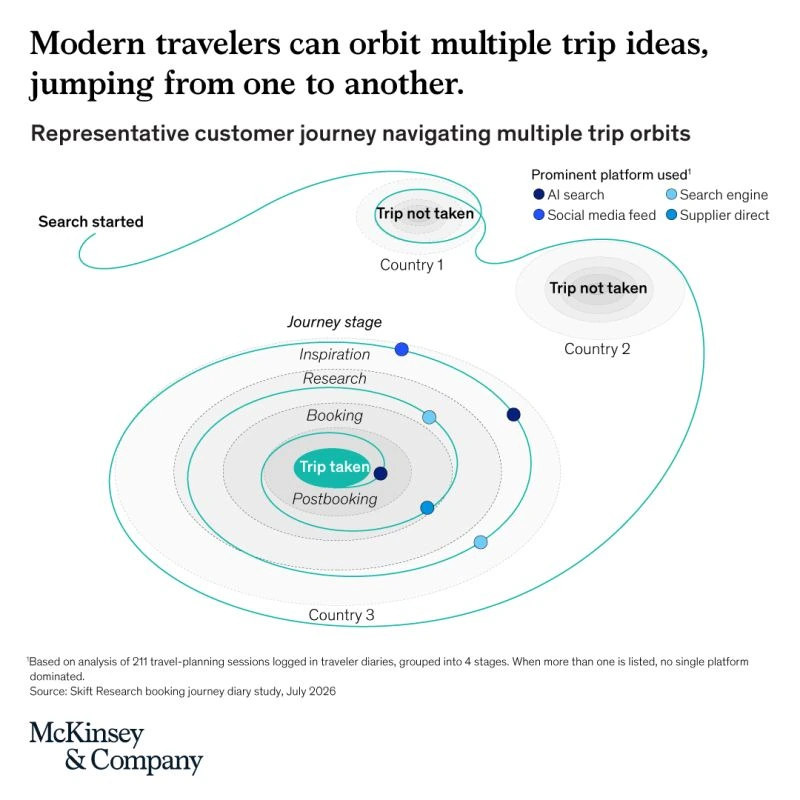
It is now well established that travellers turn to AI for the early, exploratory stage of planning. A traveller describes the kind of break they have in mind and receives a plan in return. The searching, comparing and tab-hopping that once filled the process is compressed into a single conversation. Surveys over the past year suggest around half of travellers in the UK and the US use AI tools when planning a trip, yet most still book through familiar channels and check the details before committing. With planning now taking limited effort, travellers increasingly engage in trip-switching, where they generate several itineraries and abandon most before they ever become a booking, leaving a growing number of plans unfulfilled.
Maps have made that experience feel complete. ChatGPT now places its recommendations on an interactive map, so a traveller can explore routes and opening times without leaving the conversation. Hotel groups and airlines have launched their own ChatGPT apps to be part of that moment. The result is that the businesses pinned to the map effectively become the trip, while those left off it are rarely considered. The five destinations that came up most often accounted for 38% of all AI recommendations, which suggests AI is largely mirroring existing travel patterns instead of spreading demand more widely.
This week, OpenAI launched Businesses in ChatGPT in beta, giving companies an official way to manage how they appear inside that conversation. It marks the moment AI optimisation moves from being relatively informal experimentation to a recognised discipline with its own tools and data. For destinations and the small businesses that make up its visitor offer, that brings opportunity alongside some new risks.
Inside the ChatGPT Business Hub
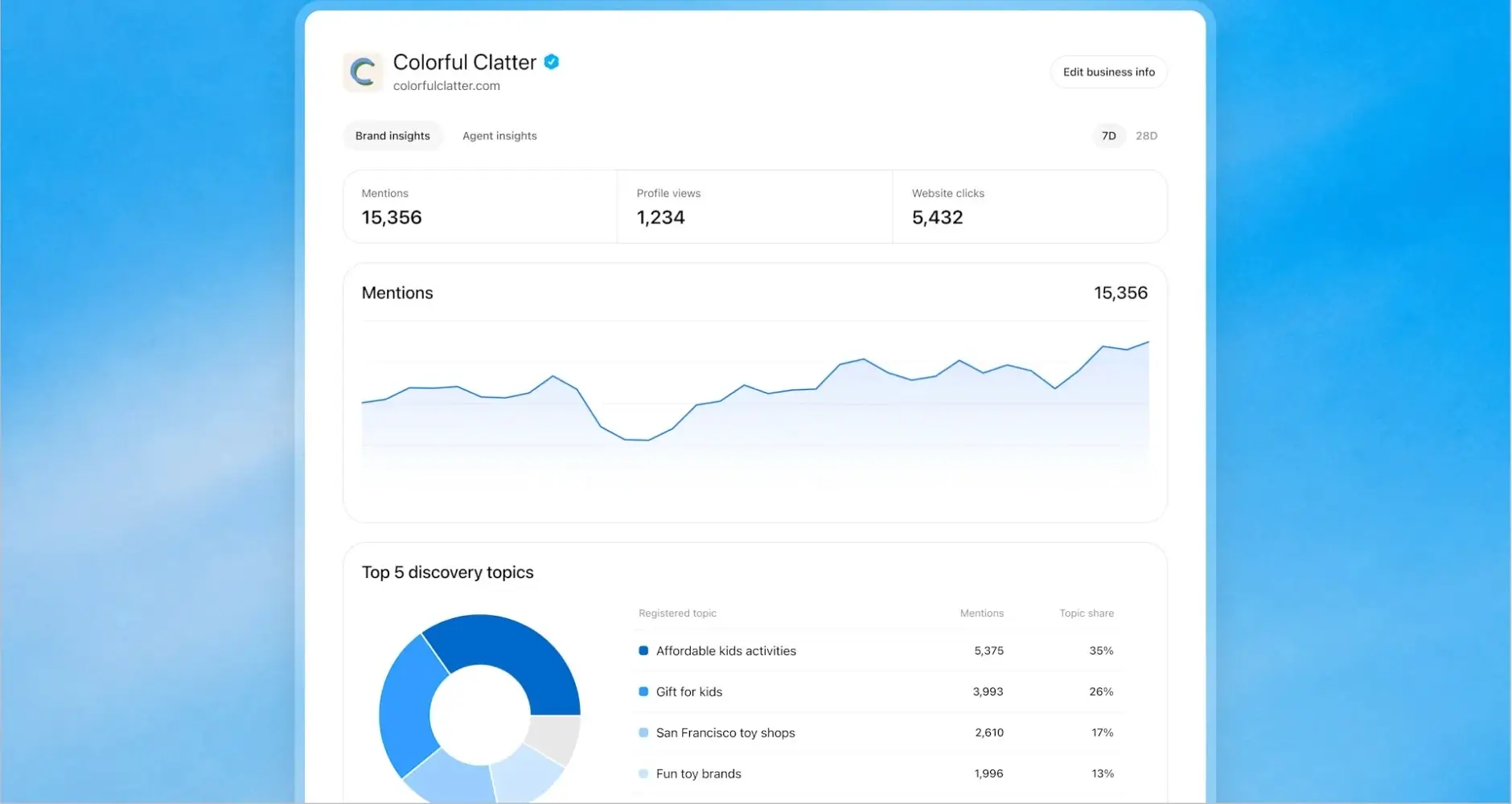
Until now, businesses had little direct say in how ChatGPT described them. Its LLMs drew on websites, reviews and directories, and the only way to influence it was to improve those sources and wait. Businesses in ChatGPT introduces a Business Hub where a business can claim and verify its profile, update its details and add product feeds. The Hub also shows aggregated data on how often ChatGPT mentions the business, how many people click through to its website and which topics come up.
The launch also strengthens OpenAI's Business Agents. These are dedicated AI assistants that answer customer questions inside ChatGPT, clearly labelled and kept separate from ChatGPT's own responses. With travel planning often hinging on hyper-specific questions, an agent instantly resolves the make-or-break logistics that determine whether inspiration from casual browsing converts into a visitor going deeper into the travel funnel. Businesses can also sponsor their agents as part of ChatGPT Ads. For now, agents are limited to e-commerce and online service businesses in the United States, although OpenAI plans to extend them to more markets and categories.
Taken together, this is how AI optimisation is increasingly becoming a dedicated role within teams. There is now a profile to own, a feed to maintain, a dashboard to monitor and, before long, an agent to supervise. Search engine optimisation followed the same path once search engines gave site owners their own tools, and it soon came with dedicated roles, budgets and agencies.
The Risk of Becoming Invisible
On the other hand, it must be noted that most of the experiences that give a destination its character are run by small operators. Many have a basic website, an occasionally updated Google profile and very little time for marketing. They are also rarely the first to adopt a new platform. There is also the matter of workload. Between keeping a website live, managing booking portals, running social accounts, and updating a Google Business Profile, small operators have zero spare capacity. Adding ChatGPT into that mix means yet another asset to claim, verify and monitor.
This maintenance overload inevitably creates digital chaos. The moment opening hours are updated on Google but overlooked on ChatGPT, AI systems ingest conflicting signals and travellers get conflicting answers. Expecting a small business owner to maintain universal digital parity is an impossible standard. The quiet danger is that it widens an already unequal race, allowing large attractions to pull further ahead, while small and independent businesses risk becoming invisible.
AI search is an unforgiving funnel. Unlike traditional search, where a curious traveller might still stumble onto page two, conversational answers deliver a handful of curated recommendations. As major brands pour resources into optimised feeds, structured data, and bespoke AI agents, this algorithmic divide only deepens. Left unchecked, visitors will simply be directed towards the traditional hotspots AI already knows best. In the DTTT's view, confronting this algorithmic divide will become an increasingly urgent equity challenge in destination management, making proactive business enablement and digital advocacy a new defining role DMOs must step into in partnership with business networks and clusters.
The Business Hub is in beta and will change, but the direction is clear enough to act on. A modest investment of time now, made in the expectation that the tools will keep shifting, will leave a destination and its businesses far better placed as AI discovery moves closer to the point of booking.