From AI discovery and immersive technologies, to live visitor management, a new layer of technology is helping rural destinations reach the right travellers, enrich their visits and manage growth on their own terms.
DTTT Knowledge Team
10 Aug 2026
In this piece
Technology is quietly reshaping how rural destinations attract visitors and strengthens in-destination experiences. The old assumption that rural areas are simply offline is dating fast, with the connectivity gap that held countryside destinations back for years closing significantly. Our Rural Tourism Renaissance report found that rural broadband coverage across Europe reached 92.2% for fixed services and 73.7% for 5G networks in 2023, a rise of 22.7 percentage points in a single year. This improved connectivity is the foundation for enhancing rural tourism's competitiveness, with technology start-ups supporting DMOs in leveraging the undeniable touristic appeal of these regions.
Boosting Discoverability Through AI
Like many sectors, AI is where the largest shift is underway. Travellers have quickly adapted to using AI for trip planning, with 57% using generative AI for destination research and 38% then going on to book what it recommends. For rural destinations, this provides a new opening, because in answering a direct question, AI holds great potential to help rural destinations become easier to discover. Yet, to do so, rural areas must first improve their online presence and overcome the traditional favouritism towards popular cities, which persists simply because far more information exists about them.
Whether a rural destination can be found by prospective travellers at all now rests less on its appeal than on how well its content is structured. That is a real hurdle because championing local experiences now goes beyond having detailed knowledge of the destination offer to a more technical focus on digital skills to build a strong website or the budget to commission one. While sharing personal stories of rural business owners makes for engaging content, at a foundational level, the case for investment in website development, and in the skills to structure content so it can be found, has become one of the most valuable steps a destination can take.
Boosting discoverability is therefore the first test for a rural DMO, because AI assistants answer from whatever exists online and independent businesses with thin digital footprints are easy to miss. A 2026 analysis based on an index of 131,000 hotels across 30 countries found that only 16% of the world's hotels appear in AI results, leaving 84% effectively invisible. Chain hotels surfaced far more often than independents and only a small share of hotel sites publish machine-readable detail, including structured data on ratings and amenities, that AI systems rely on. For rural destinations, where most accommodation is independent, this gap becomes more pronounced since it directly affects perceptions of capacity. As OTAs account for 55% of hotel citations, having a presence on these platforms becomes crucial for independent businesses to be recommended in AI answers.
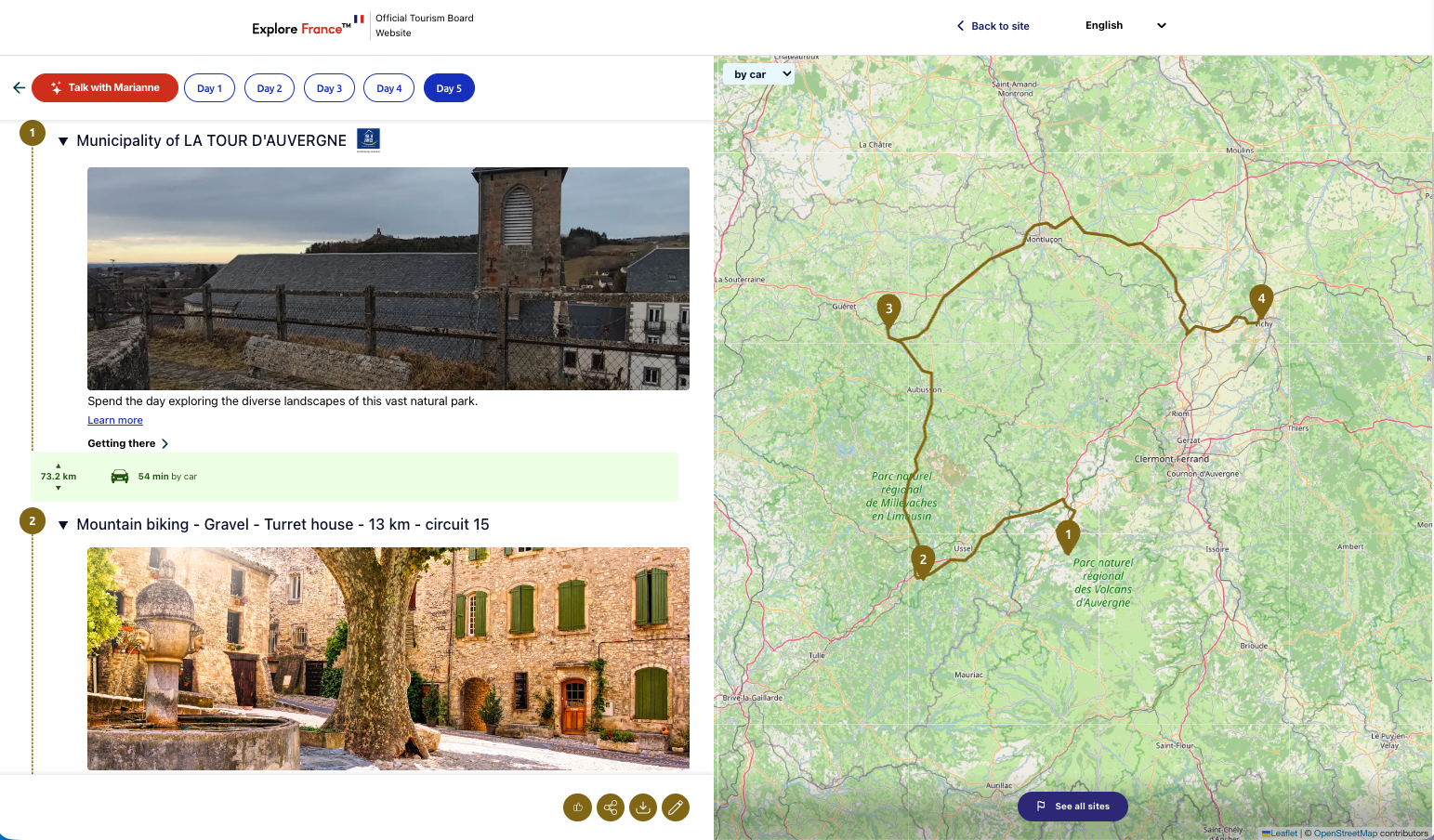
AI can also decide where demand goes, which hands destinations a tool for dispersal. Atout France's assistant MarIAnne builds personalised multi-day itineraries while steering travellers away from crowded hotspots. Following its launch in 2024, within a year it had generated 11,000 complete itineraries from 25,000 sessions, with 92% of users satisfied. In aligning recommendations that are connected to a traveller's specific interests, AI can redirect a traveller to a quieter region that suits them better, which starts to remove some of the biases towards popular destinations.
Simplified.Travel applies the same idea, embedding a white-label AI itinerary planner directly on a DMO's website through a single line of code. In a partnership with the Mexican state of Tamaulipas, it helped raise average length of stay from 1.8 nights to between four and seven, the kind of shift that matters most for rural areas that do not often receive large volumes of travellers.
Enhancing Platform Design
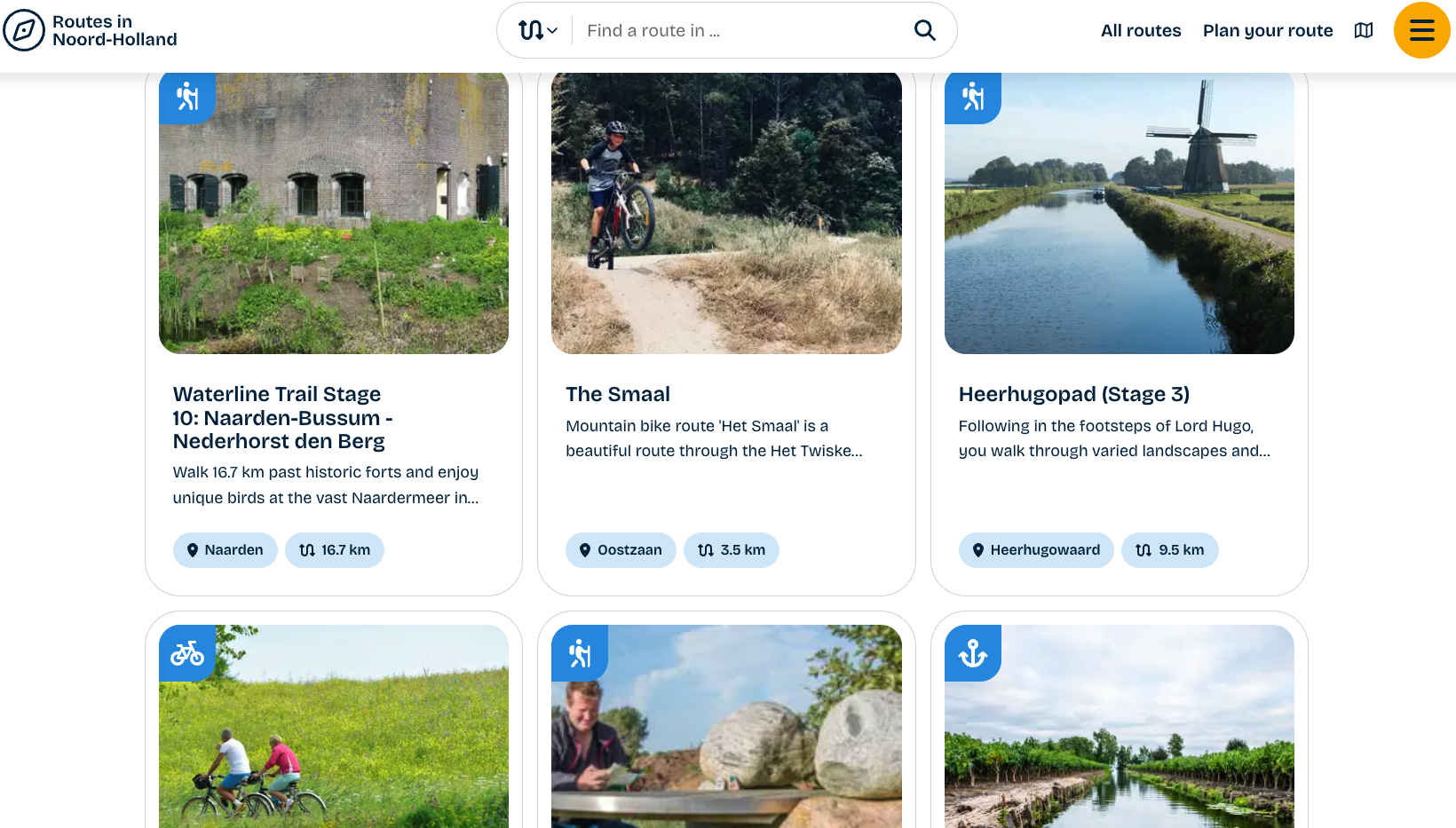
Boosting the visibility of destinations by developing a multilingual content hub is an effective approach to supporting content optimisation for AI. By bringing lesser-known destinations together in one place, collaborative marketing approaches help rural destinations to work together to achieve strong visibility. In partnership with the Route Alliance North Holland, Event Connectors built a platform connecting over 200 walking, cycling and sailing routes. Intending to distribute visitors and spread economic impact, the collaboration between 44 municipalities helps to eliminate fragmentation and simplify the planning of nature adventures, with public transport hubs and tourist transfer points also integrated into the platform.
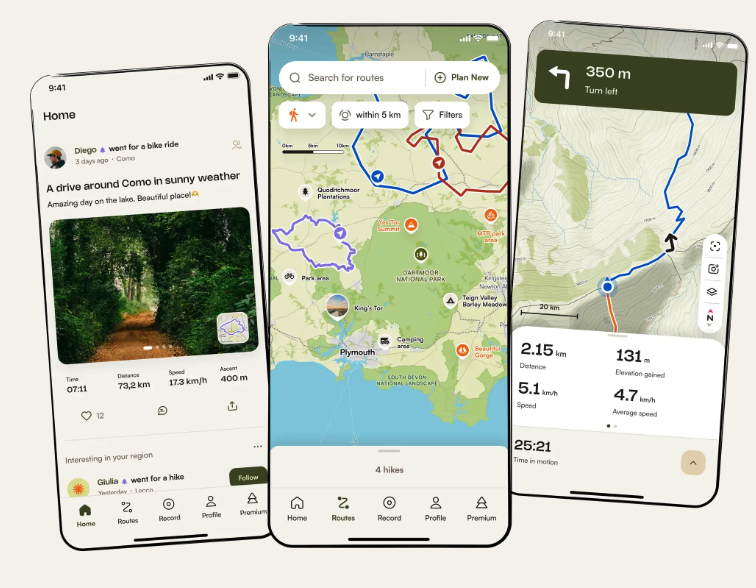
Building dynamic and customised mapping also helps to transform visitor engagement through thematic routes. A branded map keeps a destination in charge of its own story, guiding visitors along the routes it most wants to promote and shaping how a place is understood. Boldest builds branded interactive maps for destinations, rich in information. Its work with Turismo de Aragón turned a set of touring routes into a five-stage interactive map complete with descriptions, images and downloadable GPX files (a standard GPS route format) for each stop. Citynomadi offers a similar service, with a dedicated focus on forest environments, featuring crowdsourced applications for nature observations and activity maps as well as offline downloads and safety tools such as compass and coordinate readouts.
Sharing Accessible and Engaging Content
Social media has made travel guide creation more accessible, helping rural destinations reach global audiences through authentic storytelling. Content creators serve as trusted intermediaries who translate rural experiences into engaging content, whilst providing direct pathways to destination discovery and booking. Alongside social media, community co-creation is important for championing local businesses. With sustainability a core element of the tourism experience, steering travellers to independent businesses is a core ambition of Ecohopper. The green lifestyle guide app gathers thousands of sustainable cafés, shops, artisans and events to support travellers in creating a positive handprint.
Once travellers arrive in a rural destination, mobile apps become essential for helping them navigate their surroundings. The feature that sets rural use apart is offline capability, because a hiker can still face intermittent signal on their journey between two towns. Komoot and Outdooractive are strong examples, combining topographical data, localised weather and route difficulty into trusted guidance, with curated route suggestions and community hazard alerts layered on top. iNaturalist, on the other hand, takes a different angle, letting visitors photograph and identify wildlife on the spot through image recognition and community verification, drawing on a dataset of more than 302 million observations and a global community of 9.3 million users.
Audio guides give visitors a richer, more engaging way to understand a place as they move through it. With the experience playing while a visitor keeps their eyes on the landscape, it suits rural settings particularly well, holding attention on the surroundings. Jooks puts this into practice, delivering commentary through headphones as travellers run, walk or cycle their way along a route, pointing out landmarks and sharing local stories as each one comes into view. The app works with local DMOs to build these experiences around a destination's own heritage, with curated routes that keep visitors active while surfacing the corners of a place they might otherwise pass by.
A growing set of tools are also being designed to make places legible, with language often the first barrier to overcome. Making rural attractions more appealing to international visitors, Reveel builds multilingual digital guides, supporting museums and attractions to become attractive to larger audiences. Recognising that less than a quarter of the world's population speaks English fluently, their partnership with the ÅSSA Museum in Sweden expanded the offer from two languages to sixty-three overnight, significantly opening the potential market who would benefit from heritage interpretation.
Creating Emotional Connections With Immersive Storytelling
Technology can also deepen how a place feels, adding context and story to a landscape. In Slovenia, a 360-degree virtual walk lets people move through the Alpine valleys in the Solčava Region. In doing so, it works as both a planning tool and a promotional one for a destination that is unfamiliar to the majority of prospective visitors. From a more entry-level perspective, augmented reality (AR), which overlays digital content onto the physical world through a phone, is the technique emerging most rapidly. This technology is playing a vital role in supporting learning as much as entertainment. The Slovenian Tourist Board's "Hike Safe" AR experience turns mountain safety into a game younger travellers engage with, while providing valuable information about the equipment that should be taken on hikes and responsible behaviour.
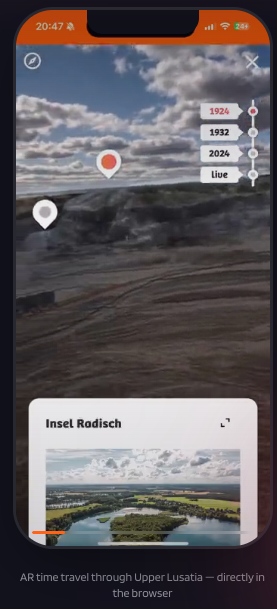
In Germany, SpotAR's augmented reality stations bring local landscapes and heritage to life, giving self-guided visitors a reason to stop, look and learn. With 60 experiences at more than 600 points of interest, webAR eliminates the friction of app downloads, removing a key barrier for visitors to engage with heritage and traditions. This creates an engaging and accessible experience for locals and tourists alike.
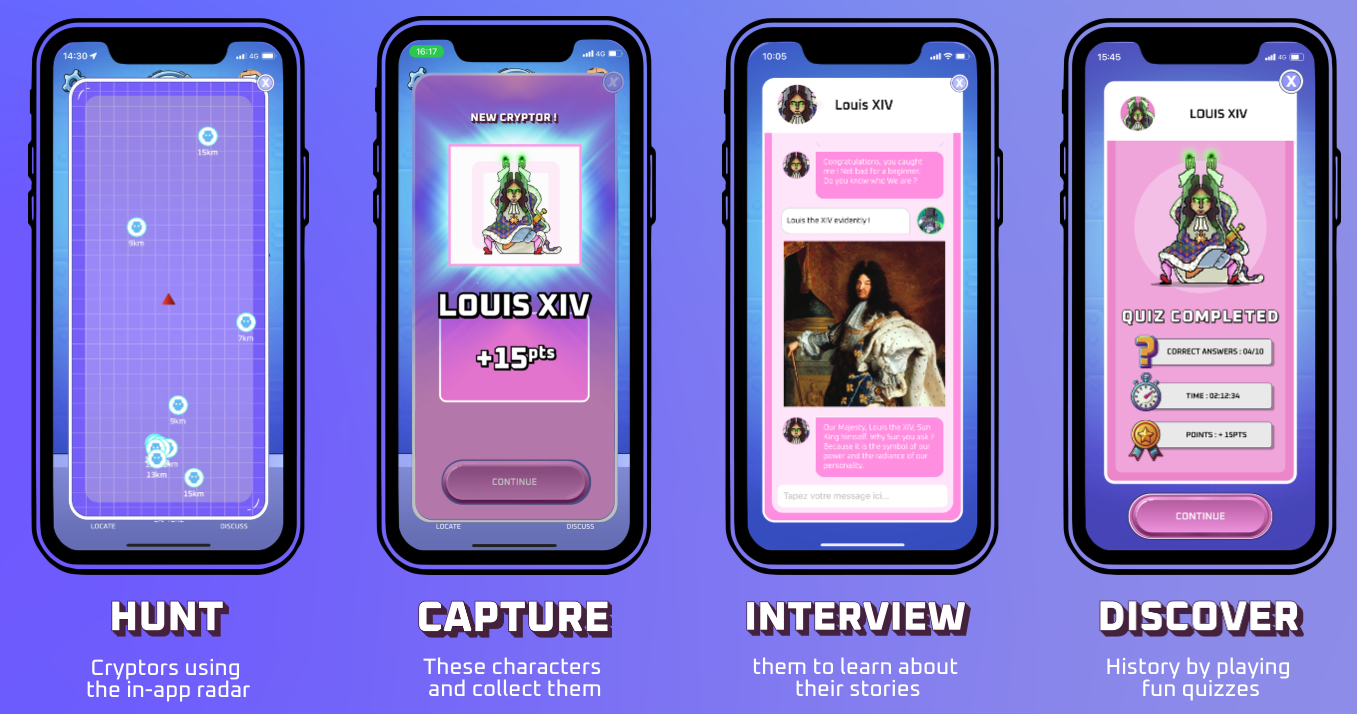
Gamification achieves similar immersive storytelling objectives with enhanced interactivity. Turning exploration into a game gives a destination a gentle way to pull visitors towards the lesser-known places that need footfall, directly shaping where people go. Cryptors in the City applies this concept to local heritage through a location-based mobile game. Funded through the French government's France 2030 innovation investment plan, this digital treasure hunt combines street art, mobile gaming and artificial intelligence. The app-based experience is designed to engage audiences at heritage locations across France, with users scanning artworks of historical figures to 'capture' their AI avatars and interact with them.
DMOs like the Catalan Tourist Board have also prioritised investing in technology pilots to support regional dispersal. Identify Travel's Grand Tour of Catalonia digital passport turns a 2,000-kilometre route across Catalonia into a game played through a web app. Travellers collect digital stamps, answer questions and complete small challenges at 200 checkpoints as they explore, nudging them past the icons towards quieter corners of the region. By rewarding travellers for reaching a series of stops, they are actively encouraged to travel deeper into a region, extending how long they stay and how widely their spending reaches.
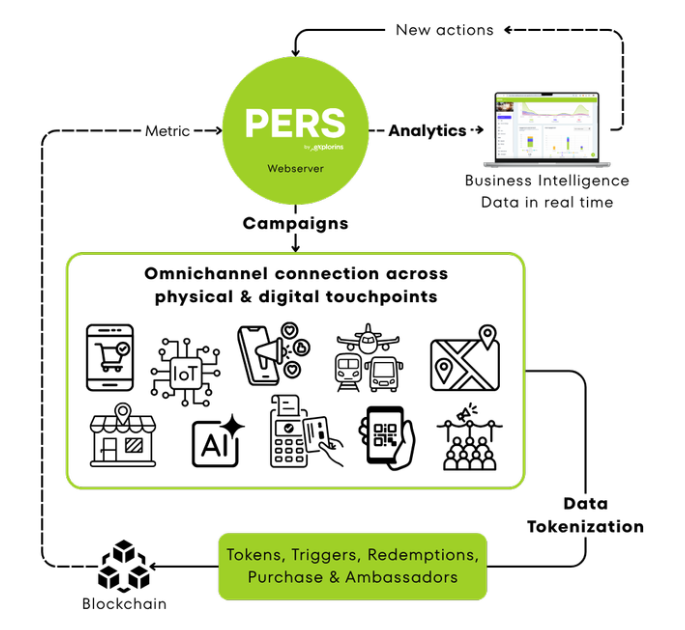
Another pilot project the DMO supported focused on connecting small, independently owned businesses into a single loyalty network through eXplorins' PERS platform. Using blockchain to provide a verifiable trail of each action, first-party behavioural data is generated when travellers scan a QR code upon check-in at a participating business. In return, they receive tokenised rewards. This approach is designed to drive loyalty while also providing economic support directly to local communities, opening up shared loyalty programmes for businesses too small to run such systems alone. This shared infrastructure bridges the gap between marketing and real-world impact, as campaign spend becomes immediately attributable and visitor dispersal can be proven.
Civic Dollars shows a community-first version of the same model, rewarding communities for spending time in designated outdoor zones, such as beaches, parks and trails. Introducing a community currency that can be redeemed at cafés, shops and attractions, the app plays a key role in boosting community spirit and encourages healthier, more active lifestyles. A partnership with Donegal County Council has even seen over 40% of the value earned being donated to local causes. By keeping the value earned within the area, the scheme ensures the economic benefit circulates locally.
The common thread across these is dwell time. Rural destinations tend to be passed through rather than stayed in, so anything that gives a visitor a reason to stop, return or spend locally addresses the economics as much as the experience.
Boosting In-Destination Support
Alongside improved visitor experiences, technology is providing much-needed support for facilitating communication with travellers. With many physical tourist offices around the world closing in the face of budget cuts, in-destination engagement is increasingly supported through digital communications. Taking advantage of improved digital connectivity, Azienda per il Turismo Rovereto Vallagarina e Monte Baldo in Italy launched the "Allerta Vallagarina" WhatsApp channel to send visitors timely updates about trail closures and warnings, weather alerts and local updates, meeting travellers on a channel they already check. Beyond convenience, this gives a destination a live relationship with visitors throughout their stay, turning a low-cost tool into a reliable way to guide behaviour, respond to conditions and stay present across a wide rural area.
On the other hand, Destination BC's Touch Point Island Guide brings a custom-designed digital kiosk into museums, establishing a visitor information booth that acts as a hub for discovering the destination's offer. Funded through the DMO's Visitor Services Experience Enhancement Grant, such touchscreens provide an effective approach to help visitors in remote locations. It gives visitors a single, reliable starting point for exploring a remote destination, turning a brief museum stop into a gateway to the wider island.
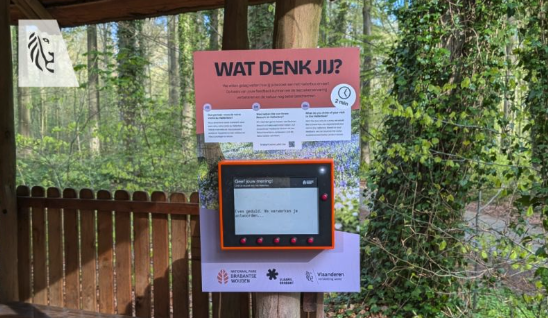
A similar investment in mobile devices has been made by Visit Flanders for capturing visitor feedback. One such device installed in Hallerbos during the hyacinth festival saw over 500 visitors sharing their opinions, helping to collect visitor insights to ensure evidence-based decisions are made. Gathering feedback at the point of experience gives a destination a clearer view of who is visiting and what they value, building the evidence base needed to shape services around resident and visitor priorities alike.
This emphasis on visitor feedback can also be achieved through unique AI interfaces. Beyond gathering responses, the power of AI lies in its ability to sift large volumes of feedback and identify clear patterns, spotting shifts in sentiment or recurring themes as they emerge. At Zwin Nature Park on the Belgian coast, Westtoer and Lean Mean Learning Machine built an AI interviewer, a Lego stork that talks to visitors in natural conversation. Since summer 2024, it has run more than 7,000 interviews, with 59% of them lasting over two minutes. The AI sorted responses into categories correctly in 92% of cases with no human involvement. The same partnership also developed a voice assistant that fields visitors' practical questions on the spot, freeing staff to focus where they are needed most.
Towards Agentic Solutions
AI is also changing what travellers do once they arrive. ChatGPT can now use a traveller's shared location to suggest nearby businesses and experiences. With 87% of travellers saying they like to leave room in their itinerary for unexpected local discoveries and around 40% booking tours and attractions within two days of doing them, spontaneity is a core part of the tourism experience. Achieving this level of localisation almost entirely depends on whether Point-of-Interest (POI) data is structured, accurate and machine-readable. This matters in rural areas because it gives the functional information AI needs to make a recommendation that is not just relevant but immediately actionable, helping to showcase the smaller family-run businesses that are commonplace.
The same signals are starting to trigger action. Expedia and Google's "Bundle in the Now" takes live context, such as weather and local events, and a traveller's intent and uses Google AI to assemble a bookable flight-and-hotel package inside the ad unit itself, the moment someone shows interest. By boosting digital presence in rural communities, the likelihood of being featured in such packages will only become stronger, helping to close the inspiration-to-booking gap.
Building a booking automatically at the point of intent is an early sign of the automation to follow. That automation goes furthest with agentic AI. Agentic systems work across multiple platforms and make decisions on a traveller's behalf, such as planning an itinerary or booking a farm visit. Rural travel carries more logistical friction than a city break, so removing that friction provides enormous value.
Enabling Data-Driven Strategies
AI is starting to protect the assets that draw people, too. Vodafone's partnership with UK National Parks uses AI-powered habitat mapping to monitor biodiversity and visitor impact across all fifteen parks. This focus on data-driven decision-making is what sits at the heart of emerging destination management approaches. None of this works without open, connected data underneath. That same data foundation is crucial for improving awareness of how to reach rural destinations in the first place. In helping to overcome logistical mobility challenges, DataWharf turns fragmented travel information into standardised, AI-ready feeds delivered through APIs, so a region's transport and journey detail can flow into apps, planners and AI assistants.
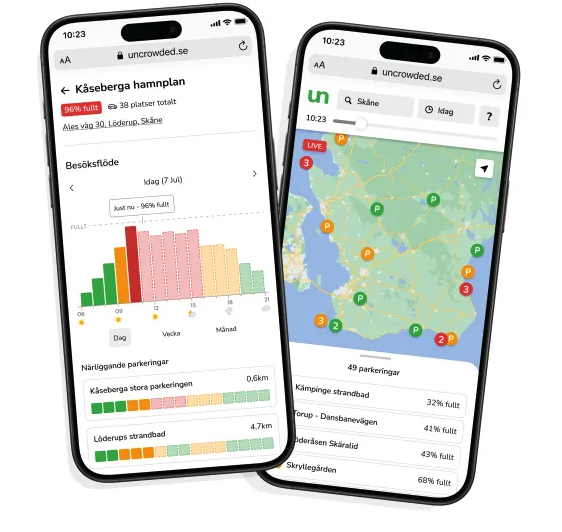
In rural settings, an overcrowded or degraded trail can undo the quality that draws people, so seeing pressure coming matters more than it would in a city. Anticipating those peaks lets a destination act before the damage is done, with Visit Skåne's Uncrowded platform built for exactly this. It forecasts visitor numbers at popular natural sites by combining vehicle-counter history, weather data and sensor readings refreshed every 15 minutes, then nudges people towards quieter alternatives or off-peak times before car parks overflow.
Data also sharpens how destinations plan. Robust data lets a destination move from acting on instinct to acting on evidence, seeing clearly where demand is growing, which markets are worth pursuing and where investment will do the most good. For rural DMOs working with limited budgets and small teams, that clarity is what turns scarce resources into well-placed decisions. In Spain, Asociación Española de Ciudades del Vino (ACEVIN)'s new wine tourism intelligence system pulls data from more than 1,300 wineries, wine museums and accommodation providers into eight analysis panels covering visitor profiles, economic impact and other key measures of supply and demand. This lets each of the 32 wine routes compare its performance against the national picture and create strategic destination development plans.
Maximising the Rural Opportunity
By combining destination management and visitor experience, these technologies paint an optimistic picture of rural tourism's future. The effort a destination puts into describing itself well through structured content comes back as visitors who arrive with a clear intent. When a rural destination stops competing for attention on unequal terms and starts appearing at the point where decisions get made, travellers benefit from the same shift, because a well-described destination is one they can choose knowingly, with a clear sense of what a place offers.
That exchange matters most to small operators, where financial viability is often defined by fine margins. This is where national and regional DMOs make the difference. By setting content standards, funding shared platforms and pulling a dispersed offer into one place, they give small rural businesses a route to visibility that would be out of reach individually and let each operator concentrate on what they do best.
The DTTT is an active champion of rural technological development because digitalisation is what allows rural destinations to compete on their own terms, at their own scale. That is one of the founding principles of our Accelerate Programme, which exists to shorten the distance between the founders solving these problems and the destinations that need them solved. How far rural tourism goes from here depends a great deal on how quickly those two groups find and work more collaboratively with each other.

.webp)

