Putting Regenerative Action at the Centre of Experience Design
Sustainability in tourism has largely been framed around impact reduction. Regenerative action sets a higher standard, asking whether tourists can leave a place in better condition than they found it.
Sustainability in tourism has largely been framed around impact reduction. Regenerative action sets a higher standard, asking whether tourists can leave a place in better condition than they found it. In doing so, visitors become active contributors to ecological recovery, community wellbeing and cultural vitality.
That mindset shift changes what a destination offers and what it asks of everyone involved. Visitors, locals and DMOs all become contributors to outcomes that are visibly positive, not merely less negative. The question is how to design experiences and incentives so that this participation feels like a natural part of the trip.
Enabling Active Contributions
For years, the asks made to visitors in the name of sustainability have been modest, frequently focusing on the basics of reusing towels, taking shorter showers and refilling water bottles. These are vital actions that add up to a significant cumulative impact. However, the underlying logic still casts the visitor as someone whose impact needs to be softened, while visitors may misconstrue these requests as attempts by hotels to reduce their operating costs.
Nevertheless, there is a strong willingness to take stronger action. Booking.com’s 2025 Travel and Sustainability Report, drawing on responses from 32,000 travellers across 34 countries, found that 69% want to leave the places they visit in better condition than they found them and 73% want the money they spend to reach the local community. What has often been missing, though, is a mechanism to channel this intent without significantly increasing prices for cost-conscious travellers.
A handful of destinations have recently begun to tackle this challenge. Tourism Fiji launched Loloma Hour in 2025, inviting visitors to dedicate at least one hour of their trip to reef protection, mangrove restoration, beach clean-ups or cultural exchanges with local communities. With 'Loloma' being the Fijian word for love and generosity, the initiative was designed to champion Fijian values. An initial target of 5,000 volunteer hours in the first year was quickly exceeded, and within six months, more than 30 participating resorts and operators had logged over 12,500 hours. By presenting a clear way for visitors to give back to the country, Loloma Hour demonstrates what can be achieved when visitors are empowered to contribute towards defined outcomes through having a structured role and purpose.
As Visit Isle of Man's Big Blue Bag citizen science project demonstrates, residents also play a role in shaping regenerative action. Launched in 2025, the initiative supports 'ocean heroes', who are equipped to sample microplastics, record sea surface temperature, log coastal debris and monitor biodiversity, following a step-by-step toolkit developed with marine biologist Monty Halls. The data generated is then submitted through a dedicated app to a global open-access database. As a result, the initiative is designed to inspire environmental stewardship across generations, strengthening the Isle of Man's positioning as the world’s first whole-nation UNESCO Biosphere reserve.
Similarly, Passport to Recovery on Kangaroo Island encourages visitors to "arrive as a tourist, leave as a scientist". Developed as a collaboration between Flinders University, the local council and the Australian government, alongside the Kangaroo Island Tourism Alliance, the ferry operator SeaLink and a wildlife rescue centre, visitors contribute by completing tasks aimed at driving conservation of native flora and fauna through a dedicated app. The data feeds directly into research and monitoring ecological recovery following the 2019-2020 bushfires. In exchange, visitors collect points that convert into discounts with local businesses. Initiatives of this kind work because they are built on partnerships, with academic involvement giving credibility.
Developing the appropriate mode of action is one part of the shift towards tourism achieving its regenerative ambitions. However, designing experiences so that the regenerative choice becomes the most rewarding option is a more complex process. This is where behavioural design becomes a strategic question for destinations.
Wonderful Copenhagen's CopenPay is the most fully developed example. After a successful pilot in 2024, which reported a 98% recommendation rate among participants, the initiative has become a long-term component of the DMO's strategy. The 2025 edition ran for nine weeks from June to August with around 100 participating attractions, rewarding visitors who arrived by train, stayed four nights or longer, swapped their car for a bike, picked up litter, helped in urban gardens or joined biodiversity workshops. Rewards ranged from free bike rental and yoga sessions to discounted entry at major cultural sites.
What makes the model work is the reciprocity loop, where visitors receive an experience they would otherwise have paid for as a token of appreciation for supporting the sustainability actions the destination wants to promote. The psychological effect matters too, with research repeatedly showing that visitors report feeling more positive about their trip when they have made a meaningful contribution. CopenPay builds that effect into a programme. From 2026, the initiative has become a year-round concept, showing how pilot projects can expand significantly from their initial concept when they are designed with clarity of vision and a bold message.
Taking a different approach, Visit Faroe Islands launched Closed for Maintenance in 2019 to focus on recovery efforts where they are needed most. By closing selected paths and sites to tourism for a few days each spring, volunteers from around the world join Faroese coordinators to rebuild paths, restore landscapes and protect cultural heritage. Since launch, the project has run 62 maintenance interventions on 41 sites across 11 islands, supported by 687 foreign volunteers and 243 locals.
The Measurement Question
The question that has not yet been fully answered is how to measure regenerative action. Recent academic reviews in Tourism Geographies and other journals have converged on net positive effects as a defining feature of regenerative tourism, alongside community centrism and viewing tourism as part of a living system. While metrics for benchmarking regenerative effects at destination scale are still under development, the clearest justifications often require local contextualisation.
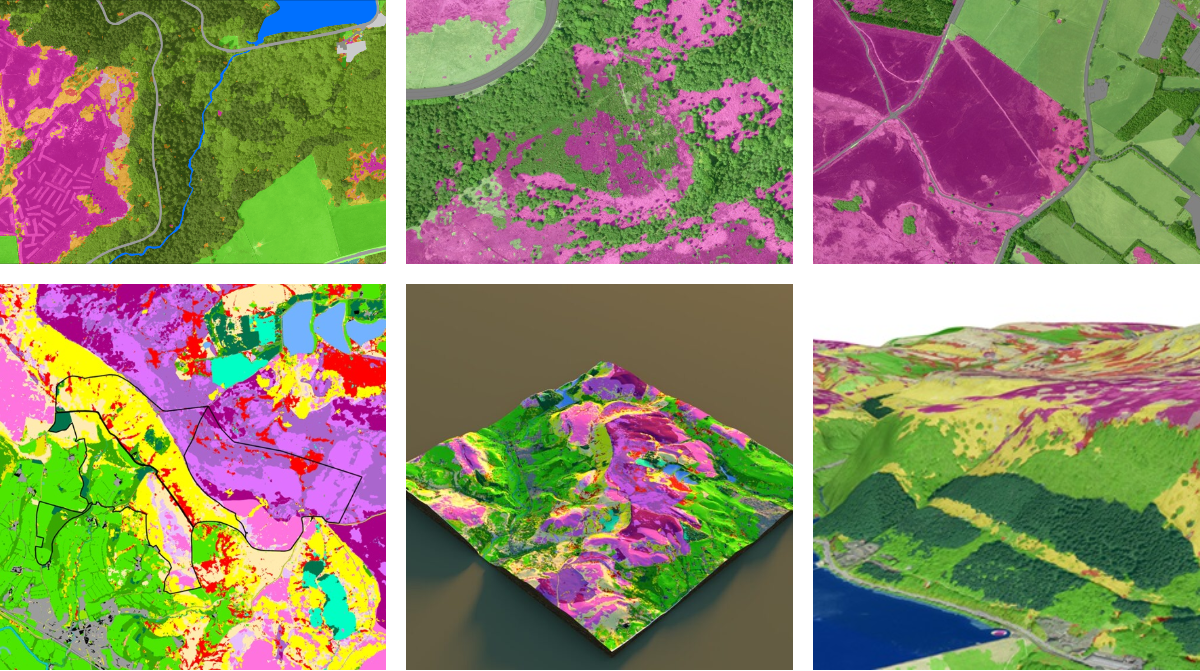
Technology investments play a key role in enabling this long-term measurement and ongoing progress monitoring. Vodafone's partnership with UK National Parks, announced in 2025 as a three-year programme spanning all 15 parks, is designed to use AI-powered habitat mapping to replace manual surveys, generating real-time data on biodiversity, visitor impact and habitat health. By combining user geolocation and footfall data with IoT sensors, mobile networks and smart wireless cameras, this advanced geospatial mapping will significantly accelerate the collation of important destination intelligence on ecosystem resilience.
The practical value of better mapping is that it improves the knowledge of park rangers and visitor centre managers in their attempt to influence behaviour and identify priority infrastructure upgrades. Knowing which paths are eroding, which habitats are recovering and where endangered species are returning is vital for improved destination management. Being able to get these insights sooner means that appropriate plans can be made faster to tackle emerging visitor impacts, but more importantly, to identify which initiatives drive the strongest response.
Knowing which actions have the greatest effect is the foundation for refining the design choices that follow. If a destination can see where its regenerative efforts are effective, it can build the value proposition around those actions and direct visitor attention towards them. In rethinking what purpose-driven tourism looks like, the destinations making progress understand this connection, treating measurement and behavioural design as interconnected components.
How can we re-envisage the value proposition to put regenerative experiences at the centre? CAMPUS 2026 is structured to tackle that critical question. Taking place from 30 September to 3 October in the Turku Archipelago, Finland, CAMPUS brings together destinations and industry to pioneer bold and radical solutions to the pressing destination management challenges DMOs face.
Oops! Something went wrong while submitting the form.
Sustainability in tourism has largely been framed around impact reduction. Regenerative action sets a higher standard, asking whether tourists can leave a place in better condition than they found it. In doing so, visitors become active contributors to ecological recovery, community wellbeing and cultural vitality.
That mindset shift changes what a destination offers and what it asks of everyone involved. Visitors, locals and DMOs all become contributors to outcomes that are visibly positive, not merely less negative. The question is how to design experiences and incentives so that this participation feels like a natural part of the trip.
Enabling Active Contributions
For years, the asks made to visitors in the name of sustainability have been modest, frequently focusing on the basics of reusing towels, taking shorter showers and refilling water bottles. These are vital actions that add up to a significant cumulative impact. However, the underlying logic still casts the visitor as someone whose impact needs to be softened, while visitors may misconstrue these requests as attempts by hotels to reduce their operating costs.
Nevertheless, there is a strong willingness to take stronger action. Booking.com’s 2025 Travel and Sustainability Report, drawing on responses from 32,000 travellers across 34 countries, found that 69% want to leave the places they visit in better condition than they found them and 73% want the money they spend to reach the local community. What has often been missing, though, is a mechanism to channel this intent without significantly increasing prices for cost-conscious travellers.
A handful of destinations have recently begun to tackle this challenge. Tourism Fiji launched Loloma Hour in 2025, inviting visitors to dedicate at least one hour of their trip to reef protection, mangrove restoration, beach clean-ups or cultural exchanges with local communities. With 'Loloma' being the Fijian word for love and generosity, the initiative was designed to champion Fijian values. An initial target of 5,000 volunteer hours in the first year was quickly exceeded, and within six months, more than 30 participating resorts and operators had logged over 12,500 hours. By presenting a clear way for visitors to give back to the country, Loloma Hour demonstrates what can be achieved when visitors are empowered to contribute towards defined outcomes through having a structured role and purpose.
As Visit Isle of Man's Big Blue Bag citizen science project demonstrates, residents also play a role in shaping regenerative action. Launched in 2025, the initiative supports 'ocean heroes', who are equipped to sample microplastics, record sea surface temperature, log coastal debris and monitor biodiversity, following a step-by-step toolkit developed with marine biologist Monty Halls. The data generated is then submitted through a dedicated app to a global open-access database. As a result, the initiative is designed to inspire environmental stewardship across generations, strengthening the Isle of Man's positioning as the world’s first whole-nation UNESCO Biosphere reserve.
Similarly, Passport to Recovery on Kangaroo Island encourages visitors to "arrive as a tourist, leave as a scientist". Developed as a collaboration between Flinders University, the local council and the Australian government, alongside the Kangaroo Island Tourism Alliance, the ferry operator SeaLink and a wildlife rescue centre, visitors contribute by completing tasks aimed at driving conservation of native flora and fauna through a dedicated app. The data feeds directly into research and monitoring ecological recovery following the 2019-2020 bushfires. In exchange, visitors collect points that convert into discounts with local businesses. Initiatives of this kind work because they are built on partnerships, with academic involvement giving credibility.
Developing the appropriate mode of action is one part of the shift towards tourism achieving its regenerative ambitions. However, designing experiences so that the regenerative choice becomes the most rewarding option is a more complex process. This is where behavioural design becomes a strategic question for destinations.
Wonderful Copenhagen's CopenPay is the most fully developed example. After a successful pilot in 2024, which reported a 98% recommendation rate among participants, the initiative has become a long-term component of the DMO's strategy. The 2025 edition ran for nine weeks from June to August with around 100 participating attractions, rewarding visitors who arrived by train, stayed four nights or longer, swapped their car for a bike, picked up litter, helped in urban gardens or joined biodiversity workshops. Rewards ranged from free bike rental and yoga sessions to discounted entry at major cultural sites.
What makes the model work is the reciprocity loop, where visitors receive an experience they would otherwise have paid for as a token of appreciation for supporting the sustainability actions the destination wants to promote. The psychological effect matters too, with research repeatedly showing that visitors report feeling more positive about their trip when they have made a meaningful contribution. CopenPay builds that effect into a programme. From 2026, the initiative has become a year-round concept, showing how pilot projects can expand significantly from their initial concept when they are designed with clarity of vision and a bold message.
Taking a different approach, Visit Faroe Islands launched Closed for Maintenance in 2019 to focus on recovery efforts where they are needed most. By closing selected paths and sites to tourism for a few days each spring, volunteers from around the world join Faroese coordinators to rebuild paths, restore landscapes and protect cultural heritage. Since launch, the project has run 62 maintenance interventions on 41 sites across 11 islands, supported by 687 foreign volunteers and 243 locals.
The Measurement Question
The question that has not yet been fully answered is how to measure regenerative action. Recent academic reviews in Tourism Geographies and other journals have converged on net positive effects as a defining feature of regenerative tourism, alongside community centrism and viewing tourism as part of a living system. While metrics for benchmarking regenerative effects at destination scale are still under development, the clearest justifications often require local contextualisation.
Technology investments play a key role in enabling this long-term measurement and ongoing progress monitoring. Vodafone's partnership with UK National Parks, announced in 2025 as a three-year programme spanning all 15 parks, is designed to use AI-powered habitat mapping to replace manual surveys, generating real-time data on biodiversity, visitor impact and habitat health. By combining user geolocation and footfall data with IoT sensors, mobile networks and smart wireless cameras, this advanced geospatial mapping will significantly accelerate the collation of important destination intelligence on ecosystem resilience.
The practical value of better mapping is that it improves the knowledge of park rangers and visitor centre managers in their attempt to influence behaviour and identify priority infrastructure upgrades. Knowing which paths are eroding, which habitats are recovering and where endangered species are returning is vital for improved destination management. Being able to get these insights sooner means that appropriate plans can be made faster to tackle emerging visitor impacts, but more importantly, to identify which initiatives drive the strongest response.
Knowing which actions have the greatest effect is the foundation for refining the design choices that follow. If a destination can see where its regenerative efforts are effective, it can build the value proposition around those actions and direct visitor attention towards them. In rethinking what purpose-driven tourism looks like, the destinations making progress understand this connection, treating measurement and behavioural design as interconnected components.
How can we re-envisage the value proposition to put regenerative experiences at the centre? CAMPUS 2026 is structured to tackle that critical question. Taking place from 30 September to 3 October in the Turku Archipelago, Finland, CAMPUS brings together destinations and industry to pioneer bold and radical solutions to the pressing destination management challenges DMOs face.
Continue reading...
Get access to 100s of case studies, workshop templates, industry leading events and more.



.svg)