The State of AI in Destination Management: X. Design Week 2026

For most destination teams, the hard part of AI is no longer getting a tool to work. The tools are capable and within reach, though teams sit at very different stages with them. What decides the outcome is the work around the tool.

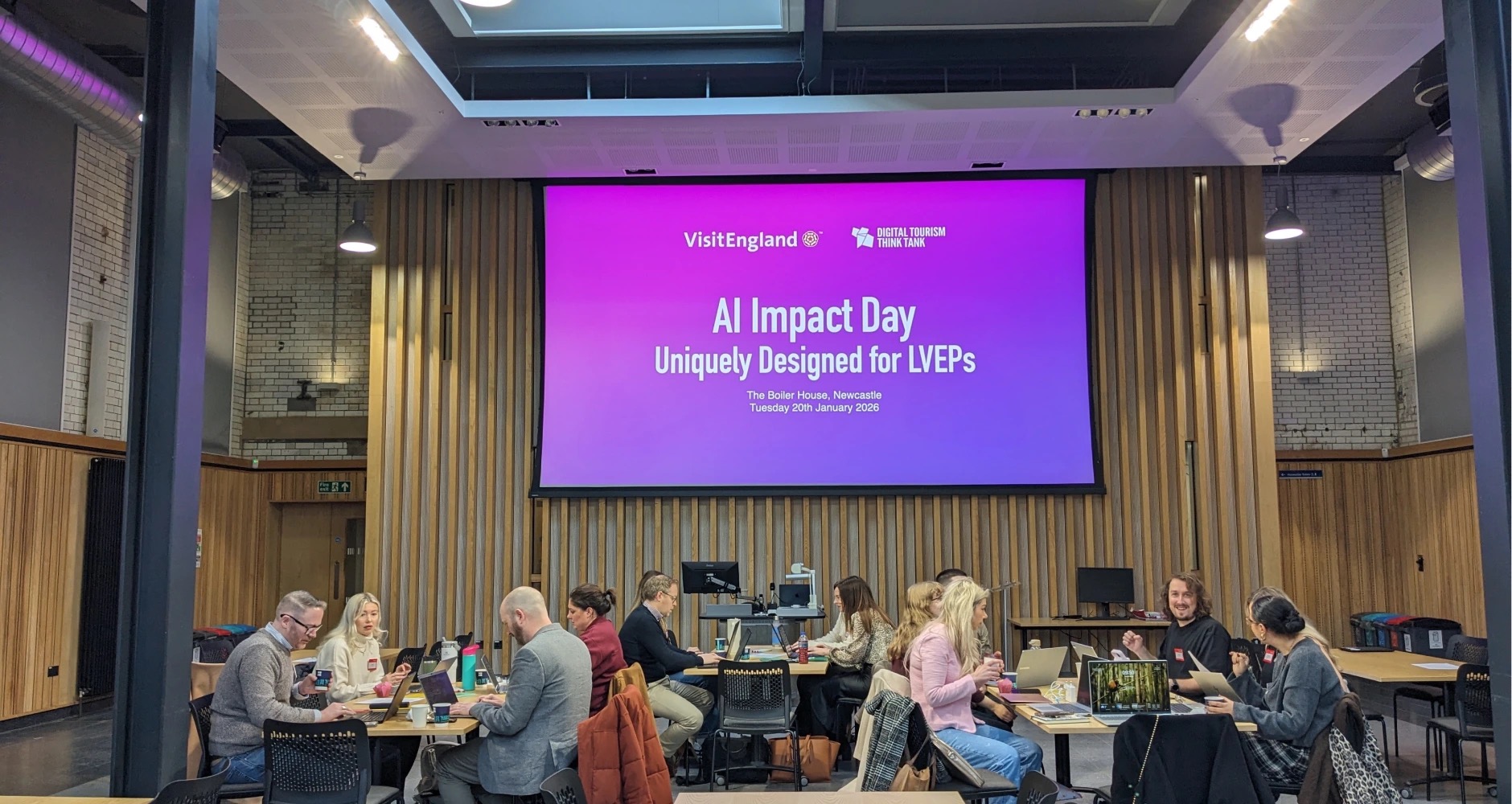
For most destination teams, the hard part of AI is no longer getting a tool to work. The tools are capable and within reach, though teams sit at very different stages with them. What decides the outcome is the work around the tool. X.Design Week 2026 spent three days on exactly that.

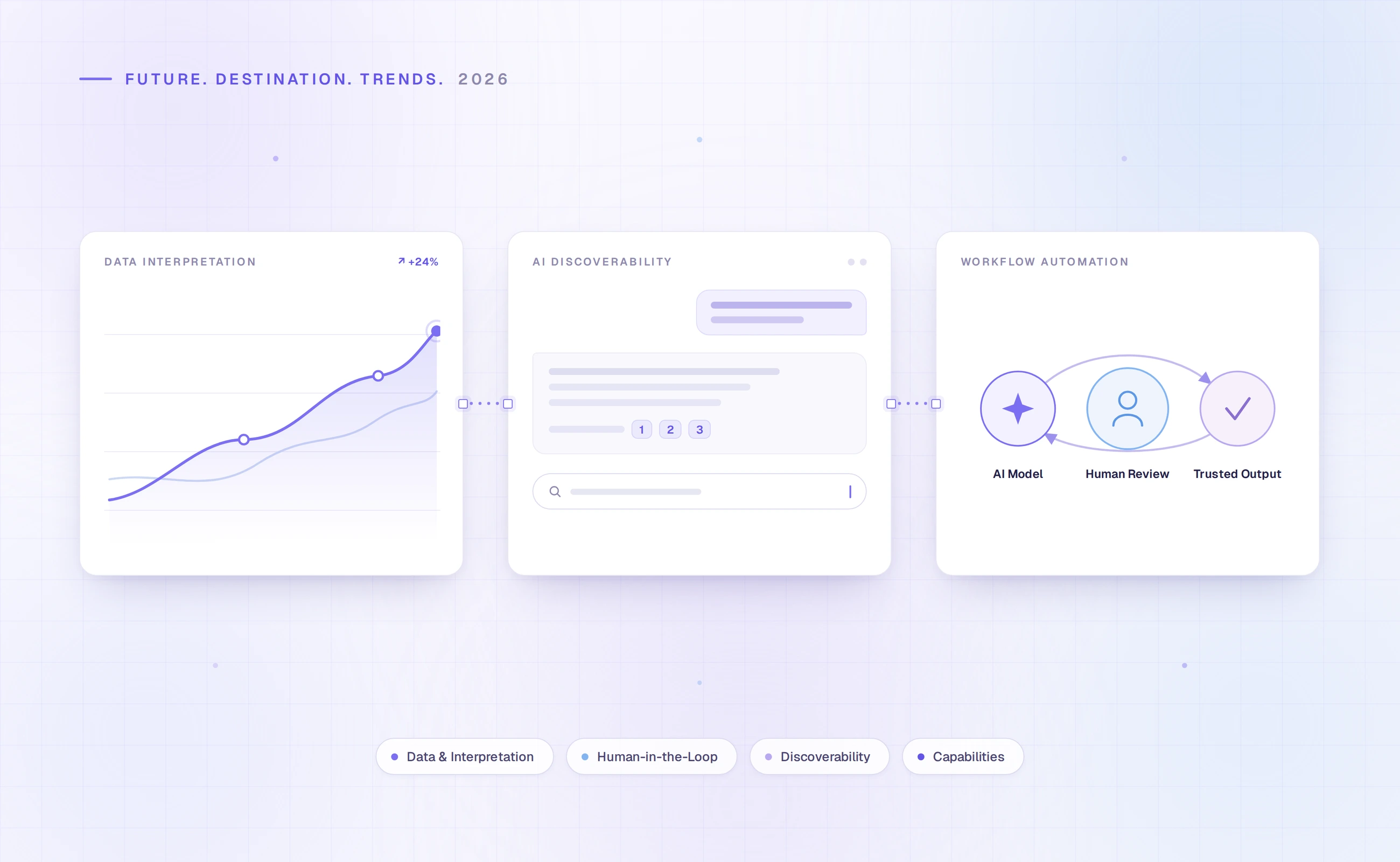
The report that came out of it lands one conclusion across all four topics. As the tools get cheaper and easier, the ground shifts to the things they can't supply, the knowledge a team feeds them, the trust that lets people stand behind the output, the authority a destination earns beyond its own website and the judgment about what to build. None of this is quick to put in place since slow work is what separates the destinations pulling ahead from those falling behind.  

The Digital Tourism Think Tank (DTTT) ran the week in Brussels and has gathered the arguments and the case studies into the X. Design Week 2026 report, across AI readiness, governance, discoverability and interfaces.

AI Readiness, Workflow and Knowledge Systems

Readiness comes first, because a team can only use AI as well as its groundwork allows. Most destinations use AI every day already, but far fewer have changed how they work to suit it. McKinsey puts everyday use at 88% and redesigned workflows at 21%. The value leaks away in the gap between the two, because dropping a tool into a process you have not changed saves a few minutes on the task while the work itself comes out much the same.

Two things around the tool make the difference. The first is shared knowledge the AI can read, so everyone's work comes out in the same voice and to the same standard. The second is judgment, because almost anyone can produce a draft now and the skill worth having is knowing what to ask for and whether the answer is any good. The biggest block on both is enablement: people need access to the tools and the confidence to use them, which comes when they trust the tool is there to help them do their job.

The kind of work is changing too. Automation takes over a routine job and saves the time once, while augmentation changes what a person can take on so the gains keep adding up across everything they do. Readiness is what lets a team make that second move.

Read the readiness thread →

AI Governance and Strategy

Most destinations still treat governance as compliance, something that slows the work down. The teams making progress use it the other way round, as the thing that lets them put AI work out with confidence, because someone has checked it and can explain what was done. The same rules hold one team back and push another one forward, so what changes is only how they are used.

Governance matters because people are already using these tools out of sight. Staff pick them up whether the guidelines allow it or not and plenty have already pasted company information into public chatbots. Banning the tools hides the problem without solving it, while a clear framework brings the use into the open where it can be watched and managed.

There is fear underneath all this. Younger staff worry about losing their jobs to AI, while older staff worry the skills they built up over years are losing their worth. A policy that only covers data and legal risk leaves both worries untouched, so it helps to name the fear plainly.

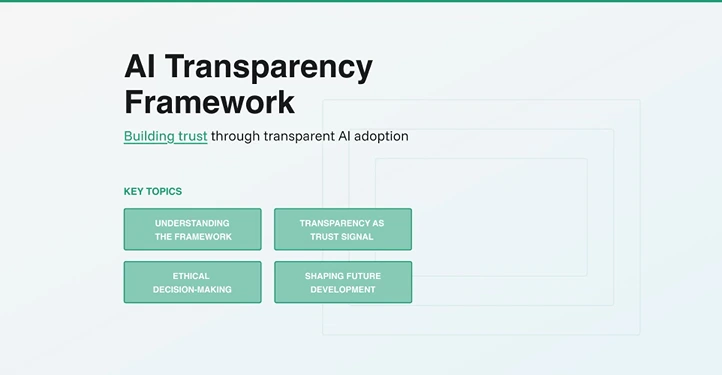
The change that makes governance useful is small: a manager stops asking whether AI was used and starts asking how. The first question gets a yes or a no and goes nowhere, while the second opens up to the discussion of who did what and what they checked. This allows for simple rules to be made on where AI can be used and how a record of what went out should be kept. The EU AI Act's high-risk rules arrive in August 2026, so it is worth having this in place early. Doing it the same way each time is easier with a shared language and the DTTT AI Transparency Framework gives destinations one.

Read the governance thread →

AI Discoverability and Presence

Governance is about trust inside the organisation. Discoverability is about trust outside it, how AI systems see a destination and describe it to the people asking. A place used to get found by ranking near the top of search.

Now an AI system reads whatever it can find about a place and gives its own summary to whoever asks. The system leans mostly on what other people say, so a destination's own website counts for less than it used to, while coverage in the press, in guides anmin reviews counts for more.

There are three layers to building this kind of standing. First is the technical groundwork that lets AI systems read the site properly, which many destinations have not sorted yet. Then comes the story a place tells about itself across the web, which it can either shape on purpose or leave the AI to piece together. On top sits everyone else, the operators, partners and press who repeat the same things about a place until the AI takes them as fact.

What you measure changes as well, because clicks and rankings matter less now and what counts is whether a destination turns up in AI answers and how accurately it is described there. The work holds together when a destination sticks to a few themes it can back up, so its own content, its partners and the press all say roughly the same thing.

Read the discoverability thread →

AI Interfaces and User Experience

Discoverability is about how AI talks about a destination. Interfaces are the point where AI becomes the thing the visitor actually uses. First is a destination's own assistant on its website. Second is the AI assistant the visitor brings with them, which does the research and booking for them, so they might never open the destination's site. Third is the newsletters, hubs and campaign pages a team now puts together with AI.

Building any of these is quick now, so if a team can describe what it wants clearly it can put a working version together in a session. The speed makes it easy to build whatever is new or trendy, so the better habit is to start with the visitor. The question to answer is what the visitor is trying to do and the interface earns its place only when it helps with that.

The job is shifting from making single pages to shaping how the whole thing fits together and keeping the brand safe inside it. A quick build is fine for an internal tool or a short campaign, but the main public website carries far more traffic and the brand with it, so it needs proper engineering before it goes live.

Accuracy matters more on an assistant than almost anywhere else, because a wrong answer goes straight to the visitor with the destination's name on it. To keep it right, these tools work from checked information, with staff ready to step in when the answer is not clear. The same goes for the assistants visitors bring with them and they will only put a place forward when its information is detailed enough to fit the question and reliable enough to trust. Getting there is editorial work: choosing what the tools draw on and making sure the facts hold up. 

Read the interfaces thread →

What Carries into the Rest of 2026

The four topics come back to the same thing. The teams getting ahead treat AI as a reason to sort out their groundwork and their judgement, putting that before simply doing the old work faster. Sorting out the groundwork is slower than picking up a new tool, but it lasts.

The work carries on past the three days. The AI Transparency Framework moves into its next phase and takes on new destinations. The community meets again later in the year, at CAMPUS in the Turku Archipelago and at Future. Destination. Brand. in Dublin. The follow-up page sets out what is taking shape in between.

The report has the full arguments and the case studies. The candid discussions and the detailed frameworks stay with members and the people who were there.

 Read the full report →

Subscribe to our Newsletter

Thank you! Your submission has been received!
Oops! Something went wrong while submitting the form.

For most destination teams, the hard part of AI is no longer getting a tool to work. The tools are capable and within reach, though teams sit at very different stages with them. What decides the outcome is the work around the tool. X.Design Week 2026 spent three days on exactly that.

The report that came out of it lands one conclusion across all four topics. As the tools get cheaper and easier, the ground shifts to the things they can't supply, the knowledge a team feeds them, the trust that lets people stand behind the output, the authority a destination earns beyond its own website and the judgment about what to build. None of this is quick to put in place since slow work is what separates the destinations pulling ahead from those falling behind.  

The Digital Tourism Think Tank (DTTT) ran the week in Brussels and has gathered the arguments and the case studies into the X. Design Week 2026 report, across AI readiness, governance, discoverability and interfaces.

AI Readiness, Workflow and Knowledge Systems

Readiness comes first, because a team can only use AI as well as its groundwork allows. Most destinations use AI every day already, but far fewer have changed how they work to suit it. McKinsey puts everyday use at 88% and redesigned workflows at 21%. The value leaks away in the gap between the two, because dropping a tool into a process you have not changed saves a few minutes on the task while the work itself comes out much the same.

Two things around the tool make the difference. The first is shared knowledge the AI can read, so everyone's work comes out in the same voice and to the same standard. The second is judgment, because almost anyone can produce a draft now and the skill worth having is knowing what to ask for and whether the answer is any good. The biggest block on both is enablement: people need access to the tools and the confidence to use them, which comes when they trust the tool is there to help them do their job.

The kind of work is changing too. Automation takes over a routine job and saves the time once, while augmentation changes what a person can take on so the gains keep adding up across everything they do. Readiness is what lets a team make that second move.

Read the readiness thread →

AI Governance and Strategy

Most destinations still treat governance as compliance, something that slows the work down. The teams making progress use it the other way round, as the thing that lets them put AI work out with confidence, because someone has checked it and can explain what was done. The same rules hold one team back and push another one forward, so what changes is only how they are used.

Governance matters because people are already using these tools out of sight. Staff pick them up whether the guidelines allow it or not and plenty have already pasted company information into public chatbots. Banning the tools hides the problem without solving it, while a clear framework brings the use into the open where it can be watched and managed.

There is fear underneath all this. Younger staff worry about losing their jobs to AI, while older staff worry the skills they built up over years are losing their worth. A policy that only covers data and legal risk leaves both worries untouched, so it helps to name the fear plainly.

The change that makes governance useful is small: a manager stops asking whether AI was used and starts asking how. The first question gets a yes or a no and goes nowhere, while the second opens up to the discussion of who did what and what they checked. This allows for simple rules to be made on where AI can be used and how a record of what went out should be kept. The EU AI Act's high-risk rules arrive in August 2026, so it is worth having this in place early. Doing it the same way each time is easier with a shared language and the DTTT AI Transparency Framework gives destinations one.

Read the governance thread →

AI Discoverability and Presence

Governance is about trust inside the organisation. Discoverability is about trust outside it, how AI systems see a destination and describe it to the people asking. A place used to get found by ranking near the top of search.

Now an AI system reads whatever it can find about a place and gives its own summary to whoever asks. The system leans mostly on what other people say, so a destination's own website counts for less than it used to, while coverage in the press, in guides anmin reviews counts for more.

There are three layers to building this kind of standing. First is the technical groundwork that lets AI systems read the site properly, which many destinations have not sorted yet. Then comes the story a place tells about itself across the web, which it can either shape on purpose or leave the AI to piece together. On top sits everyone else, the operators, partners and press who repeat the same things about a place until the AI takes them as fact.

What you measure changes as well, because clicks and rankings matter less now and what counts is whether a destination turns up in AI answers and how accurately it is described there. The work holds together when a destination sticks to a few themes it can back up, so its own content, its partners and the press all say roughly the same thing.

Read the discoverability thread →

AI Interfaces and User Experience

Discoverability is about how AI talks about a destination. Interfaces are the point where AI becomes the thing the visitor actually uses. First is a destination's own assistant on its website. Second is the AI assistant the visitor brings with them, which does the research and booking for them, so they might never open the destination's site. Third is the newsletters, hubs and campaign pages a team now puts together with AI.

Building any of these is quick now, so if a team can describe what it wants clearly it can put a working version together in a session. The speed makes it easy to build whatever is new or trendy, so the better habit is to start with the visitor. The question to answer is what the visitor is trying to do and the interface earns its place only when it helps with that.

The job is shifting from making single pages to shaping how the whole thing fits together and keeping the brand safe inside it. A quick build is fine for an internal tool or a short campaign, but the main public website carries far more traffic and the brand with it, so it needs proper engineering before it goes live.

Accuracy matters more on an assistant than almost anywhere else, because a wrong answer goes straight to the visitor with the destination's name on it. To keep it right, these tools work from checked information, with staff ready to step in when the answer is not clear. The same goes for the assistants visitors bring with them and they will only put a place forward when its information is detailed enough to fit the question and reliable enough to trust. Getting there is editorial work: choosing what the tools draw on and making sure the facts hold up. 

Read the interfaces thread →

What Carries into the Rest of 2026

The four topics come back to the same thing. The teams getting ahead treat AI as a reason to sort out their groundwork and their judgement, putting that before simply doing the old work faster. Sorting out the groundwork is slower than picking up a new tool, but it lasts.

The work carries on past the three days. The AI Transparency Framework moves into its next phase and takes on new destinations. The community meets again later in the year, at CAMPUS in the Turku Archipelago and at Future. Destination. Brand. in Dublin. The follow-up page sets out what is taking shape in between.

The report has the full arguments and the case studies. The candid discussions and the detailed frameworks stay with members and the people who were there.

 Read the full report →

Subscribe to our Newsletter

Thank you! Your submission has been received!
Oops! Something went wrong while submitting the form.