Unlocking AI Capability at Scale: A National Impact Programme
VisitEngland's Local Visitor Economy Partnerships moved from curiosity to confident, everyday AI use through a national workshop programme shaped by practical tools and by what participants told DTTT they needed.
DTTT Knowledge Team
22 Jul 2026
In this piece
Destination marketing is changing at the point where the visitor journey starts. As AI reshapes how travellers choose where to visit, for destination teams that shift changes what good marketing looks like and what skills a team needs to deliver it.
This was the starting point for the AI Impact Programme, a national skills initiative VisitBritain and VisitEngland commissioned from the Digital Tourism Think Tank (DTTT) for professionals working across England's Local Visitor Economy Partnerships (LVEPs). These teams cover content and campaign delivery, partner coordination and data reporting across many channels, often with only a handful of staff and limited budgets. Awareness of AI across this community was high, but very few people were using it in a structured way.
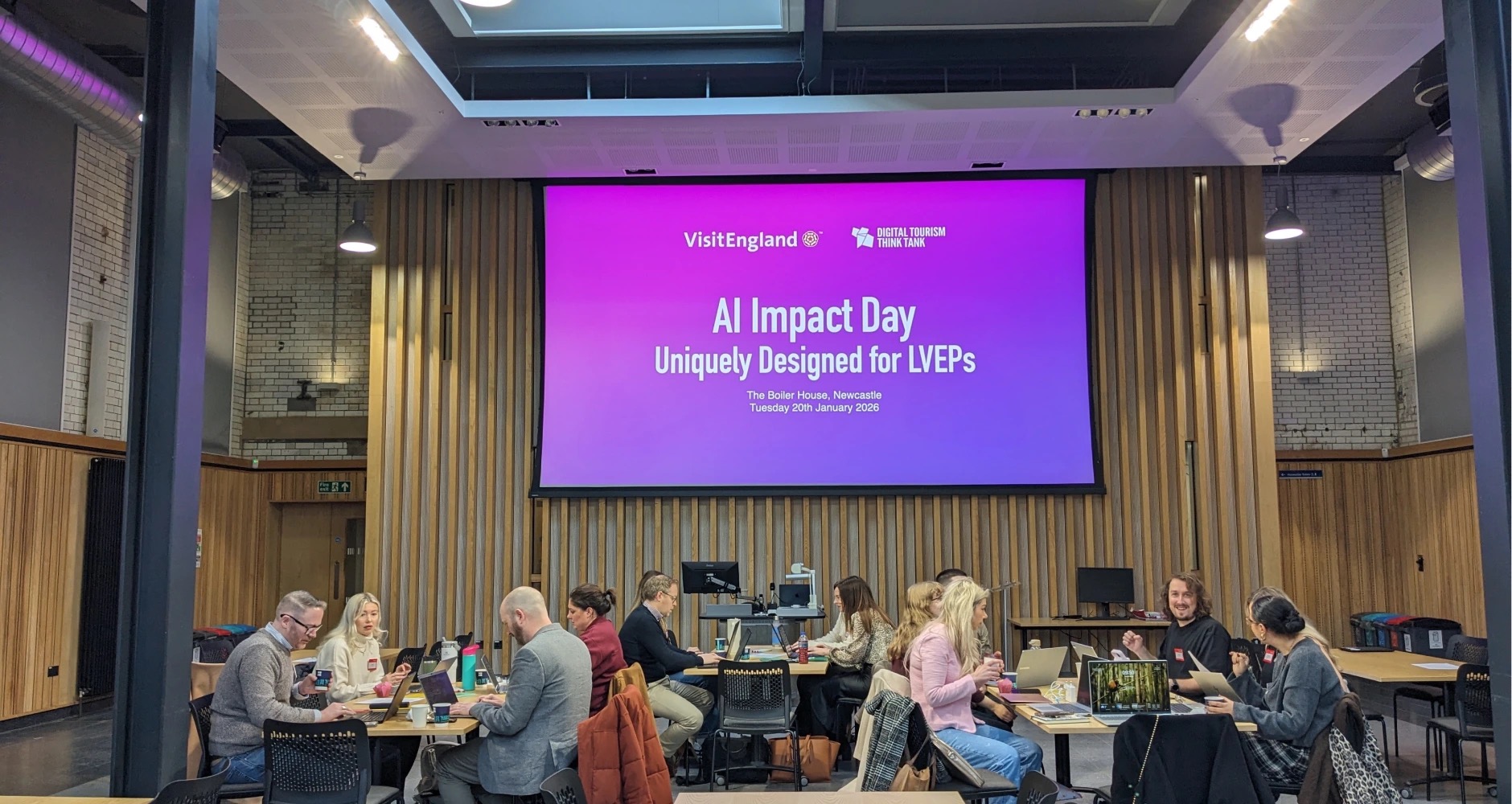
Aiming to develop strategic judgement around AI usage in daily workflows, DTTT designed a full-day workshop, delivered and adapted for LVEP cohorts across all regions of England. These sessions were built to move a whole professional community from initial curiosity to confident, everyday use.
The Pressures the Programme Was Built to Answer
Three pressures shaped the Impact Programme's structure. The first was how visitors were discovering destinations in the first place. Travel planning was moving from search toward conversation, with AI tools increasingly sitting alongside destination websites as a source of inspiration. Destination teams needed to understand how that shift worked and what it meant for their own content and brand visibility.
The second pressure was how to enhance capacity. Destination marketing teams already spend a large share of their week on repetitive, manual work, the kind of task that leaves too little room for strategic and creative thinking. AI offered a genuine way to free up that time, but only for teams that had learned to use it with purpose.
The final consideration was that while most participants already understood that AI mattered, far fewer knew where the boundaries sat around rights, governance and quality. A programme that built skill without also resolving that uncertainty would have only gone halfway. This meant that building confidence became the third key pillar of our work.
Answering all three at once, in a way that held up across teams with very different starting points, shaped everything DTTT built into the programme that followed.
The Tools Behind the Training
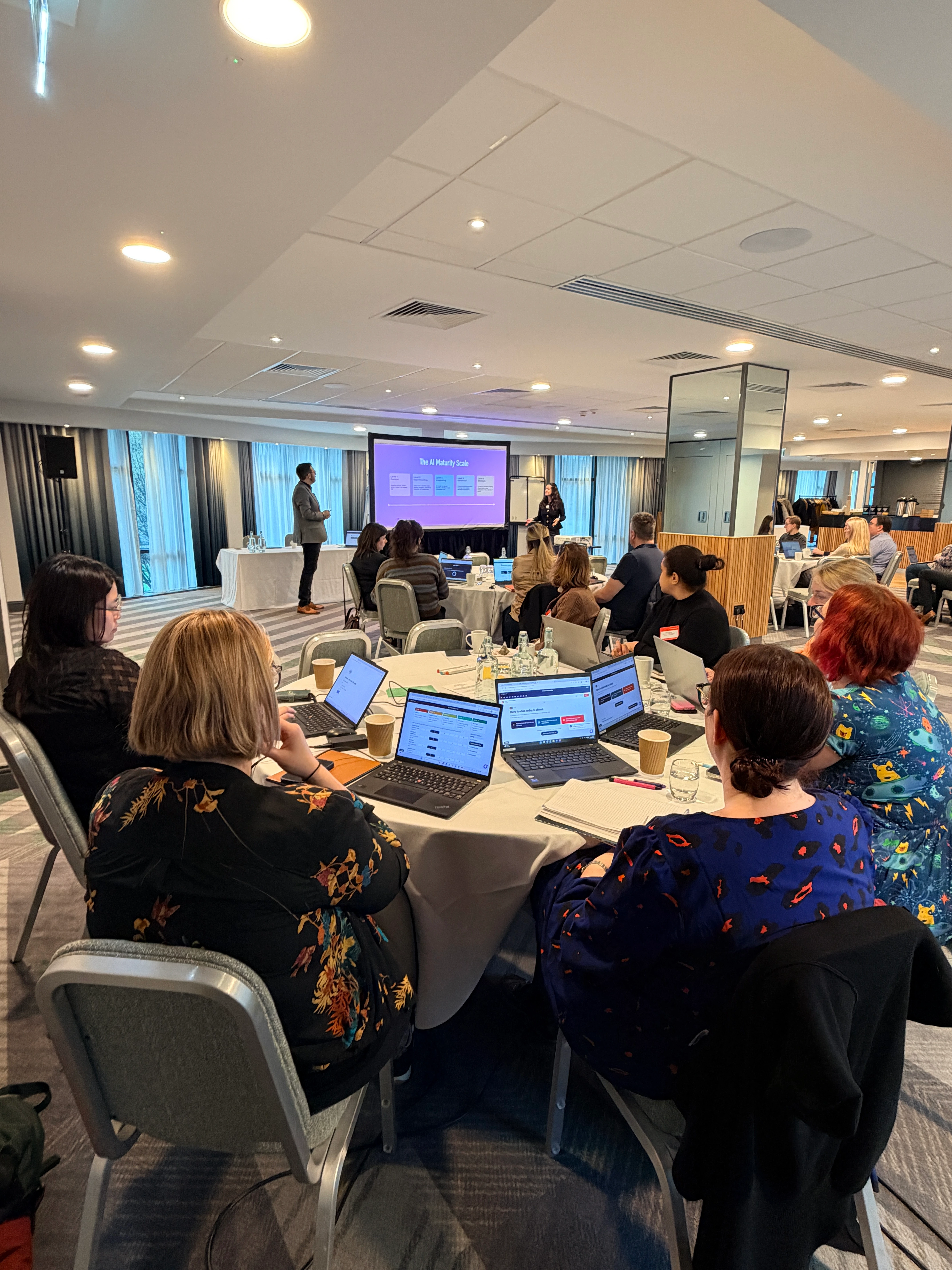
Each of the AI Impact sessions opened with the foundations, prompt engineering and the legal, compliance and governance questions that were holding teams back, before moving participants through four practical themes covering workflow and productivity, copy and editorial, visual media, plus advanced and interactive applications.
Around that day, DTTT curated a set of practical materials designed to carry the learning beyond the room, consisting of a handbook, a prompt library and a detailed glossary. The handbook set out the same four themes as the workshop, with each task built around what DMOs are trying to achieve, why it matters, how to do it and what to watch out for, written like guidance from an experienced colleague. The prompt library and glossary turned the ideas from the day into a working, task-based resource participants could return to whenever a real piece of work called for it.
Listening and Rebuilding
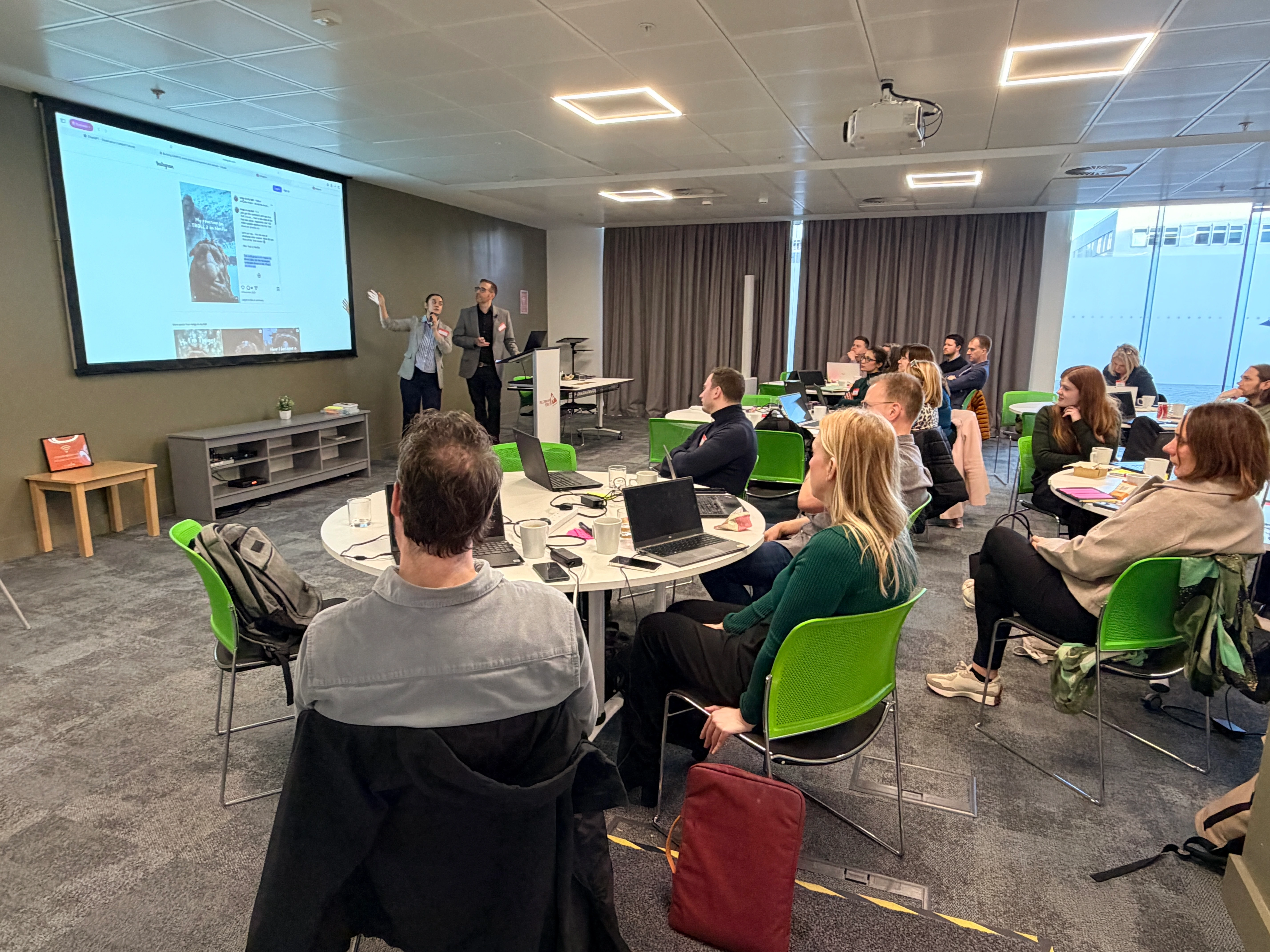
Early cohorts responded well, but the feedback pointed in a clear direction. Participants wanted the day to be more hands-on, more relevant to their own role and more directly applicable to their daily workflows. The most advanced material felt like a stretch for some teams, and with a wide range of skill levels in every room, beginners sometimes struggled while more experienced participants wanted to go further.
DTTT took that feedback and rebuilt around it. Theory was consolidated into a single block early in the day so the practical work afterwards could run without interruption, and the most advanced content was scaled back. In doing so, the core practical work moved onto tools built for each role that actually exists in a DMO: strategy and administration, marketing and content, partnerships and trade as well as insight curation.
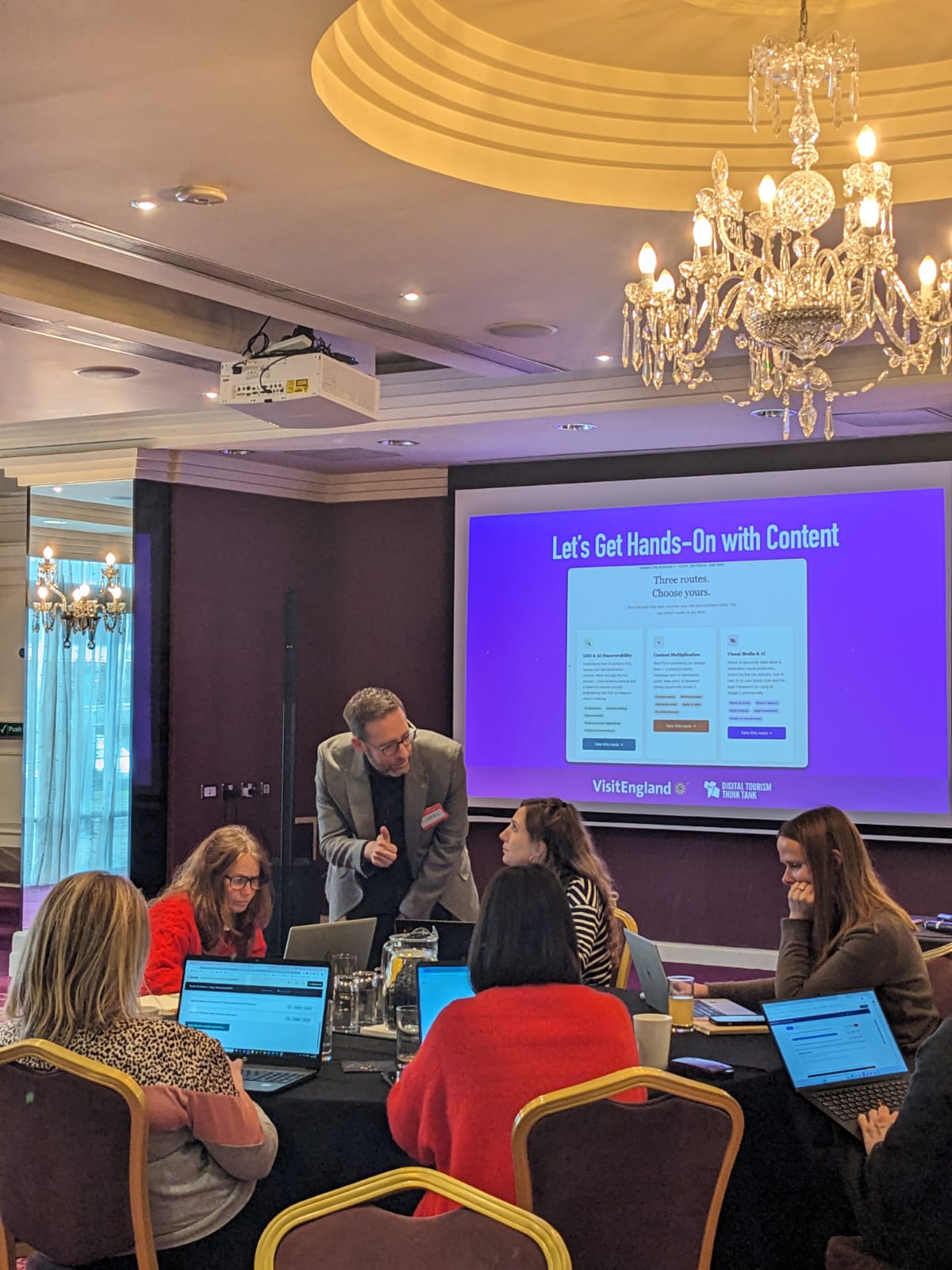
Interactive facilitation tools strengthened the practical sessions themselves, with single-screen, mostly click-based activities that followed a deliberately sparse layout so participants stayed focused on their own task. In building an interactive tool, the nature of the training transformed into being much more individually focused. This meant that participants generated personalised strategy points, ensuring they all left with insights specific to their own AI implementation challenges.
Giving the right materials, process and prompts to work with, not just the overview of where AI brings competitive advantages, is what let a single day of training produce outputs DMO teams could take straight back into their jobs. Each group worked through a tool built around their own kind of task, complete with worked examples and prompt feedback, so every group left the room with a tangible output and a process they could repeat.
Having spent the day learning to build with AI, participants discovered the workshop had already shown them how, a demonstration that proved its own argument. This evolutionary approach is the distinctive part of how DTTT approaches skills development, with workshops that give a systematic, hands-on route into applying AI, rather than a purely theoretical one.
Building A Committed Community
What came next mattered as much as the workshops themselves. DTTT saw the workshops as the start of an ongoing capability, so cohorts were brought back together through online follow-up roundtables, built around their own use cases and how far their thinking had moved on since the in-person training.
That continuity is what turns a day of training into a lasting change in how a team works. The community built after the workshops is what stops new skills from fading once participants return to their daily routines, and it reflects the same principle that shaped the programme from the start: that people build real capability with AI through perseverance and using it over time.