How Climate Change is Reshaping Tourism Models

Consecutive record summers threaten Europe's key holiday spots and peak seasons. DMOs face an urgent challenge: assessing how rising temperatures affect marketed tourist experiences and local supporting infrastructure.

Consecutive record-breaking summers are affecting the locations and periods most critical to the European travel industry. For DMOs, the pressing question is what warming temperatures do to the experiences they promote and the infrastructure that supports them.

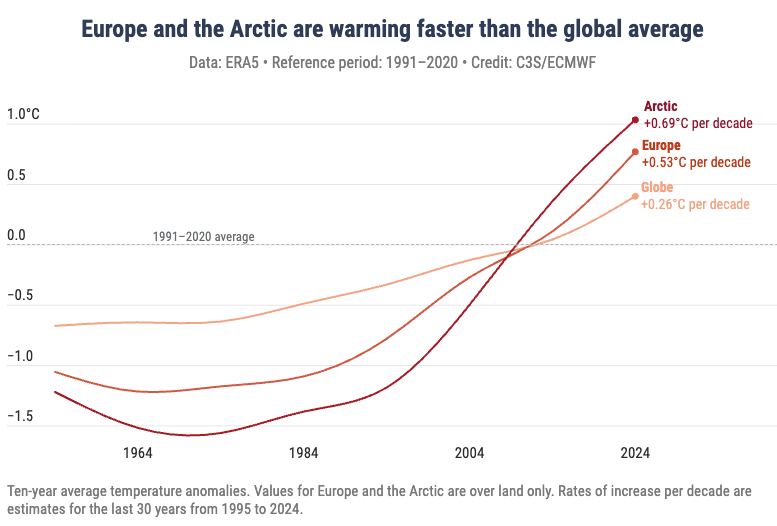
Europe is heating faster than any other continent, at roughly twice the global average, and 2024 became the first calendar year to pass 1.5 degrees above pre-industrial levels. The summers of 2023 to 2026 have brought wildfires, heat warnings and site closures. Yet, tourism remains a critical economic driver, contributing $3 trillion to the European economy in 2025 according to WTTC data. Much of that revenue is earned in the regions and the months now under the greatest climatic strain.

Source: Copernicus

The data points to a slow redistribution of seasonal demand, but shifting peak travel windows remains the hardest challenge. Traditional work schedules and school holidays continue to hold the summer peak firmly in place. While all-inclusive beach holidays continue to drive summer demand during the current cost-of-living squeeze, relying on a single product category is no longer viable. As climate impacts influence travellers to adapt their habits and destinations, regional vulnerabilities are coming into sharp focus. Delaying product diversification is a risk that escalates every year. The exact nature of that required adaptation differs by region.

When Core Products Align With Peak Seasons

When a destination’s tourism model is built around narrow, weather-reliant seasons, climate change becomes an existential threat. Southern Europe highlights this vulnerability as scorching summer heatwaves push temperatures past the point of comfort, to the detriment of visitor experiences. In Athens, the Acropolis faces closure through the afternoon heat when temperatures exceed 39°C.

Against a backdrop of severe heatwaves, more than 600,000 hectares of land have already burnt in wildfires this year, following the record 1,034,000 hectares in 2025. Such crises significantly alter safety perceptions and traveller confidence, triggering a wave of last-minute cancellations. In the aftermath, targeted communication campaigns become a destination's most vital lifeline in guiding visitors to unaffected locations and, ultimately, in rebuilding a destination's image.

Visitor numbers have remained relatively steady, even as extreme heat affects the holiday experience. Strong booking figures often obscure the growing operational challenge of promoting a summer climate that is increasingly unpredictable and risks eroding long-standing destination appeal. The impact appears gradually in visitor reviews, repeat visitation rates and prices. A strategic response requires proactive planning before arrival numbers begin to decline. 

Destination strategies often focus on expanding the primary offer throughout the year. Winter sun holidays represent a practical application of that approach. Southern and Mediterranean destinations attracted the largest share of travellers in early 2026, with international arrivals increasing by 33% in Greece, with Cyprus up 9% and Croatia up 8%. A sun and beach destination transitioning into a year-round warm-weather location allows regions to reinvent their tourism offer using assets already at their disposal, renewing their visitor appeal and insulating themselves against future shocks.

That shift prompts a broader strategic question. As comfortable temperatures extend further into spring and autumn across a wider geographic area, the traditional summer season naturally expands. Southern European destinations begin that adaptation process from a strong starting point. Shade, shuttered buildings, water management and daily routines built around the midday heat are long-standing local practices. Those established behaviours require minimal new infrastructure investment.

When the Core Asset Itself is Disappearing 

A more advanced version of climate adaptation falls on destinations whose core asset is physically disappearing. Alpine ski resorts face it most directly. A study in Nature Climate Change found 53% of 2,234 European ski resorts at high risk of scarce snow at two degrees of warming. That figure rises to 98% at four degrees. Over the past half-century, Alpine snow-cover duration has dropped by 5.6% per decade, pushing snow cover to a six-century low.

When the foundational offer of an entire region shrinks this rapidly, it becomes clear that it has a finite existence. Losing that reliability prompts a fundamental question about the future of mountain communities and the infrastructure and economy that existed because of winter tourism. Contrary to the pessimistic outlook, destinations are still seeing strong performances, with growth in early 2026 by 14% in Italy, 7% in Austria and 5% in France. That strength is precisely what makes long-term action viable, since the revenue generated can be invested in exploring new business models instead of waiting for a downturn to mandate change.

Where that adaptation has been done well, secondary experiences are anchored in what the destination naturally excels at, turning established identity into fresh appeal. Visit Paganella in the Italian Dolomites developed mountain-bike trails on dormant mountain paths and now runs an extensive network served by the same lifts and cable cars that carry skiers in winter. By stretching the life of the original investment across multiple seasons, destinations gain the structural flexibility to maintain a steady stream of visitors.

Beyond Europe, Whistler has taken the approach further and draws more visits in summer than winter. Skiing still generates most of its revenue and that balance provides a fair measure of how much a second product can be expected to achieve in its early years.

Yet, many mountain destinations still close entirely between the two seasons. A closed period concentrates operations, gives staff and landscapes time to recover and keeps fixed costs down. A two-season model spreads climate risk across the year while raising operating costs, extending the employment offer and asking for new skills and new marketing. Both models remain viable. The destinations likely to struggle are those arriving at the answer by default without making an active strategic choice.

When the Shift Brings a Destination Growth

Redistribution produces gains alongside pressure, so destinations on the receiving end face a distinct challenge. In northern Europe, that gain now carries real volume behind it. SAS reported summer bookings from France up 22% in 2025 and bookings into northern Swedish cities up by 50-60%. Norway recorded 40.6 million guest nights in 2025 and Finland reached a record 7.2 million international overnight stays. Northern Europe led European growth in early 2026 with arrivals up 13%. The question that matters strategically is whether a destination should build capacity against numbers like those. That decision depends entirely on whether the shift represents a sustained trend or a temporary spike.

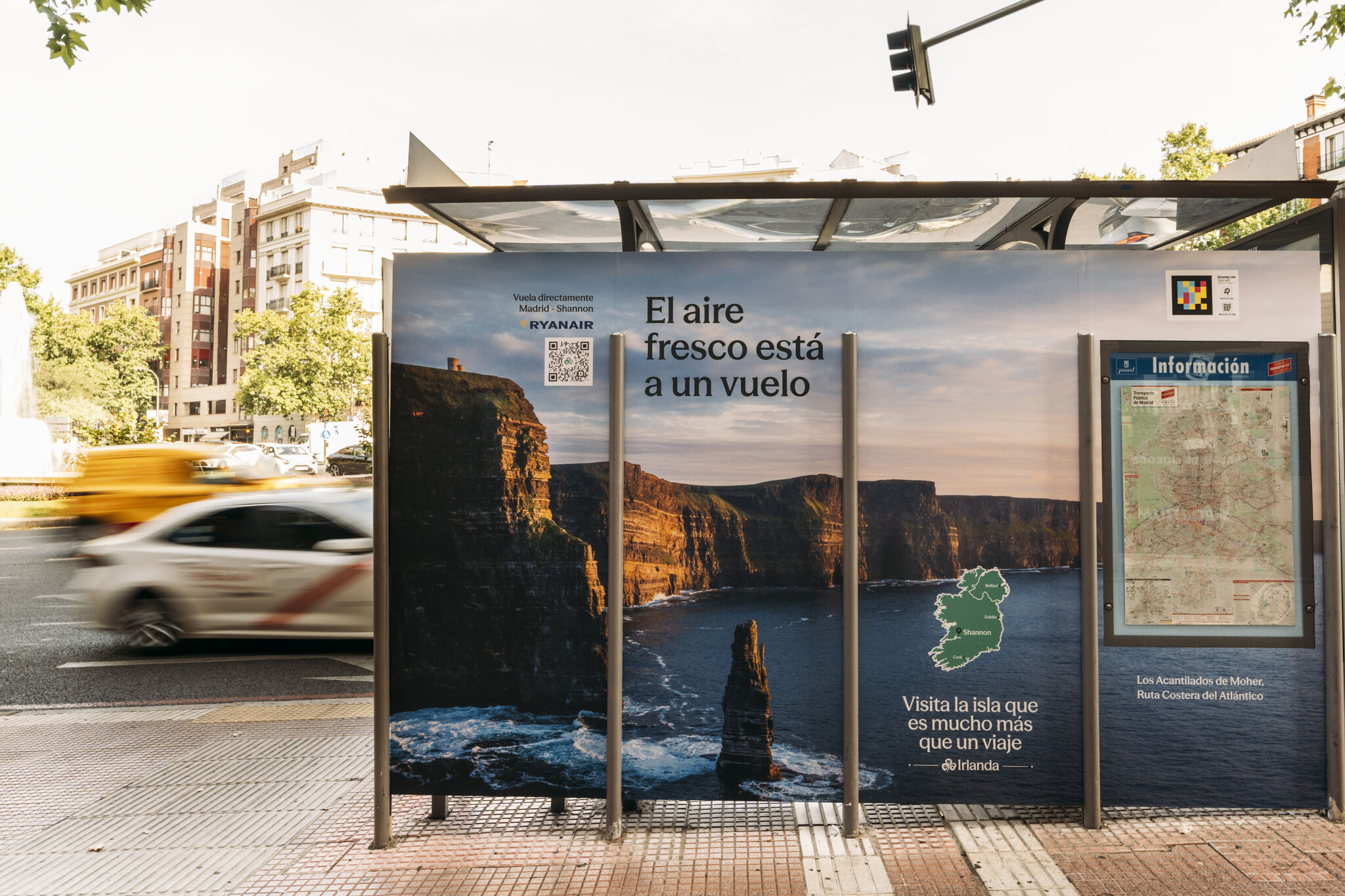
Several factors indicate the shift will hold. The physical case is the strongest because the EU Joint Research Centre modelled tourism demand across more than 1,300 European regions and found northern locations gaining in every warming scenario. Those gains grow as temperatures rise, so the advantage compounds with the warming that creates it. The demand case is almost as durable since pleasant and stable weather is the second-strongest criterion Europeans apply when choosing a destination, behind safety. Weather comfort has shaped that choice for as long as the sector has measured it. Destination marketing, such as the out-of-home campaign Tourism Ireland launched in Madrid, is beginning to make the 'coolcation' message a more pronounced narrative as it gets increasingly recognised as a significant brand asset.

Source: Tourism Ireland

Weather remains one driver among several, with exchange rates, sustained marketing investment and a wish to avoid crowded southern cities all feeding the same numbers. Statistics Norway links much of the country's foreign growth to favourable exchange rates and marketing. The trend is durable in its foundations without being a certainty in its scale, which is enough to justify investment and not enough to justify complacency.

What makes the northern position different is its place in the life cycle. Northern locations operate in a growth phase, meaning product mix and capacity limits can still be designed proactively. That planning advantage narrows with every year of double-digit growth. Reykjavik and Bergen are already managing the capacity and community questions that arrive with scale. Whether the north can absorb additional demand without reproducing the pressures it is currently relieving is being settled now as authorities are making long-term decisions about infrastructure. Growth arriving for reasons outside a destination’s control still has to be managed as deliberately as growth it has chosen.

The cool climate that draws incoming visitors is also becoming less dependable. The far north of Scandinavia recorded its longest heatwave on record in July 2025. Buildings and public spaces designed for cold perform poorly in sustained heat. Southern Europe has been adapting to high temperatures for generations, so the more urgent investment case for cooling, shade and heat-health planning may now sit in the region currently gaining from the shift. Cooler coastal destinations have a particular opening, since a sea breeze keeps coastal summers comfortable and may draw some demand away from inland city breaks.

What Changes Traveller Behaviour 

It should be noted that stated adaptation remains a minority behaviour. Extreme weather sits well below cost and personal finances among travellers’ concerns. Broad temperature increases across the continent allow travellers to gradually adjust their baseline expectations.

Nevertheless, high temperatures affect demographic groups differently. Europe’s summer of heatwaves has left a devastating toll in its wake, with more than 35,000 excess deaths. Older travellers and families with young children experience the highest health exposure while other groups are physiologically more resilient. Families with young children are also the group least able to move their dates since school terms fix them into the hottest weeks. Adapting the peak experience directly addresses their specific requirements, but necessitates substantial product development to create compelling experiences.

Official warnings drive the most significant changes in visitor decisions. Two in three Europeans would adapt a trip in response to climate-related disruption. Safety alerts prompt the highest response rates, with 68% adapting their trip and 15% cancelling. Those figures leave fewer than one in five who would carry on unchanged.

If travellers accommodate rising heat while reacting sharply to formal warnings, then the climate investment protecting revenue most directly sits in operations and in the systems that inform visitors, ahead of anything a campaign can achieve. Alert communication, heat-health warning systems and flexible booking terms belong in operational planning. The destinations treating them as such are protecting demand rather than reacting to its loss.

DTTT Take

Rising temperatures are altering the European tourism product and the infrastructure required to support it. Seasonality will move slowly because school terms and working patterns hold the summer window in place, but the product mix can move faster and that flexibility provides a clear strategic opportunity. 

  • Climate-Induced Seasonality Risk: A destination built on one climate-exposed product in a single season has concentrated its exposure. A mature product also has little room left to grow. Diversifying the product mix spreads that risk and renews the destination lifecycle. The development is most efficient where the new product runs on assets a destination already owns.
  • Driving Season Extension: Off-peak demand is thin in most markets and has to be built into the offer, then promoted, since a campaign alone will not create it. Southern winter sun shows the demand is reachable and lengthens the earning year. A less seasonal year also thins the off-peak margin and removes the quiet months a destination once used to recover, so that loss belongs in the model alongside the gain.
  • Experience and Adaptation as Core Assets: All-weather cultural product and physical measures such as shade, cooling and water management protect both the visitor experience and the workforce that delivers it. The readiness gap should be assessed routinely and direct infrastructural investments.
  • Alerts as Demand Influencers: Travellers act sharply on an official warning, which places the decisive lever in information and operations. Well-governed alert systems, heat-health guidance and no-fee rebooking belong under a clear owner and threshold, since a warning issued late or loosely carries a cost of its own.
  • Continued Change as the Working Assumption: Destinations will continue to experience a warming climate for the foreseeable future, so scenario planning and flexible capacity are what let a destination adjust year on year.
Subscribe to our Newsletter

Thank you! Your submission has been received!
Oops! Something went wrong while submitting the form.

Consecutive record-breaking summers are affecting the locations and periods most critical to the European travel industry. For DMOs, the pressing question is what warming temperatures do to the experiences they promote and the infrastructure that supports them.

Europe is heating faster than any other continent, at roughly twice the global average, and 2024 became the first calendar year to pass 1.5 degrees above pre-industrial levels. The summers of 2023 to 2026 have brought wildfires, heat warnings and site closures. Yet, tourism remains a critical economic driver, contributing $3 trillion to the European economy in 2025 according to WTTC data. Much of that revenue is earned in the regions and the months now under the greatest climatic strain.

Source: Copernicus

The data points to a slow redistribution of seasonal demand, but shifting peak travel windows remains the hardest challenge. Traditional work schedules and school holidays continue to hold the summer peak firmly in place. While all-inclusive beach holidays continue to drive summer demand during the current cost-of-living squeeze, relying on a single product category is no longer viable. As climate impacts influence travellers to adapt their habits and destinations, regional vulnerabilities are coming into sharp focus. Delaying product diversification is a risk that escalates every year. The exact nature of that required adaptation differs by region.

When Core Products Align With Peak Seasons

When a destination’s tourism model is built around narrow, weather-reliant seasons, climate change becomes an existential threat. Southern Europe highlights this vulnerability as scorching summer heatwaves push temperatures past the point of comfort, to the detriment of visitor experiences. In Athens, the Acropolis faces closure through the afternoon heat when temperatures exceed 39°C.

Against a backdrop of severe heatwaves, more than 600,000 hectares of land have already burnt in wildfires this year, following the record 1,034,000 hectares in 2025. Such crises significantly alter safety perceptions and traveller confidence, triggering a wave of last-minute cancellations. In the aftermath, targeted communication campaigns become a destination's most vital lifeline in guiding visitors to unaffected locations and, ultimately, in rebuilding a destination's image.

Visitor numbers have remained relatively steady, even as extreme heat affects the holiday experience. Strong booking figures often obscure the growing operational challenge of promoting a summer climate that is increasingly unpredictable and risks eroding long-standing destination appeal. The impact appears gradually in visitor reviews, repeat visitation rates and prices. A strategic response requires proactive planning before arrival numbers begin to decline. 

Destination strategies often focus on expanding the primary offer throughout the year. Winter sun holidays represent a practical application of that approach. Southern and Mediterranean destinations attracted the largest share of travellers in early 2026, with international arrivals increasing by 33% in Greece, with Cyprus up 9% and Croatia up 8%. A sun and beach destination transitioning into a year-round warm-weather location allows regions to reinvent their tourism offer using assets already at their disposal, renewing their visitor appeal and insulating themselves against future shocks.

That shift prompts a broader strategic question. As comfortable temperatures extend further into spring and autumn across a wider geographic area, the traditional summer season naturally expands. Southern European destinations begin that adaptation process from a strong starting point. Shade, shuttered buildings, water management and daily routines built around the midday heat are long-standing local practices. Those established behaviours require minimal new infrastructure investment.

When the Core Asset Itself is Disappearing 

A more advanced version of climate adaptation falls on destinations whose core asset is physically disappearing. Alpine ski resorts face it most directly. A study in Nature Climate Change found 53% of 2,234 European ski resorts at high risk of scarce snow at two degrees of warming. That figure rises to 98% at four degrees. Over the past half-century, Alpine snow-cover duration has dropped by 5.6% per decade, pushing snow cover to a six-century low.

When the foundational offer of an entire region shrinks this rapidly, it becomes clear that it has a finite existence. Losing that reliability prompts a fundamental question about the future of mountain communities and the infrastructure and economy that existed because of winter tourism. Contrary to the pessimistic outlook, destinations are still seeing strong performances, with growth in early 2026 by 14% in Italy, 7% in Austria and 5% in France. That strength is precisely what makes long-term action viable, since the revenue generated can be invested in exploring new business models instead of waiting for a downturn to mandate change.

Where that adaptation has been done well, secondary experiences are anchored in what the destination naturally excels at, turning established identity into fresh appeal. Visit Paganella in the Italian Dolomites developed mountain-bike trails on dormant mountain paths and now runs an extensive network served by the same lifts and cable cars that carry skiers in winter. By stretching the life of the original investment across multiple seasons, destinations gain the structural flexibility to maintain a steady stream of visitors.

Beyond Europe, Whistler has taken the approach further and draws more visits in summer than winter. Skiing still generates most of its revenue and that balance provides a fair measure of how much a second product can be expected to achieve in its early years.

Yet, many mountain destinations still close entirely between the two seasons. A closed period concentrates operations, gives staff and landscapes time to recover and keeps fixed costs down. A two-season model spreads climate risk across the year while raising operating costs, extending the employment offer and asking for new skills and new marketing. Both models remain viable. The destinations likely to struggle are those arriving at the answer by default without making an active strategic choice.

When the Shift Brings a Destination Growth

Redistribution produces gains alongside pressure, so destinations on the receiving end face a distinct challenge. In northern Europe, that gain now carries real volume behind it. SAS reported summer bookings from France up 22% in 2025 and bookings into northern Swedish cities up by 50-60%. Norway recorded 40.6 million guest nights in 2025 and Finland reached a record 7.2 million international overnight stays. Northern Europe led European growth in early 2026 with arrivals up 13%. The question that matters strategically is whether a destination should build capacity against numbers like those. That decision depends entirely on whether the shift represents a sustained trend or a temporary spike.

Several factors indicate the shift will hold. The physical case is the strongest because the EU Joint Research Centre modelled tourism demand across more than 1,300 European regions and found northern locations gaining in every warming scenario. Those gains grow as temperatures rise, so the advantage compounds with the warming that creates it. The demand case is almost as durable since pleasant and stable weather is the second-strongest criterion Europeans apply when choosing a destination, behind safety. Weather comfort has shaped that choice for as long as the sector has measured it. Destination marketing, such as the out-of-home campaign Tourism Ireland launched in Madrid, is beginning to make the 'coolcation' message a more pronounced narrative as it gets increasingly recognised as a significant brand asset.

Source: Tourism Ireland

Weather remains one driver among several, with exchange rates, sustained marketing investment and a wish to avoid crowded southern cities all feeding the same numbers. Statistics Norway links much of the country's foreign growth to favourable exchange rates and marketing. The trend is durable in its foundations without being a certainty in its scale, which is enough to justify investment and not enough to justify complacency.

What makes the northern position different is its place in the life cycle. Northern locations operate in a growth phase, meaning product mix and capacity limits can still be designed proactively. That planning advantage narrows with every year of double-digit growth. Reykjavik and Bergen are already managing the capacity and community questions that arrive with scale. Whether the north can absorb additional demand without reproducing the pressures it is currently relieving is being settled now as authorities are making long-term decisions about infrastructure. Growth arriving for reasons outside a destination’s control still has to be managed as deliberately as growth it has chosen.

The cool climate that draws incoming visitors is also becoming less dependable. The far north of Scandinavia recorded its longest heatwave on record in July 2025. Buildings and public spaces designed for cold perform poorly in sustained heat. Southern Europe has been adapting to high temperatures for generations, so the more urgent investment case for cooling, shade and heat-health planning may now sit in the region currently gaining from the shift. Cooler coastal destinations have a particular opening, since a sea breeze keeps coastal summers comfortable and may draw some demand away from inland city breaks.

What Changes Traveller Behaviour 

It should be noted that stated adaptation remains a minority behaviour. Extreme weather sits well below cost and personal finances among travellers’ concerns. Broad temperature increases across the continent allow travellers to gradually adjust their baseline expectations.

Nevertheless, high temperatures affect demographic groups differently. Europe’s summer of heatwaves has left a devastating toll in its wake, with more than 35,000 excess deaths. Older travellers and families with young children experience the highest health exposure while other groups are physiologically more resilient. Families with young children are also the group least able to move their dates since school terms fix them into the hottest weeks. Adapting the peak experience directly addresses their specific requirements, but necessitates substantial product development to create compelling experiences.

Official warnings drive the most significant changes in visitor decisions. Two in three Europeans would adapt a trip in response to climate-related disruption. Safety alerts prompt the highest response rates, with 68% adapting their trip and 15% cancelling. Those figures leave fewer than one in five who would carry on unchanged.

If travellers accommodate rising heat while reacting sharply to formal warnings, then the climate investment protecting revenue most directly sits in operations and in the systems that inform visitors, ahead of anything a campaign can achieve. Alert communication, heat-health warning systems and flexible booking terms belong in operational planning. The destinations treating them as such are protecting demand rather than reacting to its loss.

DTTT Take

Rising temperatures are altering the European tourism product and the infrastructure required to support it. Seasonality will move slowly because school terms and working patterns hold the summer window in place, but the product mix can move faster and that flexibility provides a clear strategic opportunity. 

  • Climate-Induced Seasonality Risk: A destination built on one climate-exposed product in a single season has concentrated its exposure. A mature product also has little room left to grow. Diversifying the product mix spreads that risk and renews the destination lifecycle. The development is most efficient where the new product runs on assets a destination already owns.
  • Driving Season Extension: Off-peak demand is thin in most markets and has to be built into the offer, then promoted, since a campaign alone will not create it. Southern winter sun shows the demand is reachable and lengthens the earning year. A less seasonal year also thins the off-peak margin and removes the quiet months a destination once used to recover, so that loss belongs in the model alongside the gain.
  • Experience and Adaptation as Core Assets: All-weather cultural product and physical measures such as shade, cooling and water management protect both the visitor experience and the workforce that delivers it. The readiness gap should be assessed routinely and direct infrastructural investments.
  • Alerts as Demand Influencers: Travellers act sharply on an official warning, which places the decisive lever in information and operations. Well-governed alert systems, heat-health guidance and no-fee rebooking belong under a clear owner and threshold, since a warning issued late or loosely carries a cost of its own.
  • Continued Change as the Working Assumption: Destinations will continue to experience a warming climate for the foreseeable future, so scenario planning and flexible capacity are what let a destination adjust year on year.
Subscribe to our Newsletter

Thank you! Your submission has been received!
Oops! Something went wrong while submitting the form.