Destination management was built to generate demand. DMO teams are now held accountable for social, environmental and structural outcomes the original model was never designed to deliver. CAMPUS reverses that sequence.
DTTT Knowledge Team
21 Aug 2026
In this piece
Destination management was built to generate demand. DMO teams are now held accountable for social, environmental and structural outcomes the original model was never designed to deliver, from climate impact to community wellbeing to the circular economy. CAMPUS takes that framework apart and rebuilds it in sequence, with demand placed last, where it becomes the earned result of everything before it.
This was the subject of a recent LinkedIn Live featuring Nicholas Hall, Founder and CEO of the Digital Tourism Think Tank, in conversation with Kristiina Kukkohovi, CEO of Visit Turku Archipelago and host partner for CAMPUS 2026, which runs from 30 September to 3 October in the Turku Archipelago. The conversation covered three overarching topics:
Why destinations keep solving the same problems in the wrong order.
What the six pillars of the new blueprint ask a destination to do differently.
What sustainable management looks like in practice, seen through Turku Archipelago as host partner.
The Wrong Order
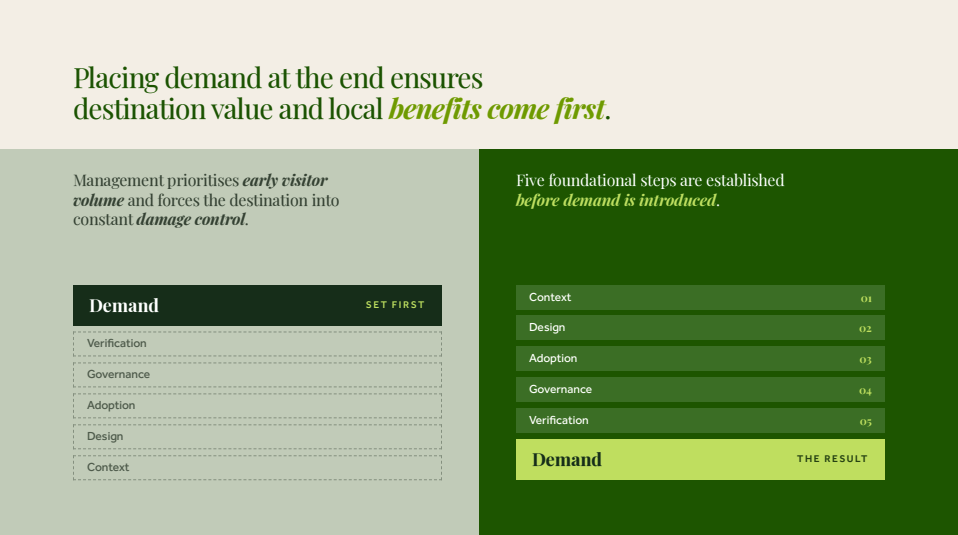
Most destinations manage demand first. Growing visitation becomes the priority before the underlying management work is in place, including deciding what the destination should become, who is accountable for it and how impact is measured. New markets are targeted and volume is pursued, while the destination absorbs whatever arrives. Everything that should have shaped that arrival comes afterwards, once the pattern is already set.
The evidence sits in the problems that never resolve. Seasonality is often set by the school calendar, so pushing for more visitors can add volume to a peak that is already full and leave the rest of the year untouched. Visitor spend leaks out of a destination because of how the local supply chain is built, so more visitors simply produce more leakage. Communities feel pressure when arrivals outpace the infrastructure around them, and higher visitor numbers make that worse rather than better.
Five Steps Before Demand
A destination that starts with demand is managing in reverse. It grows visitation first and works out what it actually wants to be afterwards, usually while managing the consequences of getting there too fast. CAMPUS reverses that order and treats demand as a result, arrived at only once five earlier management questions have answers:
Context, which means working out what matters most for your destination and which priorities carry the most weight for the place itself.
Design, which means setting out what a good outcome looks like, documented as models and best practices so it can be measured.
Adoption, which means understanding what drives uptake of good behaviour among businesses, residents and visitors, and how to effectively nudge the moveable middle.
Governance, which means establishing who decides and who is accountable, across the stakeholders and neighbouring destinations any working model has to hold together.
Verification, which means proving and communicating a claim, from regulatory reporting through to showing a visitor how much of each euro spent stays in the destination.
Demand, which follows last, once visitor flows and behaviours have a solid foundation to be shaped against.
Each pillar is a management decision a DMO has to make before demand generation has any real foundation to work from. CAMPUS builds that decision-making capability directly, through the seven themes that run across the programme and the six working instruments delegates take home.
Instruments, Not Frameworks
The sector is not short of principles. Charters, certifications and reporting standards already set out what good tourism should look like. What is missing sits underneath all of that, the instrument a small team can pick up and use to make the pillars operational.
CAMPUS builds those instruments during the event. That choice is the Adoption pillar in practice, not just in theory. A framework written elsewhere and issued to a destination gets filed away, while a framework a team builds alongside peers facing the same constraints gets used, because the people who built it are the people who have to run it.
Across the two days, 30 international speakers cover regenerative tourism, climate change mitigation, the circular economy and more, and dedicated working time runs through immersive sessions across the archipelago where peers from other DMOs build six practical instruments any destination team can adopt.
The Destination Consent Standard (Collaborative Progress). Where power actually sits with each stakeholder group, published audience by audience.
The Local Value Label (Circular Economy). A benchmarkable composite score, and the claim your evidence entitles you to make.
The AI Impact Test (Futures Thinking). To ensure technology acts as a value creator and clarify exactly where to draw the line.
The Content Prioritisation Model (Visitor Flows). To align marketing directly with wider destination goals.
The DMO Emissions Baseline (Climate Change Mitigation). Every activity line measured, with one named low-carbon substitution against each.
The Destination Health Index (Regenerative Action). Four dimensions reported separately, with the distance between them as the headline.
Delegates choose which two to work on and every group leaves with a working artefact carried into the post-CAMPUS material that shapes how the sector adopts it. The full detail behind each instrument, and what a working group produces from it, is set out in our CAMPUS briefing document.
Turku's Governance From Zero
Visit Turku Archipelago shows what the sequence looks like when a destination has no choice but to follow it. The organisation is three and a half years old, established with a formal mandate from three cities to unify a destination structure that had been fragmented, as it is across much of Europe. That mandate is the starting condition CAMPUS asks every destination to work backwards from: who has the authority to decide and on whose behalf.
There was no existing demand to inherit, so the governance question came first by necessity. Kristiina described the answer the organisation settled on: "We are just facilitating the strategy, they are the ones delivering." That is a specific allocation of authority, with strategic direction held centrally and delivery accountability sitting with the operators who run the businesses on the ground. It is also the reason adoption did not need to be forced. Decisions made with the people who have to carry them out get carried out.
That structure is what CAMPUS's Governance pillar is built to formalise elsewhere: not a single model transplanted between destinations, but a clear, documented answer to who decides and who delivers, tested against a destination that had to build the answer from nothing.
Growth as a Design Choice
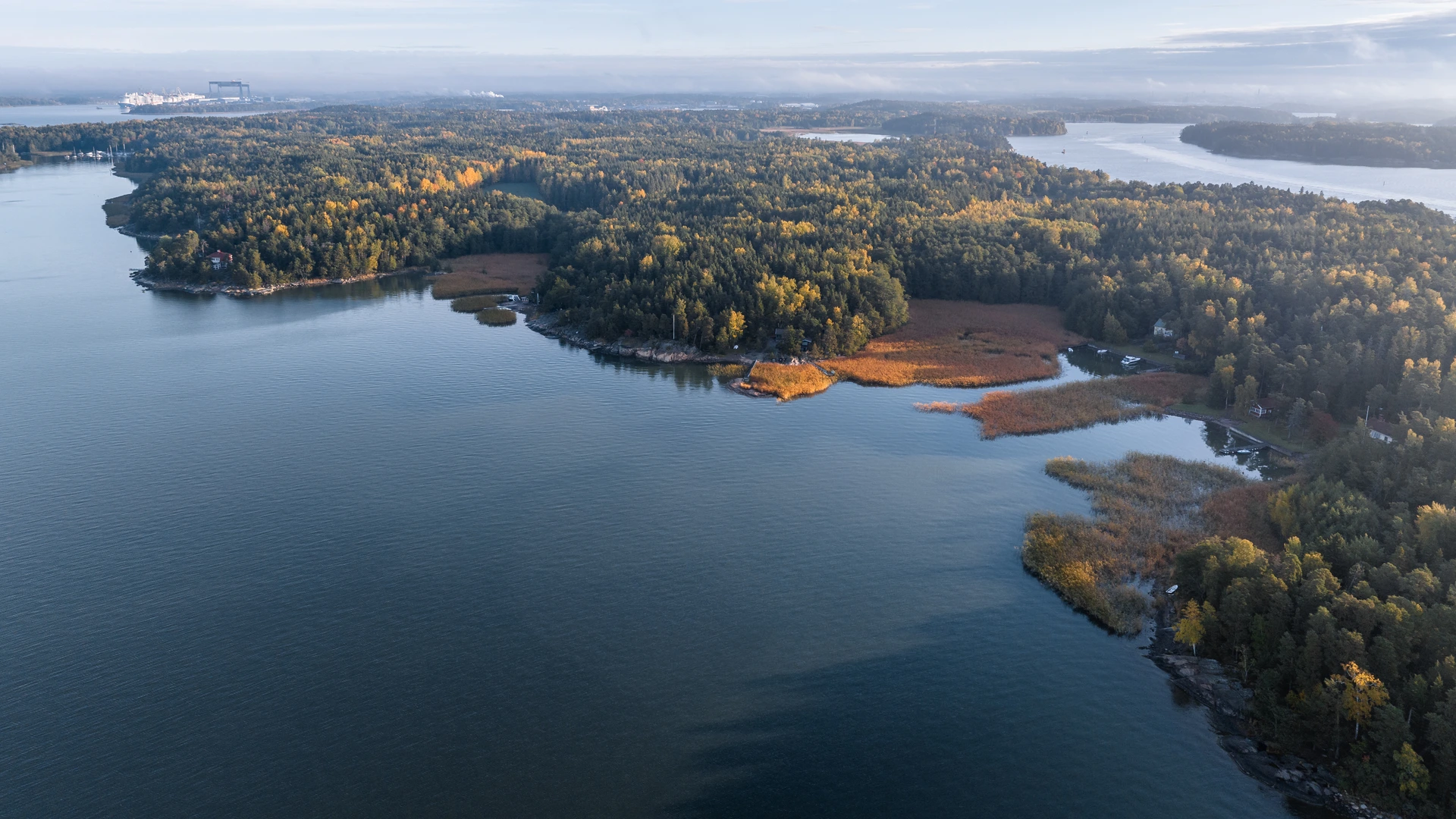
The Archipelago Sea is shallow and under pressure from agricultural runoff, and Kristiina put the underlying question directly, asking whether tourism could help that situation rather than add to it. The islands face a parallel problem, since the public sector cannot keep them populated on its own and needs working industry to stay viable. Tourism sits inside both problems as a condition of the place continuing to function, not as a growth target layered on top of it.
Kristiina was candid that growth is coming regardless of how ready the destination is for it, and equally honest about the consequence if it arrives too fast. Volume that outpaces infrastructure, society and culture degrades the experience for the traveller first and reaches residents and local businesses very soon after. A host partner naming that risk out loud is rare, and it is the clearest possible case for designing ahead of growth rather than repairing behind it.
That local practice is a starting point. Companies across the region already display a physical archipelago mark to show they are pursuing sustainability in daily operations, which is exactly the kind of informal signal the Local Value Label is built to turn into something benchmarkable across the whole sector.