Bringing Visitor Flow Management to the Local and Regional Level
Traditional DMO remits prioritise marketing growth over managing visitor flows and seasonality. Effective local frameworks must bridge this gap, aligning both roles and defining clear accountability when pressure mounts.
DTTT Knowledge Team
01 Sep 2026
In this piece
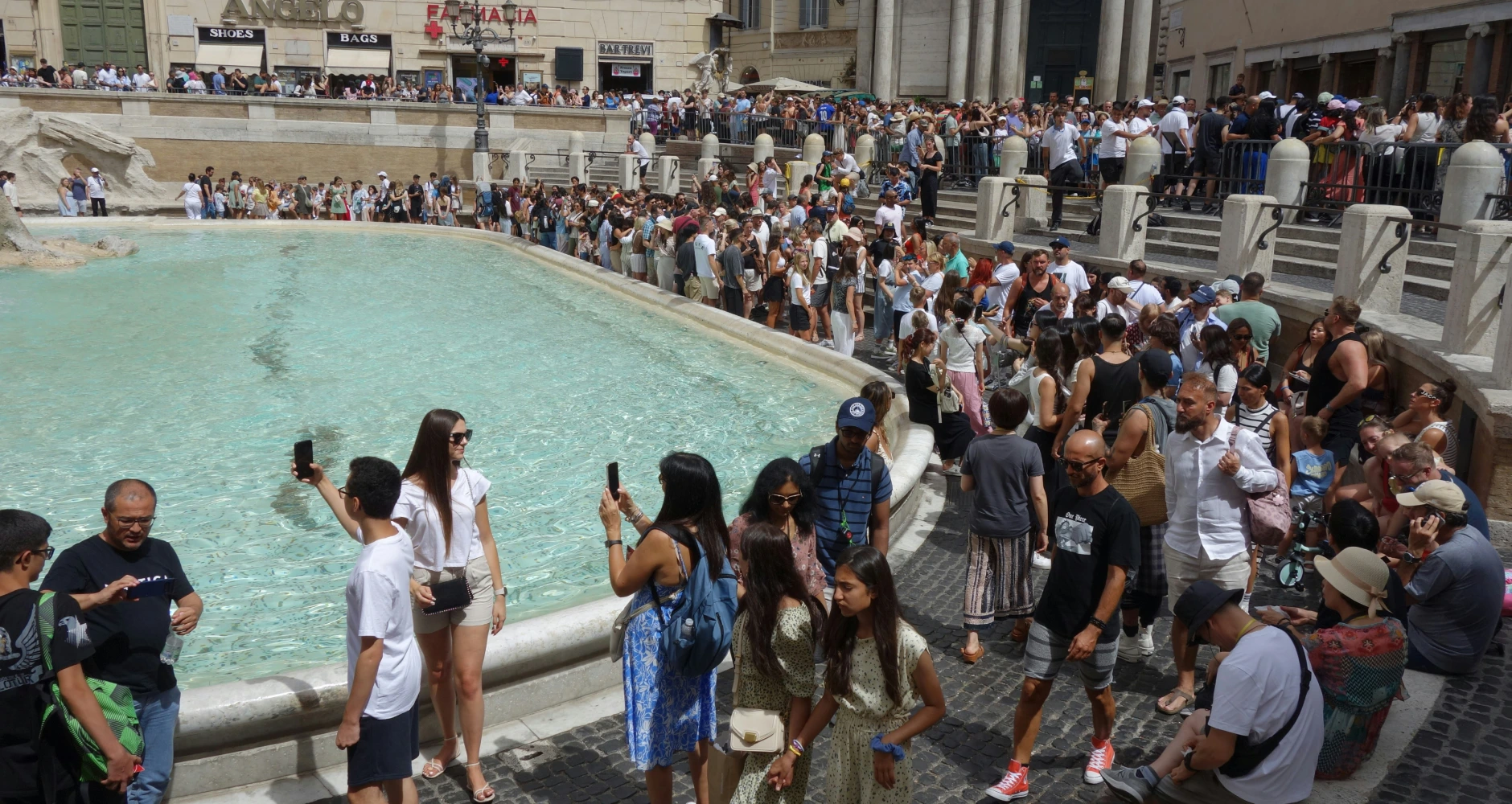
A country can perform well on aggregate tourism numbers while a single village high street or a coastal trail absorbs pressure that its infrastructure and community were never designed to handle. Visitor flow management has to function at that scale, far more granular than most national frameworks are built to address.
The organisations with the broadest mandate tend to sit furthest from where the pressure lands. National bodies set direction but rarely have the visibility to act at the level of a specific beach, street or trail on a Saturday in August. Local DMOs and municipalities have that visibility but often lack the authority, data systems or funding to act on it consistently. The traditional DMO remit has centred on marketing and growing visitor numbers, a function that sits in tension with the management role that flow and seasonality challenges actually require. A framework that works at the local and regional level depends on closing that gap: working out how those roles connect and who is accountable when the pressure falls between them.
What happens when capacity is exceeded
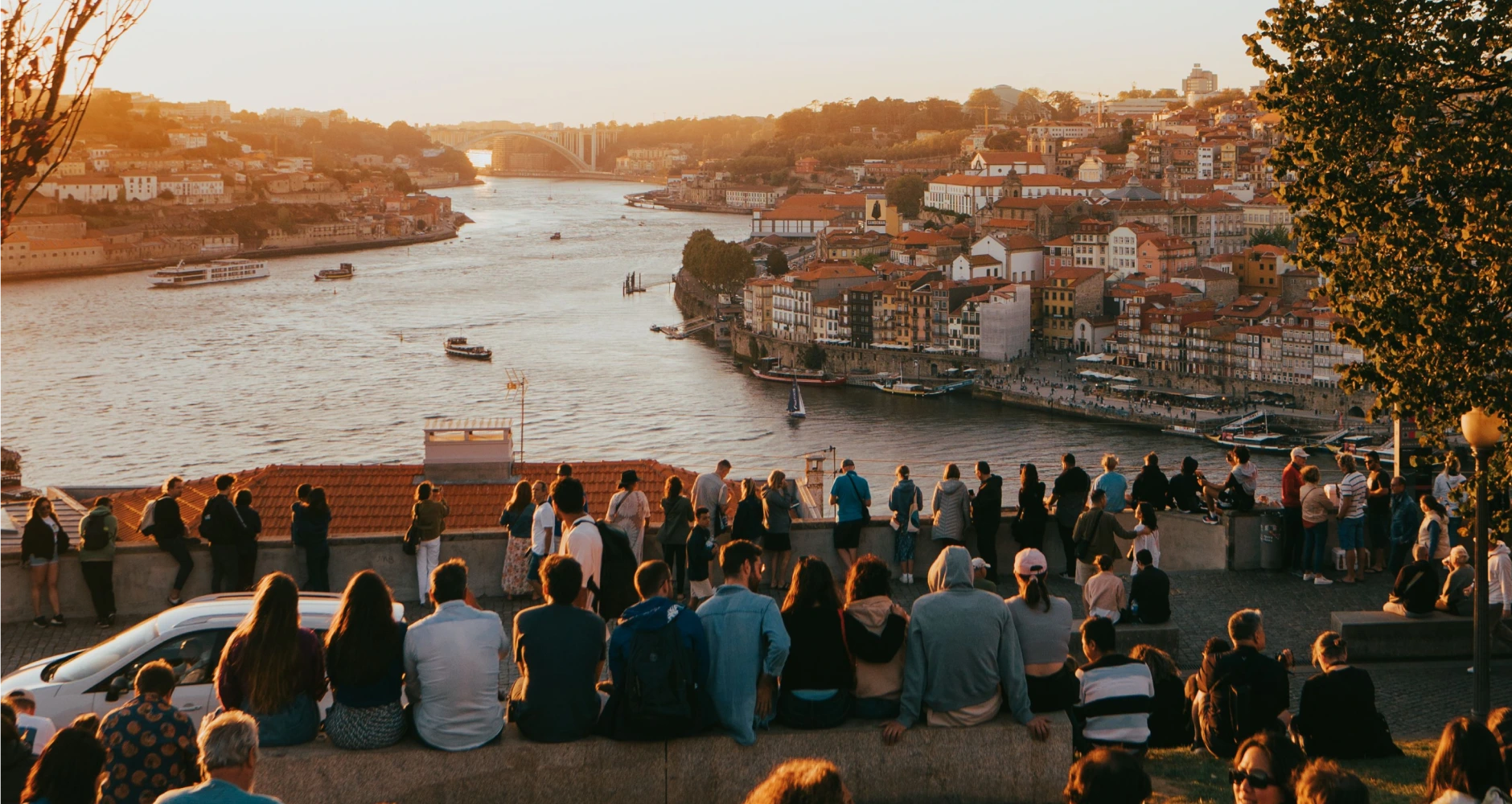
Every destination has thresholds at which visitor pressure starts to degrade the things that make it worth visiting. Carrying capacity in tourism covers ecological limits (the condition of natural assets and ecosystems), social limits (the point at which residents feel their quality of life is being eroded) and perceptual limits (the point at which visitors feel the experience has been diminished by crowding). A destination can be working well across most of its geography while one bay, one historic street or one monument absorbs more visitors than its fabric and community can sustain.
These effects build on each other. Degradation of a natural asset lowers its quality for everyone who follows. Perceived crowding is one of the strongest predictors of a poor visit, even when nothing else has gone wrong, so satisfaction falls as numbers climb. Strain on local services turns everyday inconvenience into resident resentment and rising living costs push residents out of the most visited areas, taking with them much of what gave the place its character.
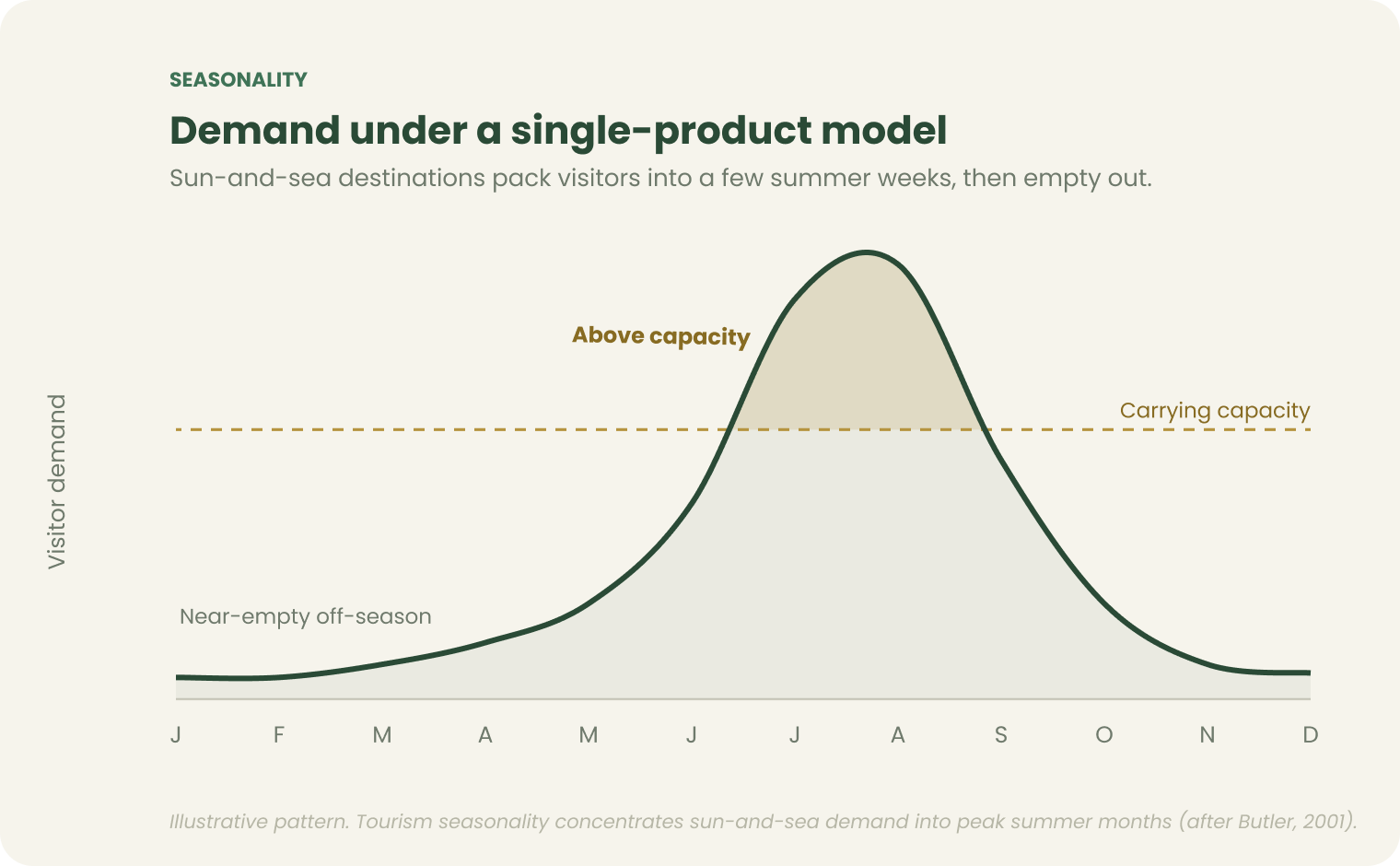
Seasonality concentrates all of this into a narrow window. When most of a year’s demand arrives in eight to twelve weeks, ecosystems, communities and services have no time to recover between cycles. Thresholds that would be manageable spread across the year are breached again and again in the same places.
The limits of single-product thinking
When a destination’s offer is built around one asset type in one season, demand has nowhere else to go. The same locations sit under pressure year after year and the case for investing in shoulder-season product is hard to make when the revenue to fund it only arrives at peak.
Residents live with this year-round. Peak pressure shows up in daily routines long before it registers in a visitor satisfaction survey. Resident sentiment surveys and community panels remain among the least-used inputs in destination management, even though they are among the most direct read-outs of where the social threshold is being crossed.
Source: Claude.ai generated
Building a multi-product offer
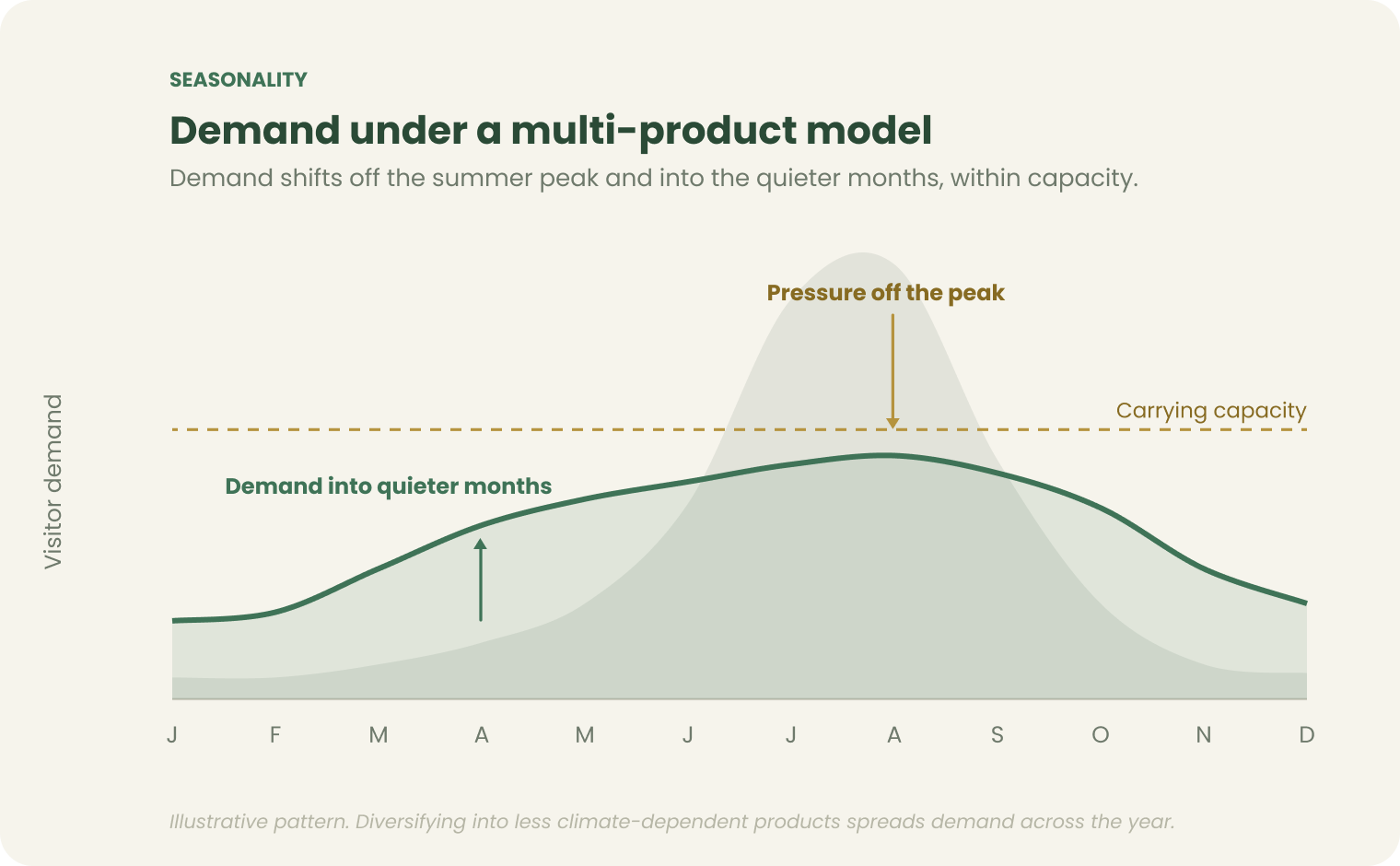
Cultural, historical and nature-based products tend to draw visitors more evenly across the year than beach or event-led tourism. A destination with a range of viable offers has more room to shape when demand arrives and which sites carry the load.
Source: Claude.ai generated
Route design is one of the more tested ways to spread visitors geographically and it has a clear limit. Ireland’s Wild Atlantic Way, a 2,500km coastal route developed by Fáilte Ireland, is estimated to generate around €3 billion a year for communities along it, with revenue up 59% between 2013 and 2023 and it has drawn international visitors into parts of the west coast that had seen little organised tourism before. Day-trip patterns at the Cliffs of Moher, where large numbers arrive and leave the same day without spending time in the surrounding area, show where route branding stops working: the route brings people in, but they only spread as far as the product waiting for them. Fáilte Ireland’s later development of Ireland’s Hidden Heartland and Ireland’s Ancient East follows from that, adding the product depth that gives dispersal somewhere to go beyond a branded road.
Dispersal holds up better when it is designed in from the start, before pressure has built. Destination British Columbia’s Invest in Iconics strategy, developed with Indigenous Tourism BC and launched globally in 2025, sets out distinct place brands across the whole province and across seasons, with geographic spread and year-round visitation as the organising idea.
The same logic applies before a visitor arrives. When airlines, regional bodies and DMOs point at the same geography at the point of sale, the itinerary spreads people from the start. VisitBritain’s GREAT Gateway Innovation Fund brings those parties together around regional gateway cities and positions them as entry points to a wider network. Its 2:1 matched funding requirement, combining cash and in-kind contributions from destinations and commercial partners, gives the industry a stake in where visitors go, not only in how many arrive.
Pricing as a management lever
Visitor fees are increasingly part of how destinations respond to flow pressure, but their effect depends almost entirely on how they are structured and who coordinates them.
São Miguel in the Azores introduced a municipal tourist tax of €2 a night in January 2025, coordinated through the Association of Municipalities of the Azores across five of the island’s six municipalities from the start, with the sixth joining in May 2025. The coordination mattered more than the rate. A patchwork approach, with each municipality setting its own charge, would have sent visitors mixed signals and undercut the shared reinvestment the tax is designed to fund. Officials projected it could raise around €10 million in its first year, with the revenue earmarked for environmental work and the infrastructure costs that visitor activity generates.
Whether fees can go further, set around when and where demand concentrates so that the busiest sites or peak weeks cost more, is the harder question. It needs real-time data sharing, agreed triggers and commercial coordination across accommodation, attractions and transport that most destinations are not yet set up to deliver.
Technology and smarter communication
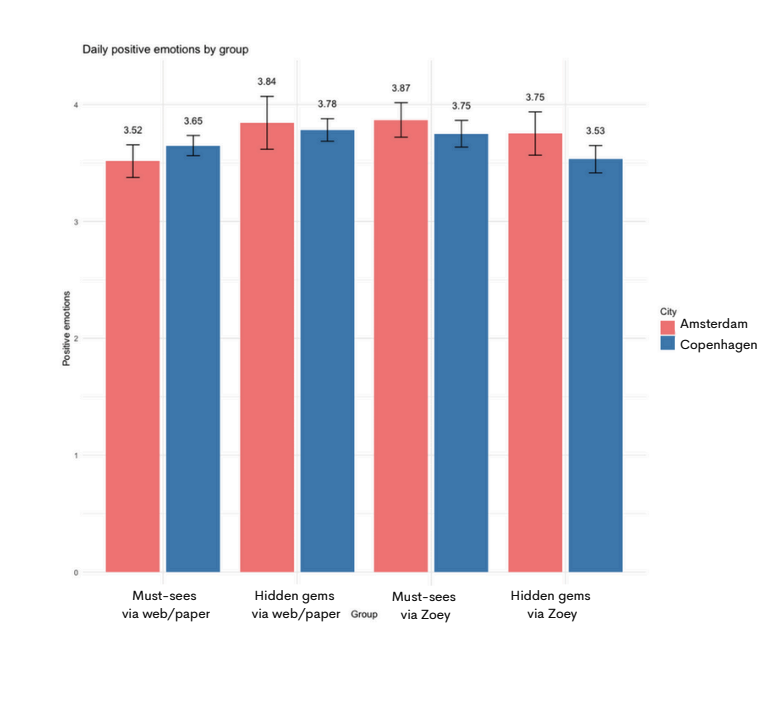
Visitor information tends to reinforce the patterns already in place: the most-visited sites get the most coverage and the same itineraries reach one wave of visitors after another. An experiment in the Dutch province of Overijssel tested the alternative, giving visitors a trip planner that surfaced the least-visited spots as the things worth seeing. Those visitors followed the recommendations and reported satisfaction equal to the group sent to the famous sites, which undercuts the assumption that steering people away from headline attractions spoils the trip. The tourism boards of Amsterdam and Copenhagen are now applying the same approach at city scale. AI recommendation tools take this further, shaping suggestions around a traveller’s interests and easing the pull of the high-traffic itinerary.
Promoting hidden gems without the groundwork in place moves pressure to a new location instead of easing it. Knowing the thresholds of individual sites, down to the single beach or street, is what lets a DMO redirect visitors with any confidence and it depends on the receiving places having the access, signage and local business readiness to absorb them before the signal goes out. That readiness rarely sits with one organisation, which is where managing flows becomes a shared problem across a destination.
What the framework actually needs
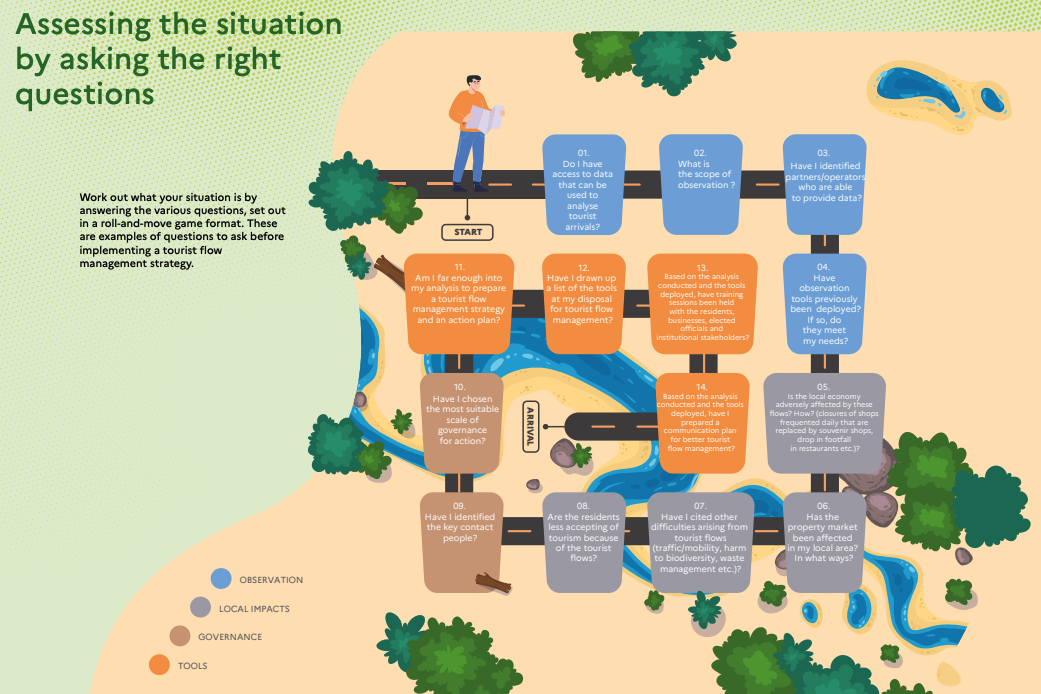
Marketing and digital tools work within the limits of what a place can physically handle and roads, car parks and sanitation reach those limits long before a marketing budget does. France’s national guide on visitor flow management, published in 2024 by its Directorate-General for Enterprise, sets out practical measures at that level, down to metering car parks at the most pressured sites. The most significant consideration is that infrastructure usually sits with different bodies, budgets and timelines from the marketing, so planning the two together becomes a clear administrative challenge.
A destination that tracks arrivals as its main measure of success will keep optimising for volume. Length of stay, spend per visit and resident satisfaction give a fuller picture of whether tourism is working for the places it runs through. Moving towards those measures is as much a political question as a technical one: national bodies and local operators often pull in different directions and better data tends to expose that tension without resolving it.
Alignment across those levels is the key enabler for successfully managing visitor flows: agreeing what success looks like, who measures it and who acts when the numbers point the wrong way. That is what makes local and regional framework hold. How a destination moves from a set of separate measures to a coherent way of managing flows and seasonality is the sort of question that only truly gets tackled through collaborative working sessions and open dialogue. CAMPUS 2026 is built around that difference. From 30 September to 3 October in the Turku Archipelago, Finland, destinations will turn questions like this one into approaches they can apply.