
Log in
Oops! Something went wrong while submitting the form.
Create an account
Oops! Something went wrong while submitting the form.


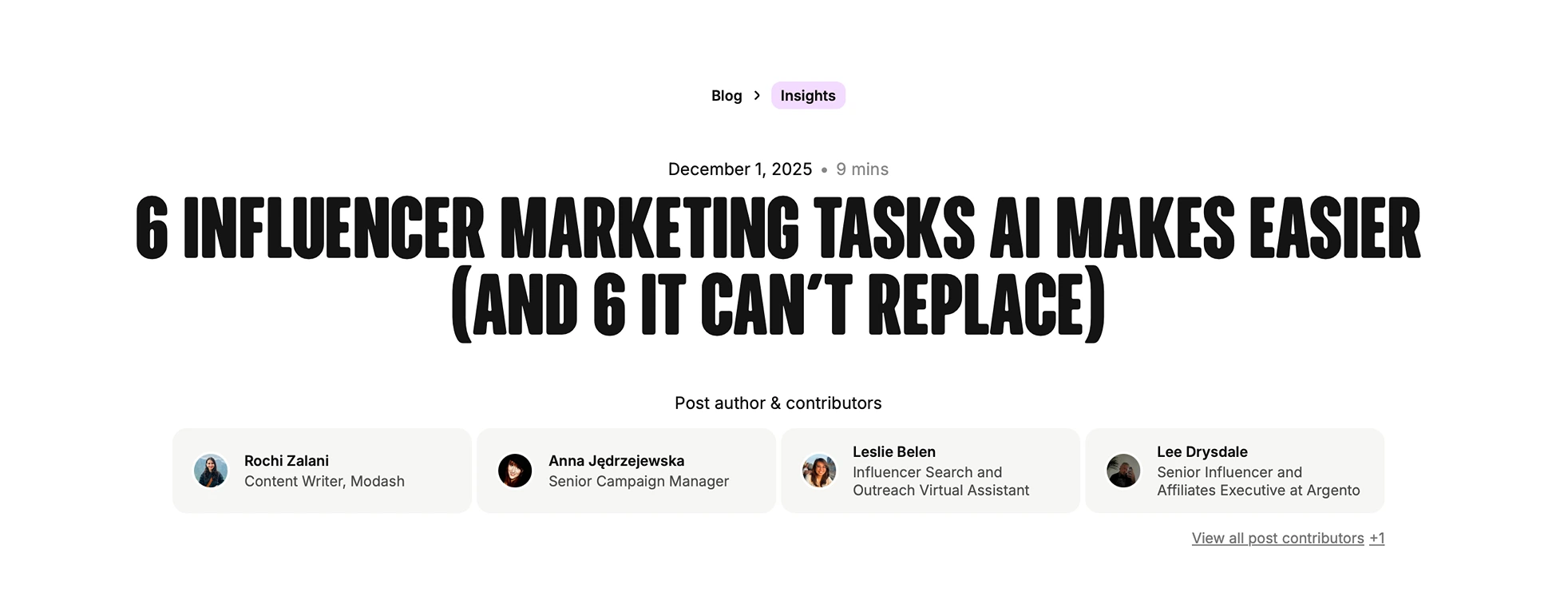
Published by Modash, an influencer marketing platform, this practical guide draws a clear distinction between the influencer marketing tasks where AI genuinely adds value and those where it falls short or risks undermining results. Rather than taking a broadly optimistic or sceptical position, the guide takes a task-by-task approach grounded in how practitioners are actually using AI tools.
The six tasks identified as genuinely easier with AI include managing influencer lists and content libraries at scale, drafting outreach messages, analysing performance data across campaigns, identifying creators by audience profile, generating content briefs and tracking brand mentions across platforms. In each case, the guide outlines the specific ways AI reduces manual workload without replacing strategic intent.
The six tasks identified as still requiring human expertise include building authentic creator relationships, negotiating partnership terms, assessing creative fit and brand alignment, making final influencer selection decisions, handling crisis or sensitive situations involving creators, and evaluating the cultural resonance of content. The guide argues that these tasks depend on contextual judgement, relationship dynamics and real-world reading of culture that AI systems cannot reliably replicate.
For destination marketing teams running influencer programmes, the guide offers a practical framework for deciding where to invest in AI tooling and where to protect human bandwidth.
Published by Modash, an influencer marketing platform, this practical guide draws a clear distinction between the influencer marketing tasks where AI genuinely adds value and those where it falls short or risks undermining results. Rather than taking a broadly optimistic or sceptical position, the guide takes a task-by-task approach grounded in how practitioners are actually using AI tools.
The six tasks identified as genuinely easier with AI include managing influencer lists and content libraries at scale, drafting outreach messages, analysing performance data across campaigns, identifying creators by audience profile, generating content briefs and tracking brand mentions across platforms. In each case, the guide outlines the specific ways AI reduces manual workload without replacing strategic intent.
The six tasks identified as still requiring human expertise include building authentic creator relationships, negotiating partnership terms, assessing creative fit and brand alignment, making final influencer selection decisions, handling crisis or sensitive situations involving creators, and evaluating the cultural resonance of content. The guide argues that these tasks depend on contextual judgement, relationship dynamics and real-world reading of culture that AI systems cannot reliably replicate.
For destination marketing teams running influencer programmes, the guide offers a practical framework for deciding where to invest in AI tooling and where to protect human bandwidth.


