
Log in
Oops! Something went wrong while submitting the form.
Create an account
Oops! Something went wrong while submitting the form.


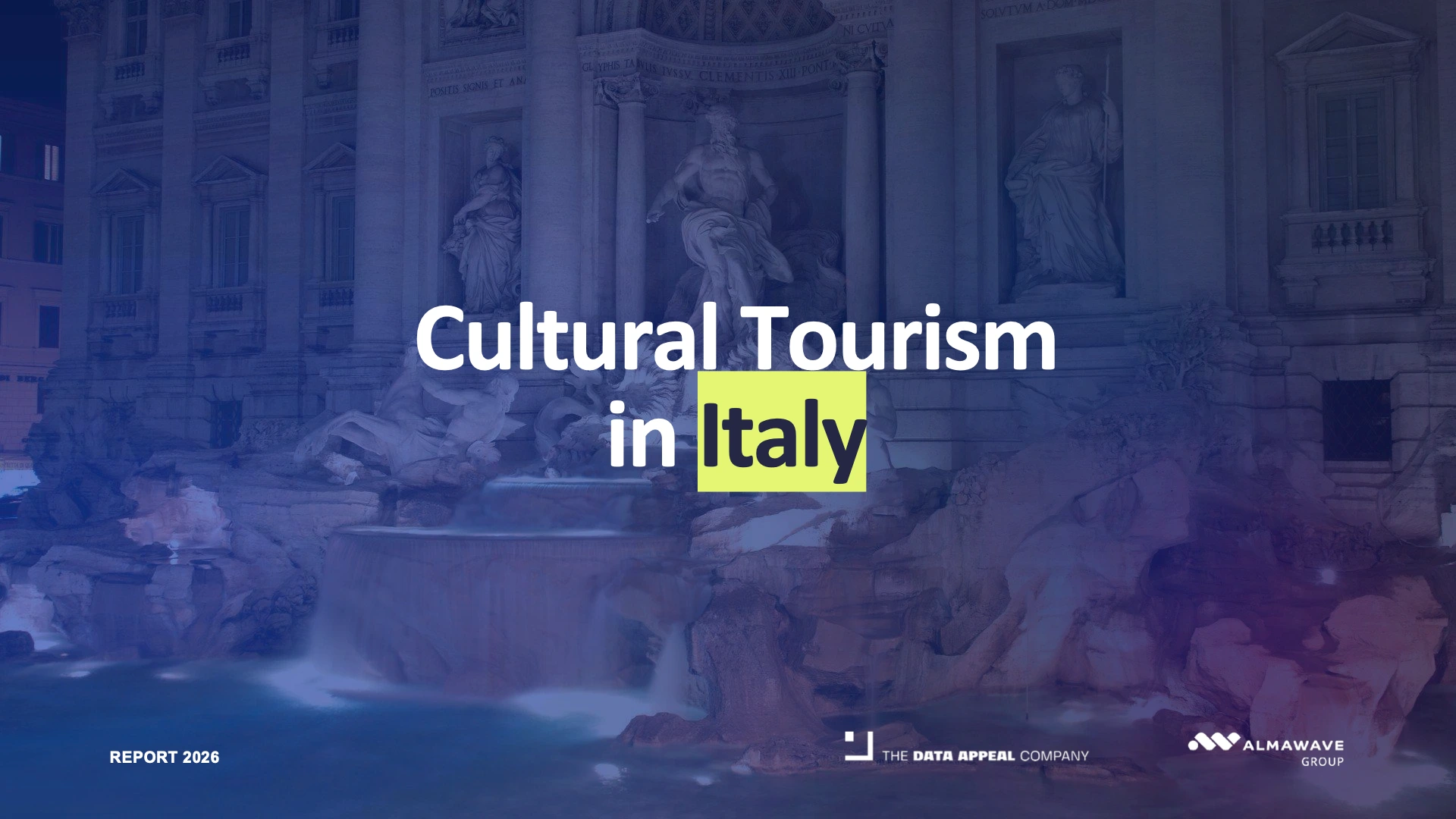
Published by The Data Appeal Company in partnership with Mabrian, this annual report analyses digital traces — online reviews, sentiment data and platform activity — across Italy's major art cities throughout 2025. The report covers traveller motivation, satisfaction trends, attraction performance, accommodation data and seasonal patterns.
The headline finding is that Italy remains chosen primarily for culture, with arts and culture cited as the leading travel motivation (34.7%). Overall digital trace volume across Italy's art cities showed a slight decline in 2025 compared to 2024, though sentiment improved across nearly all major cities. Venice recorded the strongest year-on-year increase in sentiment (+1.79), and Trevi Fountain saw the largest growth in review volume (+67% year on year).
The most reviewed cultural attractions nationally were the Trevi Fountain, the Colosseum and Milan Cathedral. Among museums, the Leonardo da Vinci Interactive Museum in Florence, the Vatican Museums and Pompeii Archaeological Park led the ranking. The report notes growing interest in interactive experiences, which correlate with higher visibility and satisfaction scores.
The accommodation picture is relatively stable: OTA saturation is declining slightly across most cities as direct bookings increase, with the exception of Naples. Rates are rising in Turin and Palermo but falling in Venice. The report identifies a growing appeal for the low and shoulder seasons, driven by milder temperatures and more accessible pricing — a positive signal for deseasonalisation.
For DMOs managing cultural destination strategy, the report provides a granular, data-led snapshot of where demand is growing, what visitors are saying and how the accommodation market is responding.
Published by The Data Appeal Company in partnership with Mabrian, this annual report analyses digital traces — online reviews, sentiment data and platform activity — across Italy's major art cities throughout 2025. The report covers traveller motivation, satisfaction trends, attraction performance, accommodation data and seasonal patterns.
The headline finding is that Italy remains chosen primarily for culture, with arts and culture cited as the leading travel motivation (34.7%). Overall digital trace volume across Italy's art cities showed a slight decline in 2025 compared to 2024, though sentiment improved across nearly all major cities. Venice recorded the strongest year-on-year increase in sentiment (+1.79), and Trevi Fountain saw the largest growth in review volume (+67% year on year).
The most reviewed cultural attractions nationally were the Trevi Fountain, the Colosseum and Milan Cathedral. Among museums, the Leonardo da Vinci Interactive Museum in Florence, the Vatican Museums and Pompeii Archaeological Park led the ranking. The report notes growing interest in interactive experiences, which correlate with higher visibility and satisfaction scores.
The accommodation picture is relatively stable: OTA saturation is declining slightly across most cities as direct bookings increase, with the exception of Naples. Rates are rising in Turin and Palermo but falling in Venice. The report identifies a growing appeal for the low and shoulder seasons, driven by milder temperatures and more accessible pricing — a positive signal for deseasonalisation.
For DMOs managing cultural destination strategy, the report provides a granular, data-led snapshot of where demand is growing, what visitors are saying and how the accommodation market is responding.


