
Log in
Oops! Something went wrong while submitting the form.
Create an account
Oops! Something went wrong while submitting the form.


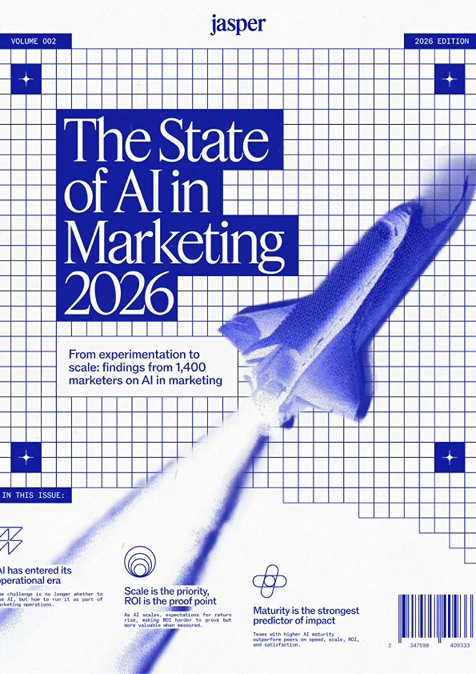
In just one year, AI usage, investment, and leadership commitment have accelerated significantly, shifting the focus from adoption to execution. In 2026, the main challenge is no longer whether to use AI, but how to run it as part of the marketing function. This shift introduces a new level of accountability. As teams move beyond experimentation, AI is no longer evaluated on potential or productivity gains alone. Success is increasingly defined by the ability to scale AI reliably and deliver sustained business value.
AI is embedded in core marketing workflows, and expectations for return have risen accordingly. At the same time, as AI scales, the definition of value has expanded beyond speed and efficiency, making ROI more difficult to prove as scrutiny increases Operating AI at this level requires strong governance, clear ownership and disciplined measurement. AI must be treated as core marketing infrastructure, supported by operating models that align strategy with day-to-day execution.
To understand how marketing organisations are navigating this shift, we surveyed 1,400 marketers across industries, roles, and company sizes. This research examines how teams are operationalising AI at scale, how that progress compares to last year’s findings, where friction remains, and what separates true AI leaders from the rest.
In just one year, AI usage, investment, and leadership commitment have accelerated significantly, shifting the focus from adoption to execution. In 2026, the main challenge is no longer whether to use AI, but how to run it as part of the marketing function. This shift introduces a new level of accountability. As teams move beyond experimentation, AI is no longer evaluated on potential or productivity gains alone. Success is increasingly defined by the ability to scale AI reliably and deliver sustained business value.
AI is embedded in core marketing workflows, and expectations for return have risen accordingly. At the same time, as AI scales, the definition of value has expanded beyond speed and efficiency, making ROI more difficult to prove as scrutiny increases Operating AI at this level requires strong governance, clear ownership and disciplined measurement. AI must be treated as core marketing infrastructure, supported by operating models that align strategy with day-to-day execution.
To understand how marketing organisations are navigating this shift, we surveyed 1,400 marketers across industries, roles, and company sizes. This research examines how teams are operationalising AI at scale, how that progress compares to last year’s findings, where friction remains, and what separates true AI leaders from the rest.


