Redefining Tourism with Data and AI: The Canadian Tourism Data Collective
The Canadian Tourism Data Collective uses AI and 230+ datasets to unify industry insights, driving smarter, more equitable growth across Canada.
The challenge in tourism has never been a shortage of data, especially since destinations have been tracking visitor numbers, spending patterns, origin markets and seasonal flows for decades. What most lack, however, is a way to seamlessly connect different pieces of information. Data sits in silos, methodologies differ between organisations and the intelligence needed to plan investment or guide policy remains fractured across systems that don't talk with each other.
When COVID-19 brought travel to a halt, these deep structural gaps were exposed in the sector. Canada’s tourism industry, like those in most countries, endured a long and uneven recovery. Navigating that difficult period proved that recovery meant going beyond simply restoring past activity levels to actively building the shared infrastructure for long-term resilience. This realisation served as a powerful catalyst for change, placing a spotlight on the need for shared data infrastructure to improve coordination.
Continue reading...
Get access to 100s of case studies, workshop templates, industry leading events and more.
The challenge in tourism has never been a shortage of data, especially since destinations have been tracking visitor numbers, spending patterns, origin markets and seasonal flows for decades. What most lack, however, is a way to seamlessly connect different pieces of information. Data sits in silos, methodologies differ between organisations and the intelligence needed to plan investment or guide policy remains fractured across systems that don't talk with each other.
When COVID-19 brought travel to a halt, these deep structural gaps were exposed in the sector. Canada’s tourism industry, like those in most countries, endured a long and uneven recovery. Navigating that difficult period proved that recovery meant going beyond simply restoring past activity levels to actively building the shared infrastructure for long-term resilience. This realisation served as a powerful catalyst for change, placing a spotlight on the need for shared data infrastructure to improve coordination.
Continue reading...
Get access to 100s of case studies, workshop templates, industry leading events and more.
The challenge in tourism has never been a shortage of data, especially since destinations have been tracking visitor numbers, spending patterns, origin markets and seasonal flows for decades. What most lack, however, is a way to seamlessly connect different pieces of information. Data sits in silos, methodologies differ between organisations and the intelligence needed to plan investment or guide policy remains fractured across systems that don't talk with each other.
When COVID-19 brought travel to a halt, these deep structural gaps were exposed in the sector. Canada’s tourism industry, like those in most countries, endured a long and uneven recovery. Navigating that difficult period proved that recovery meant going beyond simply restoring past activity levels to actively building the shared infrastructure for long-term resilience. This realisation served as a powerful catalyst for change, placing a spotlight on the need for shared data infrastructure to improve coordination.
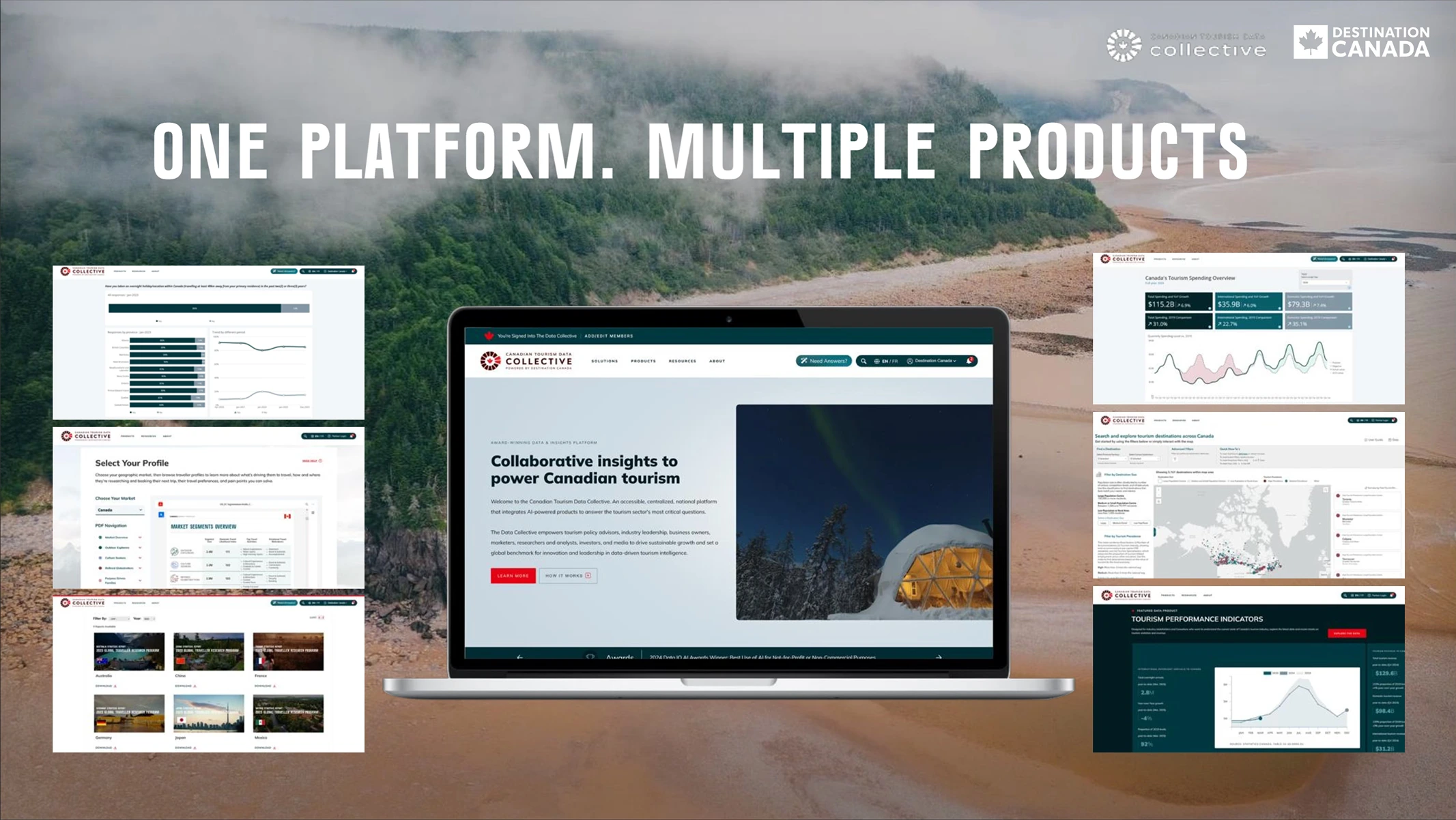
The Canadian Tourism Data Collective, developed by Destination Canada, was built specifically to answer that need. As the first national platform to unite over 230 datasets and 34 billion rows of data into a single AI-powered environment, the initiative has completely transformed how Canada’s tourism industry understands, measures and acts on granular insights. The ingenuity and highly developed user experience of this platform resulted in it winning the Partnership Award at the X. Awards.
By creating a unified, AI-powered data environment, the Data Collective transforms how insights are shared and applied across all levels of government, strengthening the collective intelligence of Canada’s tourism ecosystem. This data infrastructure enables smarter investment, more equitable growth and evidence-based decisions that reflect the social, cultural and environmental dimensions of success identified in Destination Canada’s Tourism 2030 strategy.
In the short term, it accelerates the strategy’s goals of alignment and accountability, ensuring that partners across all levels of government and industry are working from a shared foundation of truth. In the long term, it positions Canada’s visitor economy for adaptive, insight-driven growth, powered by advanced analytics and responsible AI.
Built for the Industry
From the outset, Destination Canada spent extensive time engaging with partners across the tourism sector to understand their challenges and needs. By consulting provincial organisations, regional and city destinations and private operators, they ensured this diverse network shaped every feature of the platform. Guided by those voices, the Canadian Tourism Data Collective was developed iteratively, with partners co-designing, testing early and refining continuously.
The result is a suite of interconnected data solutions, each addressing a distinct dimension of how Canada’s tourism industry understands and acts on data. This includes:
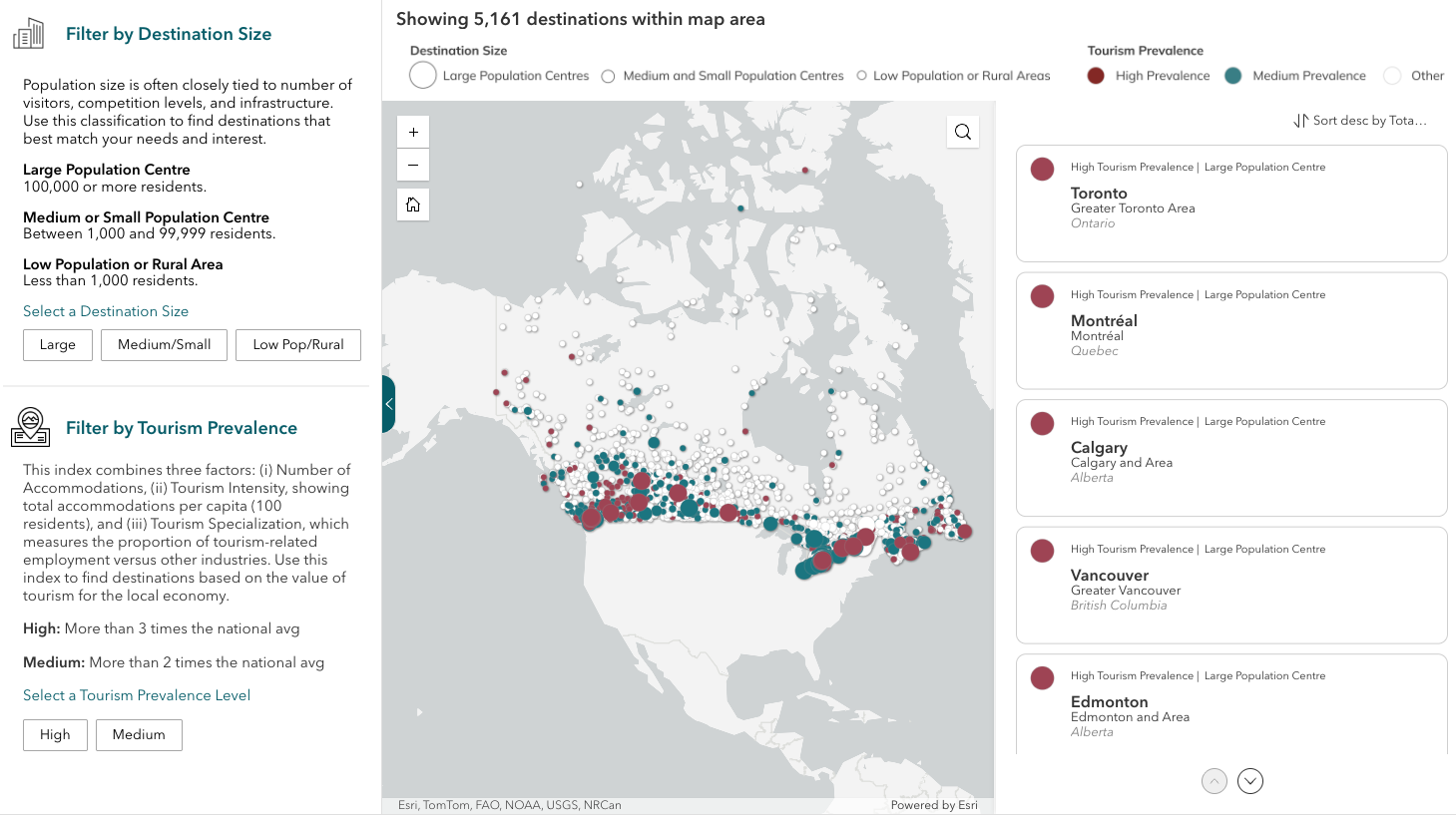
TourismScapes, whichmaps Canada’s tourism landscape across over 5,100 destinations, revealing seasonality, employment patterns, key assets and the business mix. For destinations of any size, it provides a basis for identifying strengths, gaps and opportunities that would otherwise require significant independent research investment.
Traveller Twin AItransforms static traveller segmentation into interactive, conversational personas using generative AI. Marketers and planners can test scenarios, explore audience responses and personalise their approaches in ways that static reports cannot support.
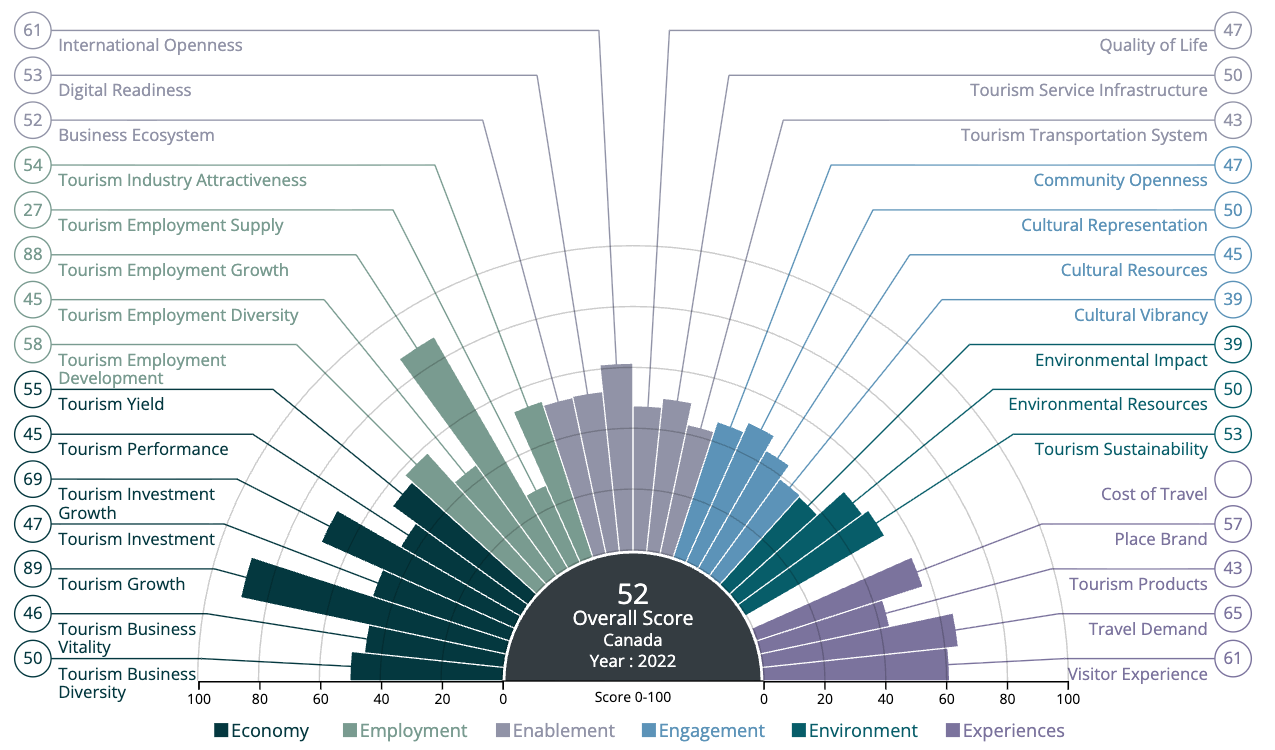
The Wealth and Well-Being Indexextends the platform’s scope beyond economic data, capturing tourism’s contribution to social, cultural and environmental development. This broadens the definition of success, giving destinations a basis for demonstrating how the visitor economy serves residents and communities alongside visitors.
The Canadian Tourism Data Collective’s technical capabilities are considerable, but the more significant achievement may be the partnership model underpinning it. Bringing together organisations that had previously operated independently required sustained engagement, shared governance and a development process that gave every partner a stake in the outcome. That model has held. The platform now serves over 51,000 active users and 79 subscribing DMOs across Canada, with a 93% annual partner retention rate and a 22% increase in subscribers in 2025 compared to 2024.
Partners report faster insight generation, more efficient use of research resources and a measurable shift toward data-informed decisions shaping funding, policy and strategy. Crucially, the platform has extended these capabilities to destinations that previously lacked access to them. Rural destinations and small tourism operators now draw on the same intelligence as provincial organisations and large businesses. For a country of Canada’s geographic scale and diversity, this equity is one of the platform's most consequential outcomes.
Beyond individual decisions, the platform has contributed to a broader change in how the Canadian tourism industry operates. Data literacy has risen across the sector and the expectation that strategy should be informed by shared evidence has grown alongside it. That shift has positioned Canada as an internationally recognised leader in tourism intelligence.
The Canadian Tourism Data Collective demonstrates what becomes possible when an entire sector agrees to see itself clearly, act collectively and grow strategically. This offers a model that other national tourism organisations can learn from. While the initiative required significant investment, the underlying approach is highly transferable. Investing in shared infrastructure, building iteratively with users and defining success in terms that extend beyond economic metrics are choices available to any DMO.
The platform’s ongoing development shows how data solutions maintain their relevance. By introducing features like predictive modelling and conversational AI, the initiative reflects a continued investment in anticipating change. Ultimately, such a forward-looking commitment is what keeps the system consistently valuable.
Key Takeaways
Build shared infrastructure before shared strategy: When data systems are fragmented and operate independently, so are the decisions that follow from them. However, investing in common metrics, standardised collection methods and a unified platform creates the foundation for evidence-based alignment across an entire industry, regardless of the scale of individual organisations within it.
Design for the whole destination ecosystem: Making intelligence tools accessible to smaller destinations, alongside large ones, produces more equitable planning across the entire sector. Prioritising this kind of inclusion right from the design stage ensures the resulting platforms serve a wider range of needs and secure broader buy-in from the outset.
Redefine what success measures: Platforms that capture social, cultural and environmental dimensions of tourism impact alongside economic metrics give destinations a more complete basis for communicating the sector's true value. Broadening the definition of success in turn supports the development of more resilient destination development strategies.
Co-develop with users: Building data tools through iterative development with the people who will use them produces platforms that address real needs and remain relevant over time. User-centric development, sustained beyond the build process, is what keeps a platform in use years after launch.
Treat partnership as a design challenge: Multi-sector collaboration at scale requires shared governance, clear accountability and a process that gives every partner a stake in the outcome. The structural work of building and sustaining partnerships is inseparable from the work of building the platform itself.
Future-focused ambition: Forward-looking tools, predictive modelling, scenario testing and conversational AI shift how organisations allocate resources and respond to changes in the visitor economy. The gap between a reactive and a proactive industry is, in large part, a question of designing platforms with the intention that they will continue to evolve and having a committed user base.
Published on:
March 2026
About the contributor
SUSTAINABILITY LEADERSHIP PROGRAMME
Become a certified Sustainability Advocate
Created for destinations around the world, this programme will provide the insight to help you become a sustainability leader within your organisation.
Designed to teach you how to master must-have tools and acquire essential skills to succeed in managing your destination or organisation, be ready to challenge all of your assumptions.
Designed to teach you how to master must-have tools and acquire essential skills to succeed in managing your destination or organisation, be ready to challenge all of your assumptions.