The Düsseldorf City Quest: Turning Urban Heritage into a Playful Digital Experience
As DMOs look for new ways to shift visitor behaviour, distribute footfall and reach younger audiences, game-based experiences are proving their value.
Featuring
SpotAR, Düsseldorf Tourismus
DTTT Knowledge Team
In this piece
As DMOs look for new ways to shift visitor behaviour, distribute footfall and reach younger audiences, game-based experiences are proving their value as a practical destination management tool. Yet, most implementations still rely on dedicated apps. Such approaches risk encountering the 'app fatigue' barrier, where visitors are increasingly reluctant to download new apps onto their personal devices.
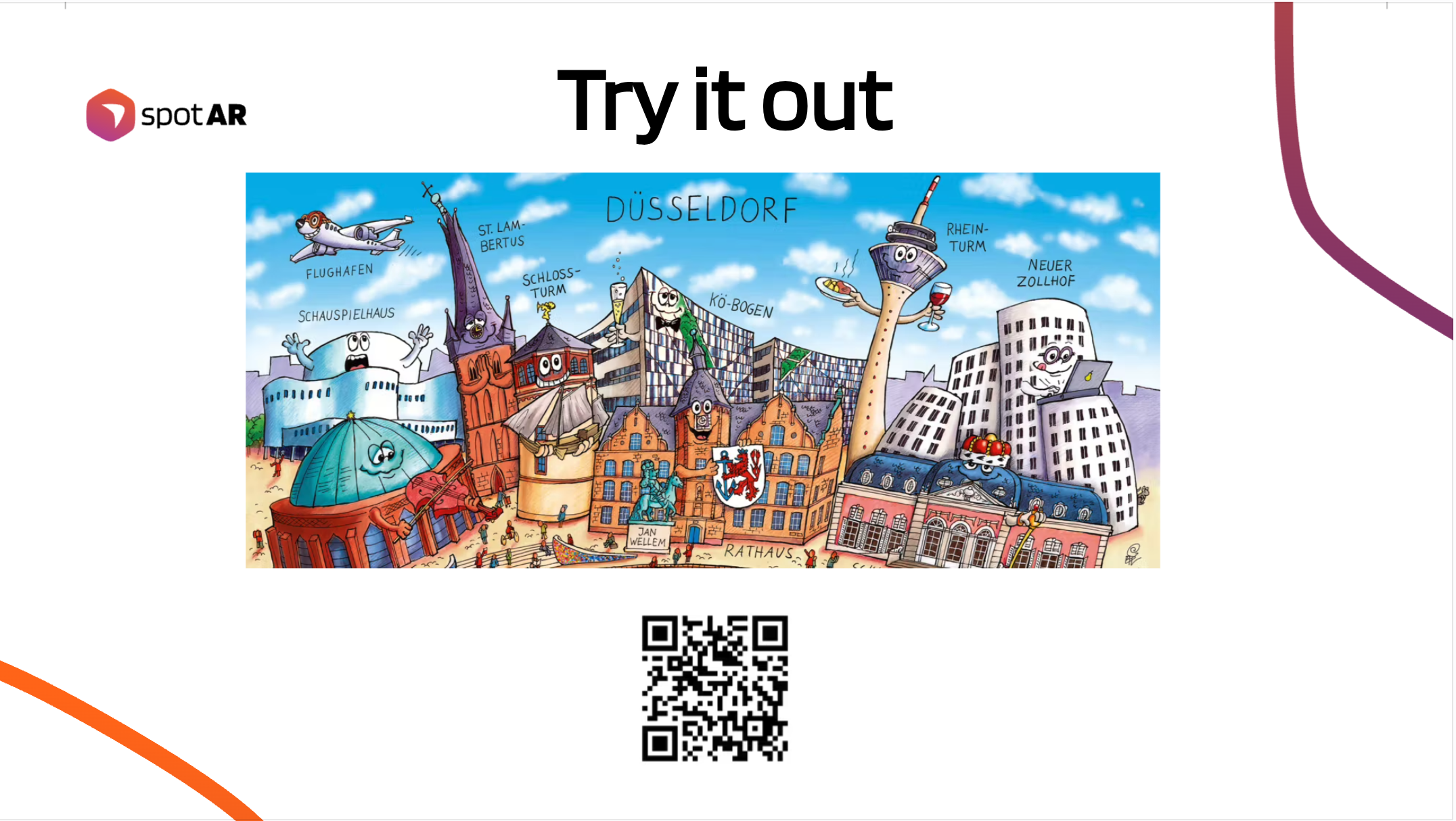
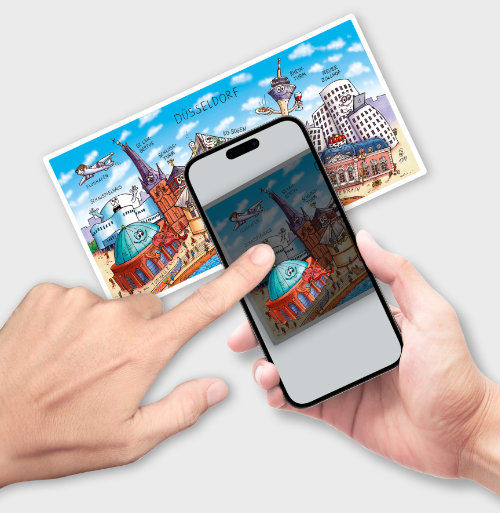
The Düsseldorf City Quest, winner of the Startup Innovation Award at the X. Awards, took a different approach. Developed by spotAR in collaboration with Düsseldorf Tourismus and DB Station & Service, the campaign transformed the city into an open-air game board, where visitors solve puzzles, collect clues and uncover local stories through augmented reality. Building on WebAR shaped the project’s reach from the outset. This meant that visitors could access the experience by scanning a QR code, which launched the augmented reality quest directly in their smartphone browser. The result was a significantly improved user experience, readily accessible for visitors to engage with.
Continue reading...
Get access to 100s of case studies, workshop templates, industry leading events and more.
As DMOs look for new ways to shift visitor behaviour, distribute footfall and reach younger audiences, game-based experiences are proving their value as a practical destination management tool. Yet, most implementations still rely on dedicated apps. Such approaches risk encountering the 'app fatigue' barrier, where visitors are increasingly reluctant to download new apps onto their personal devices.
The Düsseldorf City Quest, winner of the Startup Innovation Award at the X. Awards, took a different approach. Developed by spotAR in collaboration with Düsseldorf Tourismus and DB Station & Service, the campaign transformed the city into an open-air game board, where visitors solve puzzles, collect clues and uncover local stories through augmented reality. Building on WebAR shaped the project’s reach from the outset. This meant that visitors could access the experience by scanning a QR code, which launched the augmented reality quest directly in their smartphone browser. The result was a significantly improved user experience, readily accessible for visitors to engage with.
Continue reading...
Get access to 100s of case studies, workshop templates, industry leading events and more.
As DMOs look for new ways to shift visitor behaviour, distribute footfall and reach younger audiences, game-based experiences are proving their value as a practical destination management tool. Yet, most implementations still rely on dedicated apps. Such approaches risk encountering the 'app fatigue' barrier, where visitors are increasingly reluctant to download new apps onto their personal devices.
The Düsseldorf City Quest, winner of the Startup Innovation Award at the 2025 X. Awards, took a different approach. Developed by spotAR in collaboration with Düsseldorf Tourismus and DB Station & Service, the campaign transformed the city into an open-air game board, where visitors solve puzzles, collect clues and uncover local stories through augmented reality. Building on WebAR shaped the project’s reach from the outset. This meant that visitors could access the experience by scanning a QR code, which launched the augmented reality quest directly in their smartphone browser. The result was a significantly improved user experience, readily accessible for visitors to engage with.
Local Art as a Creative Foundation
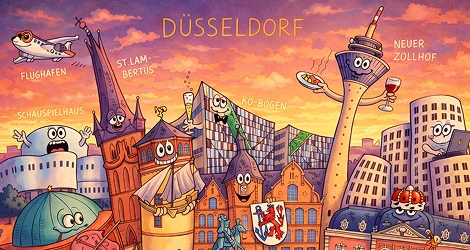
Central to the Düsseldorf City Quest's appeal is its creative partnership with Jacques Tilly, the artist renowned for his carnival floats and satirical designs. His involvement gave the campaign a visual identity rooted in Düsseldorf’s cultural character. Together with the spotAR team, he developed a 3D avatar based on the Rheinturm, the city’s iconic TV tower, which serves as a virtual guide throughout the experience. The avatar welcomes visitors, explains the game mechanics and invites them to explore the city through riddles and interactive challenges.
Transforming a recognisable landmark into a relatable digital character was an effective technique for bridging the gap between physical place and the digital experience. In doing so, the Rheinturm avatar served as both a wayfinding tool and a storytelling device, making the city’s heritage approachable to audiences who might not engage with more traditional forms of cultural tourism. The creative partnership ensured the game was strongly grounded in its location-specific context and felt unmistakably like Düsseldorf, shaping a visitor experience that was firmly rooted in destination identity.
Source: spotAR / Düsseldorf Tourismus
Monitoring Campaign Impact
The gamified campaign was launched over the Christmas period in 2023 to engage travellers passing through Düsseldorf Central Station during the festive season. The activation centred on inviting passengers to participate in an interactive quiz with the chance to win a personalised city tour led by a local artist. This transformed what would traditionally be a stressful place of transit into a space for interaction and discovery.
By leveraging WebAR, the Düsseldorf City Quest provided a format that suits transit environments. This significant consideration reflects how visitors often make snap decisions about how to spend their time. In engaging visitors at the point of arrival with a frictionless experience, the campaign captured attention when it mattered most, turning a fleeting moment into an immediate connection.
The playful tone of the experience also made heritage engagement feel natural, with visitors learning about the city’s landmarks and stories through a format that prioritised enjoyment and curiosity over formal education. For DMOs struggling to engage younger audiences with their culture, this shift in delivery method highlights the opportunity presented by embracing new communication channels as a genuine way to connect with these visitors on their own terms.
The connection between cultural storytelling and playful discovery proved to be a powerful combination. More than 3,000 people actively participated within a few weeks, with all prizes being redeemed. In turn, this generated significant social, cultural and economic impact for Düsseldorf. In driving visitor flows to nearby stores and tourist attractions during the holiday season, clear evidence demonstrated how gamification can successfully distribute visitors across cities.
From Seasonal Campaign to Permanent Engagement
The campaign's positive reception was strong enough to change its entire trajectory, turning what was originally intended as a short seasonal activity into a permanent marketing and visitor engagement tool. The Düsseldorf City Quest is now promoted through the city’s Tourist Information Centre, repositioning it from a one-off campaign to an ongoing feature of how Düsseldorf presents itself to visitors.
This kind of evolution reflects a broader pattern, where the demonstrated audience demand from successful pilot projects necessitates adjustment to preconceived formal top-down planning decisions. Such a perspective shows the enduring value of strong feedback loops when designing planning cycles for destination marketing strategies.
The Düsseldorf City Quest has already inspired follow-up projects in Cologne and Bremen, providing early evidence that the model can be localised without significant infrastructure investment. This highlights the scalability of combining WebAR technology with local creative partnerships and gamified storytelling. As more cities look for ways to activate their public spaces digitally, the demand for proven and adaptable models of this kind is likely to grow.
Key Takeaways
Remove barriers to participation: Digital tourism experiences achieve greater reach when they eliminate the need for app downloads or account creation. Browser-based access through QR codes removes friction at the point of discovery.
Ground digital experiences in local identity: Partnerships with recognised local artists and cultural figures enhance authenticity, adding a creative layer that reflects a destination’s character and helps visitors engage with something distinctive and place-specific.
Integrate flexibility into campaign design: Building campaigns that can easily transition from temporary activations to permanent ones requires designing with longevity in mind from the start. Initial pilots should be structured to routinely measure ongoing performance to quickly justify decisions about whether to continue with ongoing adoption.
Use gamification to drive real-world behaviour: Interactive challenges that reward physical exploration can increase footfall, directing visitors toward lesser-known attractions and retail outlets. Used in such a way, gamification becomes a practical visitor distribution mechanism with a measurable economic impact.
Turn transit spaces into engagement points: Transport hubs represent an underused opportunity for destination marketing. Reaching travellers at the moment of arrival, when they are actively deciding how to spend their time, creates a natural entry point for communicating the full diversity of a destination's offer.