Marketing
Dark Sky Terschelling: Boosting Off-Season Demand
The "Dark Sky Terschelling" campaign boosted off-season tourism by using its star-filled skies to drive sustainable growth and local economic impact.
Featuring
VVV Terschelling

The "Dark Sky Terschelling" campaign boosted off-season tourism by using its star-filled skies to drive sustainable growth and local economic impact.
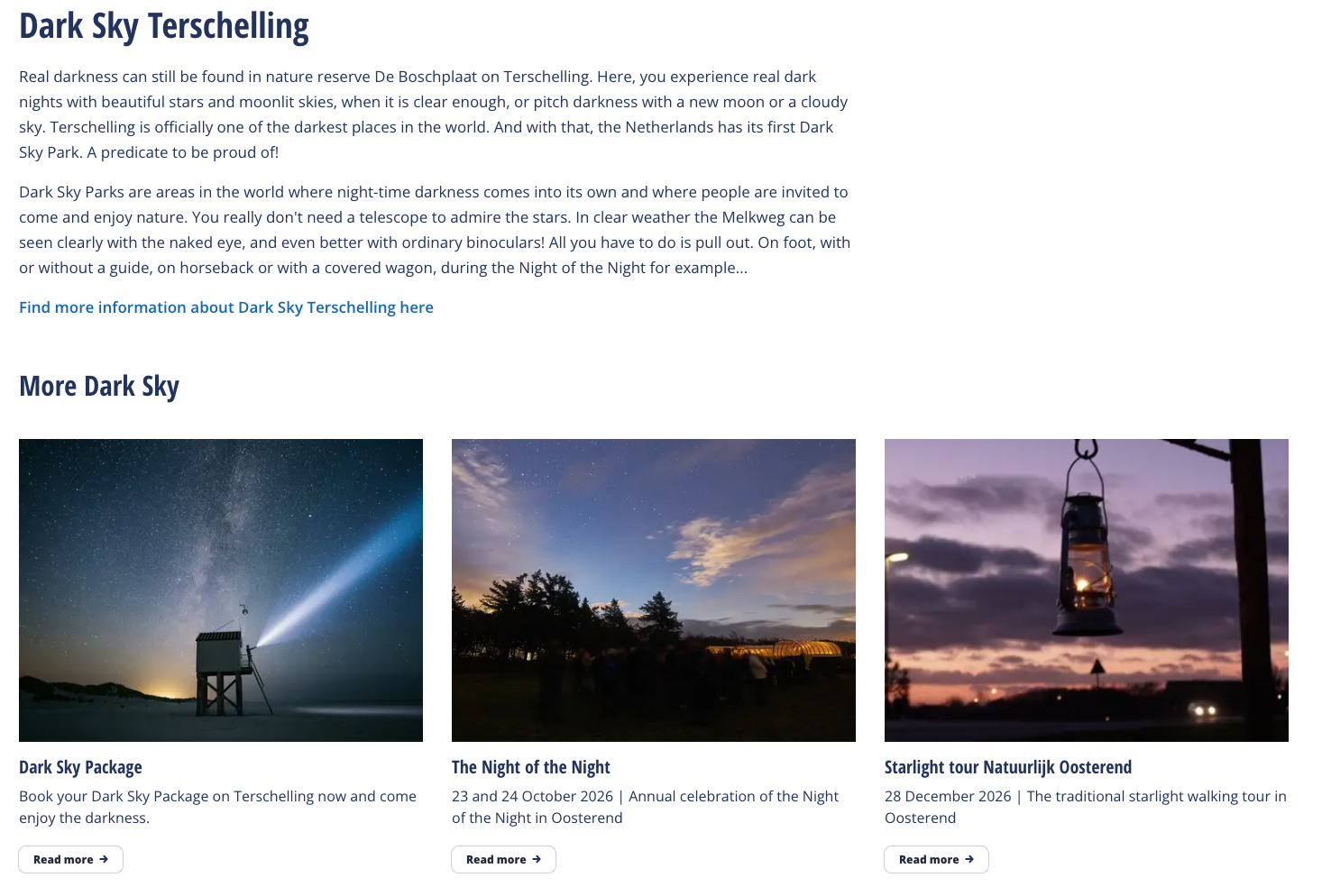
More than 80% of the world’s population can no longer see the Milky Way with the naked eye. Light pollution has steadily eroded one of humanity’s oldest shared experiences, turning the night sky into something most people only encounter in photographs. For Terschelling, a Dutch Wadden Sea island accredited as a Dark Sky Park in 2015, this growing disconnect presented a clear opportunity.
The “Dark Sky Terschelling - You don’t need to be an astronaut to see the stars” campaign, winner of the Purposeful Brand Award at the X. Awards, turned that opportunity into increased visitor numbers during the off-season months when the island’s tourism economy needs the most support. By transforming an underused natural asset into a compelling reason to visit, the campaign delivered strong results on a modest budget.
More than 80% of the world’s population can no longer see the Milky Way with the naked eye. Light pollution has steadily eroded one of humanity’s oldest shared experiences, turning the night sky into something most people only encounter in photographs. For Terschelling, a Dutch Wadden Sea island accredited as a Dark Sky Park in 2015, this growing disconnect presented a clear opportunity.
The “Dark Sky Terschelling - You don’t need to be an astronaut to see the stars” campaign, winner of the Purposeful Brand Award at the X. Awards, turned that opportunity into increased visitor numbers during the off-season months when the island’s tourism economy needs the most support. By transforming an underused natural asset into a compelling reason to visit, the campaign delivered strong results on a modest budget.
More than 80% of the world’s population can no longer see the Milky Way with the naked eye. Light pollution has steadily eroded one of humanity’s oldest shared experiences, turning the night sky into something most people only encounter in photographs. For Terschelling, a Dutch Wadden Sea island accredited as a Dark Sky Park in 2015, this growing disconnect presented a clear opportunity.
The “Dark Sky Terschelling - You don’t need to be an astronaut to see the stars” campaign, winner of the Purposeful Brand Award at the 2024 X. Awards, turned that opportunity into increased visitor numbers during the off-season months when the island’s tourism economy needs the most support. By transforming an underused natural asset into a compelling reason to visit, the campaign delivered strong results on a modest budget.
The campaign was underpinned by the TS25 Vision, a long-term tourism strategy developed through an extensive collaborative process in 2019. The Foundation Terschellinger Entrepreneurs led a bottom-up design thinking process that brought together the island’s stakeholders and residents to define how tourism should develop on their terms. This participatory foundation ensured that the Dark Sky campaign served broader community goals rather than operating as a standalone marketing exercise.
That strategic grounding extended to the campaign’s alignment with the United Nations Sustainable Development Goals. Promoting low-impact tourism and raising awareness of light pollution connected the initiative to climate action. Extending the tourist season and supporting local businesses contributes to decent work and economic growth. The focus on mindful, nature-based travel addresses good health and wellbeing, while encouraging responsible and balanced tourism development supports sustainable communities. This multi-layered alignment gave the campaign a sense of purpose.
Nature conservation as a core campaign theme also served an educational function, making visitors aware of their own environmental impact. By framing light pollution as both a global challenge and a personal experience, the messaging transformed awareness into appreciation, encouraging people to consider the effect of everyday choices on the natural world around them.
Dark sky tourism is an emerging niche, with destinations like Lake Tekapo in New Zealand already demonstrating its potential. Terschelling was well-positioned to claim a distinctive space in this market, particularly given that no additional infrastructure investment was required. Yet, while Terschelling’s Dark Sky Park designation had been in place for nearly a decade, its potential as a tourism driver remained largely unrealised. In 2023, domestic tourism in the Netherlands was stabilising after the COVID pandemic, but the island still faced a 7.7% decline in visitors. Local businesses needed sustained year-round activity to remain viable and the off-season presented the most pressing gap.
The campaign identified a growing alignment between the island's Dark Sky and shifting traveller preferences. Holidays centred on mindfulness, health and connection with nature were growing significantly across European markets, with 70% of Dutch travellers citing peaceful surroundings as their primary consideration when choosing a destination.
Using the BSR™ segmentation model, which uses psychographic values to categorise people into different lifestyles, the campaign targeted “Adventure Seekers”. This segment is defined by their interest in self-discovery, sustainability and authentic experiences. As an audience actively seeking destinations offering something beyond mainstream tourism, Terschelling’s preserved night sky was a natural fit for their values and travel motivations.
The campaign’s central idea drew on the universal childhood memory of looking up at a sky full of stars. Through nostalgic storytelling featuring a local boy as the protagonist, the hero video built an emotional bridge between personal memory and destination experience. This grounded the messaging in authenticity, positioning Terschelling as an accessible place where anyone can reconnect with something most of us have lost.
The campaign's delivery followed a full-funnel approach combining digital, earned and paid media, with local partnerships playing a central role in extending reach and credibility. The unique approach had a dual focus on raising awareness of the island’s off-season offer and directly influencing visitor behaviour through package bookings. The coherence of execution across channels ensured the message landed with clarity at every touchpoint.
With a campaign budget of €46,126, the results demonstrated what focused, purpose-driven marketing can achieve when creative strategy aligns with destination strengths. The campaign directly reached almost 4.2 million people, with a publicity reach of 25.3 million, generating a media value of €1,289,230.
The most telling metrics, however, related to actual visitor behaviour. The campaign generated 169 Dark Sky package bookings, translating into 2,400 overnight stays and €79,450 in direct revenue. The total economic impact for the island reached €268,846. These figures represent a significant return on investment and are particularly notable because they represent off-season activity.
The Dark Sky Terschelling campaign offers a clear model for other destinations looking to balance tourism growth with environmental and community wellbeing. By maintaining collaborative ownership across the community and targeting a values-aligned audience segment, Terschelling has created a blueprint that is both replicable and scalable.
Looking ahead, the island plans to expand its eco-conscious offers and continue supporting local businesses through purpose-driven tourism initiatives. The lessons from this campaign will inform how Terschelling integrates environmentally responsible practices into every aspect of its tourism strategy, ensuring that future growth continues to respect and protect its natural heritage.


