
Log in
Oops! Something went wrong while submitting the form.
Create an account
Oops! Something went wrong while submitting the form.


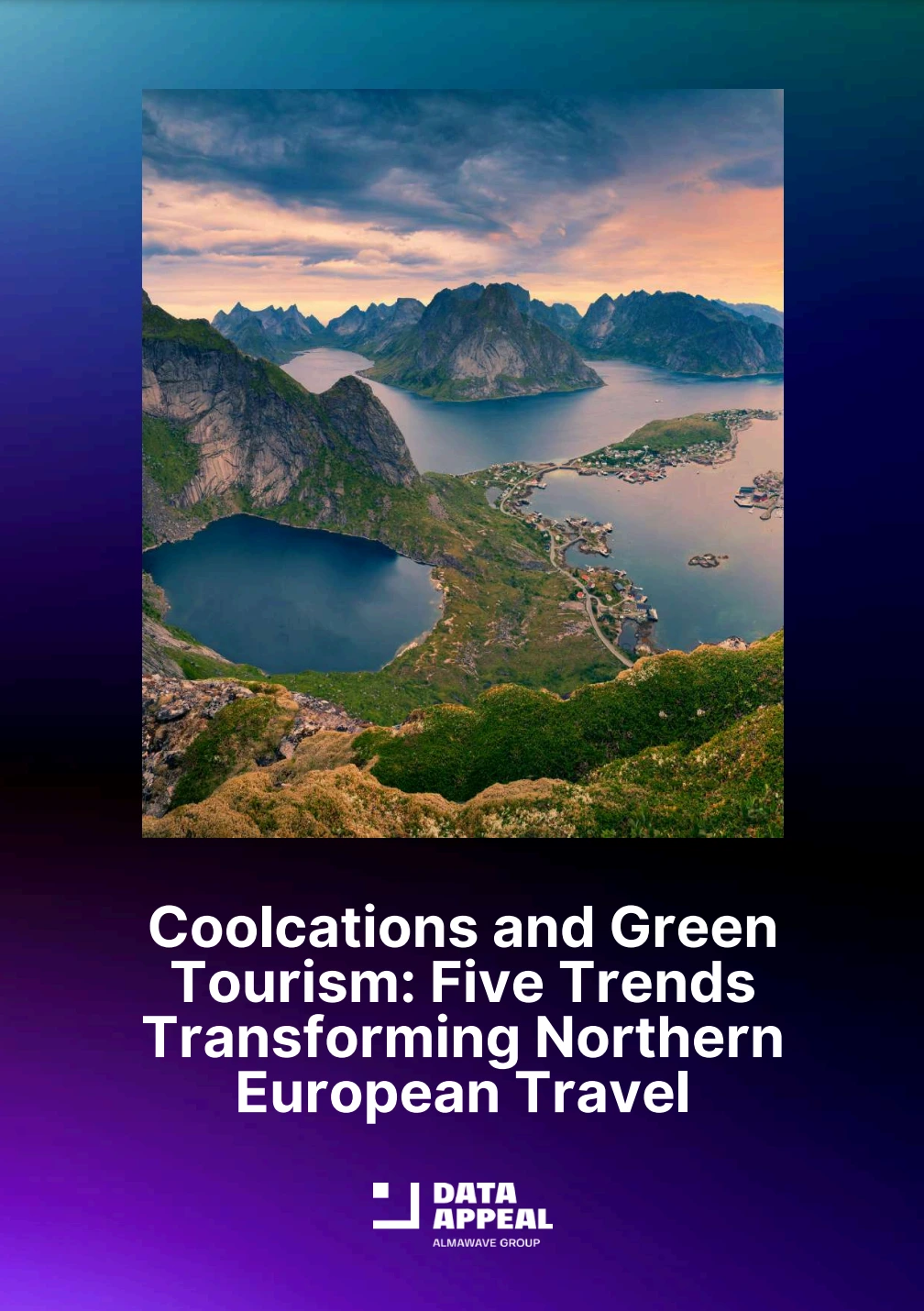
The quiet rise of Northern Europe on the global travel radar
Mild climate, a sense of adventure, untouched nature, sustainability, and cutting-edge architecture—if travel were a recipe, these would be the key ingredients. And in recent years, they’ve made the countries of Northern Europe some of the fastest-rising tourist destinations.
Global tourism data shows that visitors are increasingly drawn to exactly what these regions offer so authentically: outdoor experiences, breathtaking landscapes, a deep respect for the environment, modern infrastructure, and cities designed for people. It’s a combination that appeals to a growing range of travellers—from couples and solo adventurers to families with children.
But there’s more: one of the key reasons behind Northern Europe’s growing appeal—especially in the summer months—is a now undeniable shift in climate. More and more travellers are opting for cooler destinations to escape the extreme heatwaves affecting Southern Europe.
It’s the rise of so-called coolcations—cool-weather holidays—which has seen a sharp uptick in 2024. According to the European Travel Commission, over 22% of European travellers say they plan to avoid overly hot destinations during the summer, choosing instead to head north.
It’s no surprise, then, that according to Statista, the tourism market in Northern European countries is expected to grow by 2.63% annually between 2024 and 2029, reaching a total value of 22.6 billion.
Norway, Sweden, and Finland have been quick to capitalise on the postpandemic travel trends—such as the desire to spend more time in unspoiled nature and wide open spaces, the appeal of destinations free from overtourism, and a growing focus on sustainability and responsible tourism.
And now, they’re reaping the rewards
In 2024, Norway hit an all-time record with nearly 38.6 million overnight stays—an increase of 4.2% compared to 2023. Sweden saw a 2.1% rise in tourist arrivals in the first four months of 2024 compared to the same period in 2023, and a 7.3% increase compared to 2019. In Finland, the number of international overnight stays rose by 9% in the first half of 2024 compared to the previous year. In June alone, the increase reached 13%—the highest among the Nordic countries.
What the data says: Exploring tourism trends in Norway, Sweden and Finland
To better understand the travel trends shaping tourism in Northern Europe, The Data Appeal Company – in partnership with Mabrian (both part of the Almawave Group) – turned the spotlight on three of the region’s most popular destinations: Norway, Sweden, and Finland.
Using the destination management platform D / AI Destinations, the team was able to monitor sentiment expressed across thousands of online reviews, track hotel rate trends across OTAs, and assess the impact of key events. Mabrian contributed vital insights on Share of Searches (Travel Intent), top travel drivers, and the evolution of air capacity, revealing the broader movements in international demand.
By combining these different data sets, we’ve built a clear and comprehensive picture of these Northern destinations – and the motivations behind the growing number of travellers choosing to visit them.
Inside the report, we answer some of the key questions shaping tourism in the Nordics:
Analysing the latest tourism trends across Scandinavia gives DMOs, operators, and destinations the insights they need to navigate change and shape strategies that deliver real impact.
The quiet rise of Northern Europe on the global travel radar
Mild climate, a sense of adventure, untouched nature, sustainability, and cutting-edge architecture—if travel were a recipe, these would be the key ingredients. And in recent years, they’ve made the countries of Northern Europe some of the fastest-rising tourist destinations.
Global tourism data shows that visitors are increasingly drawn to exactly what these regions offer so authentically: outdoor experiences, breathtaking landscapes, a deep respect for the environment, modern infrastructure, and cities designed for people. It’s a combination that appeals to a growing range of travellers—from couples and solo adventurers to families with children.
But there’s more: one of the key reasons behind Northern Europe’s growing appeal—especially in the summer months—is a now undeniable shift in climate. More and more travellers are opting for cooler destinations to escape the extreme heatwaves affecting Southern Europe.
It’s the rise of so-called coolcations—cool-weather holidays—which has seen a sharp uptick in 2024. According to the European Travel Commission, over 22% of European travellers say they plan to avoid overly hot destinations during the summer, choosing instead to head north.
It’s no surprise, then, that according to Statista, the tourism market in Northern European countries is expected to grow by 2.63% annually between 2024 and 2029, reaching a total value of 22.6 billion.
Norway, Sweden, and Finland have been quick to capitalise on the postpandemic travel trends—such as the desire to spend more time in unspoiled nature and wide open spaces, the appeal of destinations free from overtourism, and a growing focus on sustainability and responsible tourism.
And now, they’re reaping the rewards
In 2024, Norway hit an all-time record with nearly 38.6 million overnight stays—an increase of 4.2% compared to 2023. Sweden saw a 2.1% rise in tourist arrivals in the first four months of 2024 compared to the same period in 2023, and a 7.3% increase compared to 2019. In Finland, the number of international overnight stays rose by 9% in the first half of 2024 compared to the previous year. In June alone, the increase reached 13%—the highest among the Nordic countries.
What the data says: Exploring tourism trends in Norway, Sweden and Finland
To better understand the travel trends shaping tourism in Northern Europe, The Data Appeal Company – in partnership with Mabrian (both part of the Almawave Group) – turned the spotlight on three of the region’s most popular destinations: Norway, Sweden, and Finland.
Using the destination management platform D / AI Destinations, the team was able to monitor sentiment expressed across thousands of online reviews, track hotel rate trends across OTAs, and assess the impact of key events. Mabrian contributed vital insights on Share of Searches (Travel Intent), top travel drivers, and the evolution of air capacity, revealing the broader movements in international demand.
By combining these different data sets, we’ve built a clear and comprehensive picture of these Northern destinations – and the motivations behind the growing number of travellers choosing to visit them.
Inside the report, we answer some of the key questions shaping tourism in the Nordics:
Analysing the latest tourism trends across Scandinavia gives DMOs, operators, and destinations the insights they need to navigate change and shape strategies that deliver real impact.


