
Log in
Oops! Something went wrong while submitting the form.
Create an account
Oops! Something went wrong while submitting the form.


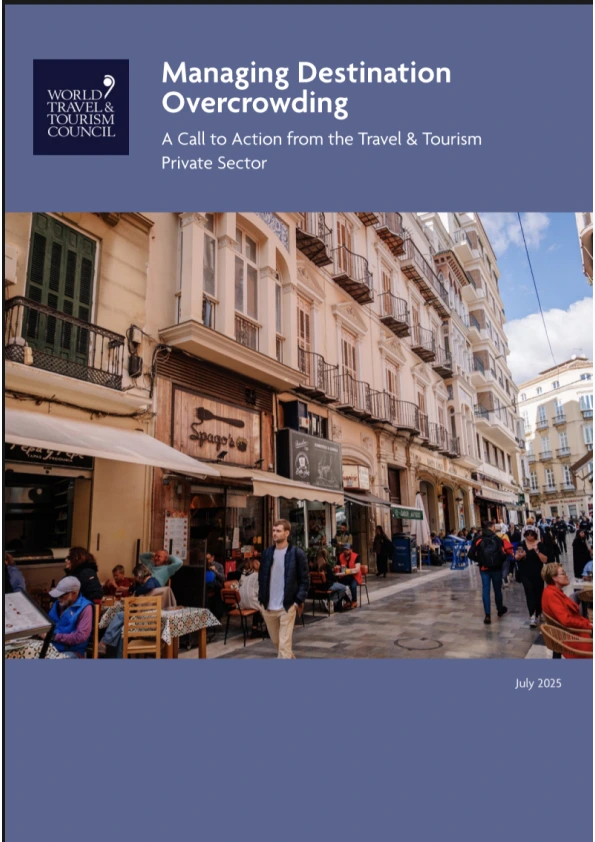
Travel & Tourism is a global engine of growth, supporting one in 10 jobs and 10% of GDP worldwide, and set to support one in three new jobs over the next decade. When managed well, it fosters cultural exchange, global understanding, and environmental conservation. But without smart urban management, the sector’s ability to help create such benefits are at risk.
The Challenge: Overcrowding is straining destinations, both visibly and structurally. While it’s often seen as a tourism issue, the root causes run deeper: underinvestment in infrastructure, poor urban planning, and fragmented governance, are just some of the areas which need to be addressed. These systemic pressures affect both locals and visitors and require coordinated, cross-sector solutions.
Our Approach: This paper addresses overcrowding as part of the broader issue of destination management. It urges public and private stakeholders to adopt a proactive, evidence-based approach to sustainable tourism management.
The global Travel & Tourism private sector commits to working with the public sector toward practical solutions and outlines six key actions.
The Risk: A failure to recognise the benefits that Travel & Tourism generates could be costly. In 11 major European cities with higher-than-average tourism levels, a drop to the regional average could cost up to $245 billion in GDP, $122 billion in tax revenue, and nearly 3 million jobs within three years.
Consideration should be given to how these revenues from tourism can be reinvested into making the destinations better places to live and to visit.
The Opportunity: Effective destination management preserves the unique character of places – the very reason people travel. Now is the time for governments, businesses, and communities to work together to ensure Travel & Tourism strengthens, rather than strains, the world’s most cherished places.
Travel & Tourism is a global engine of growth, supporting one in 10 jobs and 10% of GDP worldwide, and set to support one in three new jobs over the next decade. When managed well, it fosters cultural exchange, global understanding, and environmental conservation. But without smart urban management, the sector’s ability to help create such benefits are at risk.
The Challenge: Overcrowding is straining destinations, both visibly and structurally. While it’s often seen as a tourism issue, the root causes run deeper: underinvestment in infrastructure, poor urban planning, and fragmented governance, are just some of the areas which need to be addressed. These systemic pressures affect both locals and visitors and require coordinated, cross-sector solutions.
Our Approach: This paper addresses overcrowding as part of the broader issue of destination management. It urges public and private stakeholders to adopt a proactive, evidence-based approach to sustainable tourism management.
The global Travel & Tourism private sector commits to working with the public sector toward practical solutions and outlines six key actions.
The Risk: A failure to recognise the benefits that Travel & Tourism generates could be costly. In 11 major European cities with higher-than-average tourism levels, a drop to the regional average could cost up to $245 billion in GDP, $122 billion in tax revenue, and nearly 3 million jobs within three years.
Consideration should be given to how these revenues from tourism can be reinvested into making the destinations better places to live and to visit.
The Opportunity: Effective destination management preserves the unique character of places – the very reason people travel. Now is the time for governments, businesses, and communities to work together to ensure Travel & Tourism strengthens, rather than strains, the world’s most cherished places.


