
Log in
Oops! Something went wrong while submitting the form.
Create an account
Oops! Something went wrong while submitting the form.


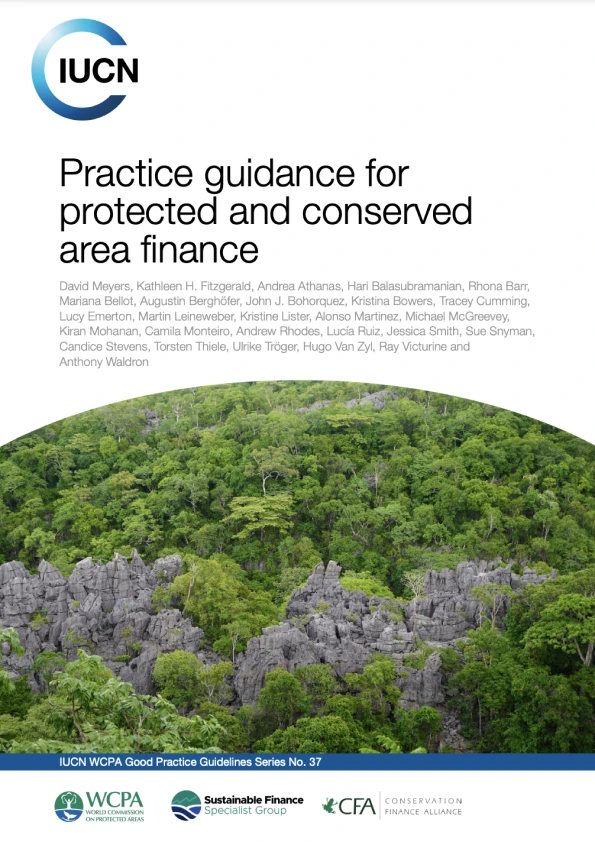
Protected and conserved areas (PCAs) have been proven to provide enormous value to nature, people and the economy. They are an effective means by which species, habitats and ecosystems can be conserved, restored and sustainably utilised. The expansion and effective management of PCAs is integral to international and national strategies for sustainable development. Achieving expansion and effective management in a period of increasing pressures on nature is extremely challenging and requires improved understanding and use of a complete array of scientific, governance, policy and financial tools and knowledge to enable and sustainably finance successful PCA design, establishment and management. To achieve effective PCA outcomes, a portfolio of finance solutions should be designed and implemented with careful attention to systems thinking, equity and effectiveness, and social and cultural awareness, responsiveness and inclusiveness.
This Guide provides detailed frameworks, descriptions and insights into the use of conservation finance solutions to achieve PCA outcomes. The guidance presents the case for PCA investment and sustainable finance, describes the role and use of finance and economics to achieve PCA outcomes, and presents guidance on how to conduct strategic and practical financial planning in support of these outcomes. The preface of the document includes a series of key principles that practitioners of PCA finance should be familiar with and consider prior to any interventions.
**The key principles described in the Prologue are the following: **
1. Diverse values: Acknowledge and respect the diverse values of nature and nature stewardship.
2. Rights-based: Utilise a rights-based approach in the design and implementation of conservation finance.
3. Good governance: Design and implement good governance structures, including accountability and transparency, for successful finance solutions.
4. Strong institutions: Build capacity and long-term effectiveness through strong and diverse institutions.
5. Systems approach: Utilise a systems-based approach for PCA finance solutions.
6. Comprehensive collaboration: Communicate and collaborate broadly to balance trade-offs.
7. Portfolio approach: Build diversified portfolios of financially meaningful and long-term finance solutions. 8. Effective finance solutions: Finance solutions should be effective and efficient.
**The main Good Practice Guidelines are the following: **
1. Optimise resource efficiencies: Seek to achieve the greatest impact towards your conservation objectives with the resources available.
2. Discourage harmful actions: Implement finance solutions that disincentivise actions that harm nature and reduce the chances of achieving your conservation objectives.
3. Incentivise positive actions: Develop finance solutions that align incentives for positive conservation outcomes.
4. Increase financial capital for conservation: Mobilise additional resources and assure sound management of those resources to be utilised for direct conservation efforts. Together the principles and the practice guidelines interact to provide an integrated approach to PCA finance as captured in the following diagram.
This Guide includes chapters on key sources of finance and finance solutions from the public sector, donors, philanthropies and international intuitions, local sources of finance, finance for Indigenous peoples, and private sector finance. The Guidance concludes with a series of Factsheets on a range of finance mechanisms pertinent to PCA finance. This publication is part of the IUCN WCPA Good Practice Guidance series.
Protected and conserved areas (PCAs) have been proven to provide enormous value to nature, people and the economy. They are an effective means by which species, habitats and ecosystems can be conserved, restored and sustainably utilised. The expansion and effective management of PCAs is integral to international and national strategies for sustainable development. Achieving expansion and effective management in a period of increasing pressures on nature is extremely challenging and requires improved understanding and use of a complete array of scientific, governance, policy and financial tools and knowledge to enable and sustainably finance successful PCA design, establishment and management. To achieve effective PCA outcomes, a portfolio of finance solutions should be designed and implemented with careful attention to systems thinking, equity and effectiveness, and social and cultural awareness, responsiveness and inclusiveness.
This Guide provides detailed frameworks, descriptions and insights into the use of conservation finance solutions to achieve PCA outcomes. The guidance presents the case for PCA investment and sustainable finance, describes the role and use of finance and economics to achieve PCA outcomes, and presents guidance on how to conduct strategic and practical financial planning in support of these outcomes. The preface of the document includes a series of key principles that practitioners of PCA finance should be familiar with and consider prior to any interventions.
**The key principles described in the Prologue are the following: **
1. Diverse values: Acknowledge and respect the diverse values of nature and nature stewardship.
2. Rights-based: Utilise a rights-based approach in the design and implementation of conservation finance.
3. Good governance: Design and implement good governance structures, including accountability and transparency, for successful finance solutions.
4. Strong institutions: Build capacity and long-term effectiveness through strong and diverse institutions.
5. Systems approach: Utilise a systems-based approach for PCA finance solutions.
6. Comprehensive collaboration: Communicate and collaborate broadly to balance trade-offs.
7. Portfolio approach: Build diversified portfolios of financially meaningful and long-term finance solutions. 8. Effective finance solutions: Finance solutions should be effective and efficient.
**The main Good Practice Guidelines are the following: **
1. Optimise resource efficiencies: Seek to achieve the greatest impact towards your conservation objectives with the resources available.
2. Discourage harmful actions: Implement finance solutions that disincentivise actions that harm nature and reduce the chances of achieving your conservation objectives.
3. Incentivise positive actions: Develop finance solutions that align incentives for positive conservation outcomes.
4. Increase financial capital for conservation: Mobilise additional resources and assure sound management of those resources to be utilised for direct conservation efforts. Together the principles and the practice guidelines interact to provide an integrated approach to PCA finance as captured in the following diagram.
This Guide includes chapters on key sources of finance and finance solutions from the public sector, donors, philanthropies and international intuitions, local sources of finance, finance for Indigenous peoples, and private sector finance. The Guidance concludes with a series of Factsheets on a range of finance mechanisms pertinent to PCA finance. This publication is part of the IUCN WCPA Good Practice Guidance series.


