The Rural Advantage: Exploring Rural Tourism's Untapped Economic Potential
New research shows rural tourism can ease overtourism while driving resilient growth, income and year-round opportunity across Europe.
Featuring
Digital Tourism Think Tank & Airbnb
DTTT Knowledge Team
In this piece
The overtourism debate has dominated European tourism for years. Yet, it can be argued that there isn't too much tourism in Europe; there is just too much tourism concentrated in specific locations. This reframing of the challenge opens up an entirely different set of solutions. Nick Hall, Founder and CEO of the Digital Tourism Think Tank, and Derek Nolan, Head of Public Policy for Ireland and the Nordics at Airbnb, previewed research that positions rural tourism as a genuine economic powerhouse capable of addressing some of the industry's most persistent challenges. The findings reveal a sector that has been systematically overlooked by policymakers and investors alike, despite demonstrating remarkable resilience and growth potential.
Continue reading...
Get access to 100s of case studies, workshop templates, industry leading events and more.
The overtourism debate has dominated European tourism for years. Yet, it can be argued that there isn't too much tourism in Europe; there is just too much tourism concentrated in specific locations. This reframing of the challenge opens up an entirely different set of solutions. Nick Hall, Founder and CEO of the Digital Tourism Think Tank, and Derek Nolan, Head of Public Policy for Ireland and the Nordics at Airbnb, previewed research that positions rural tourism as a genuine economic powerhouse capable of addressing some of the industry's most persistent challenges. The findings reveal a sector that has been systematically overlooked by policymakers and investors alike, despite demonstrating remarkable resilience and growth potential.
Continue reading...
Get access to 100s of case studies, workshop templates, industry leading events and more.
The overtourism debate has dominated European tourism for years. Yet, it can be argued that there isn't too much tourism in Europe; there is just too much tourism concentrated in specific locations. This reframing of the challenge opens up an entirely different set of solutions. Nick Hall, Founder and CEO of the Digital Tourism Think Tank, and Derek Nolan, Head of Public Policy for Ireland and the Nordics at Airbnb, previewed research that positions rural tourism as a genuine economic powerhouse capable of addressing some of the industry's most persistent challenges. The findings reveal a sector that has been systematically overlooked by policymakers and investors alike, despite demonstrating remarkable resilience and growth potential.
The Rural Opportunity
Rural communities across Europe face a familiar cluster of challenges. Traditional economic development models have largely failed these areas, leaving them with underperforming social and economic metrics, ageing populations, outward migration, lagging digital infrastructure, limited public transport and a persistent income gap compared to their urban counterparts. The research paints a stark picture: while cities attract investment and talent, rural areas struggle to maintain basic services and retain younger generations.
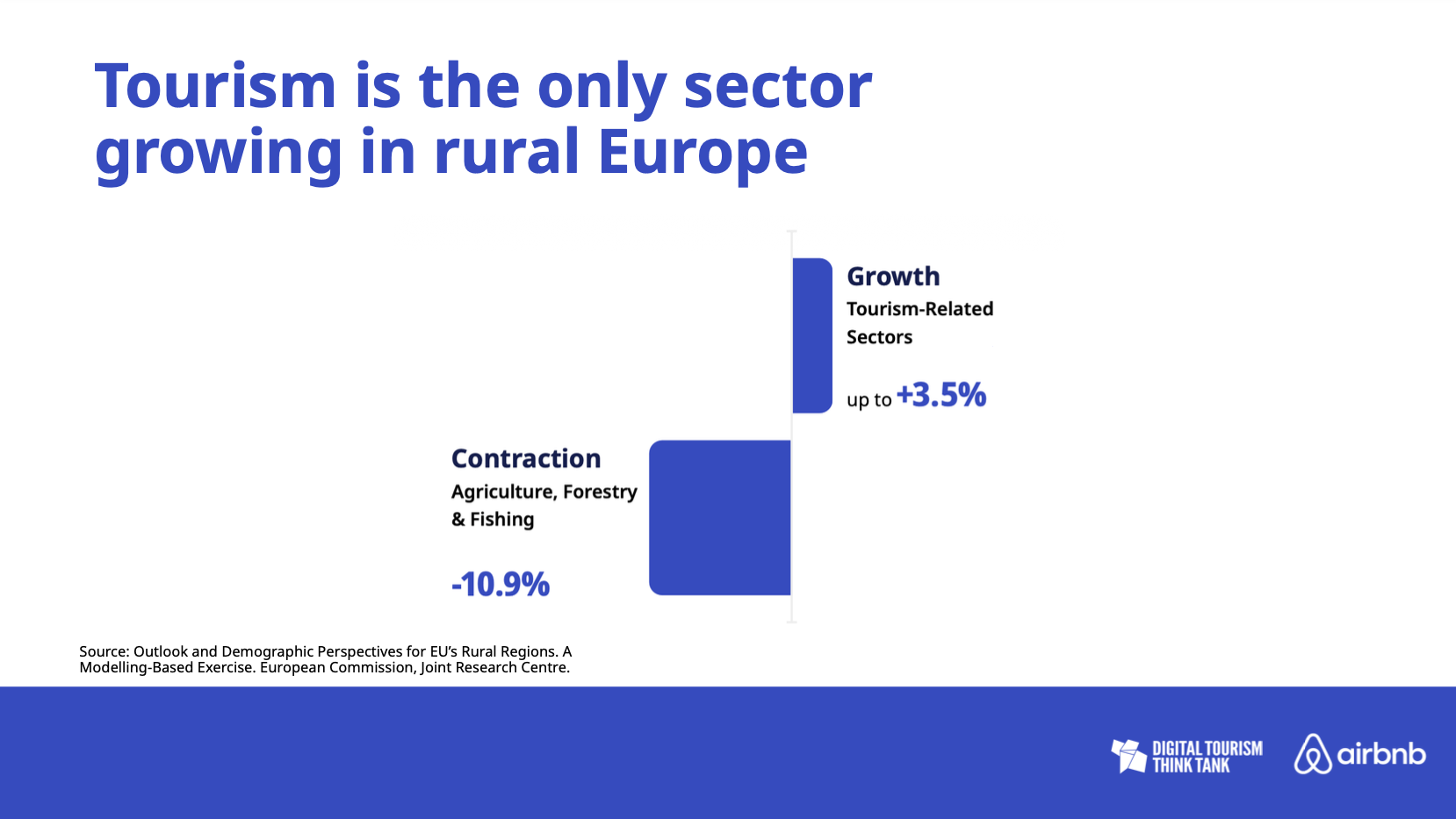
Yet within this challenging landscape, one sector stands apart. A twenty-year snapshot of European rural economies between 2000 and 2022 reveals that tourism is one of the only industries experiencing growth. Tourism-related sectors expanded by 3.5% while traditional rural industries such as agriculture, forestry and fishing have contracted by 10.9%. This shows just how vital tourism is to the economic diversification of rural destinations, ensuring the long-term economic prosperity of rural communities.
The Rural Shift
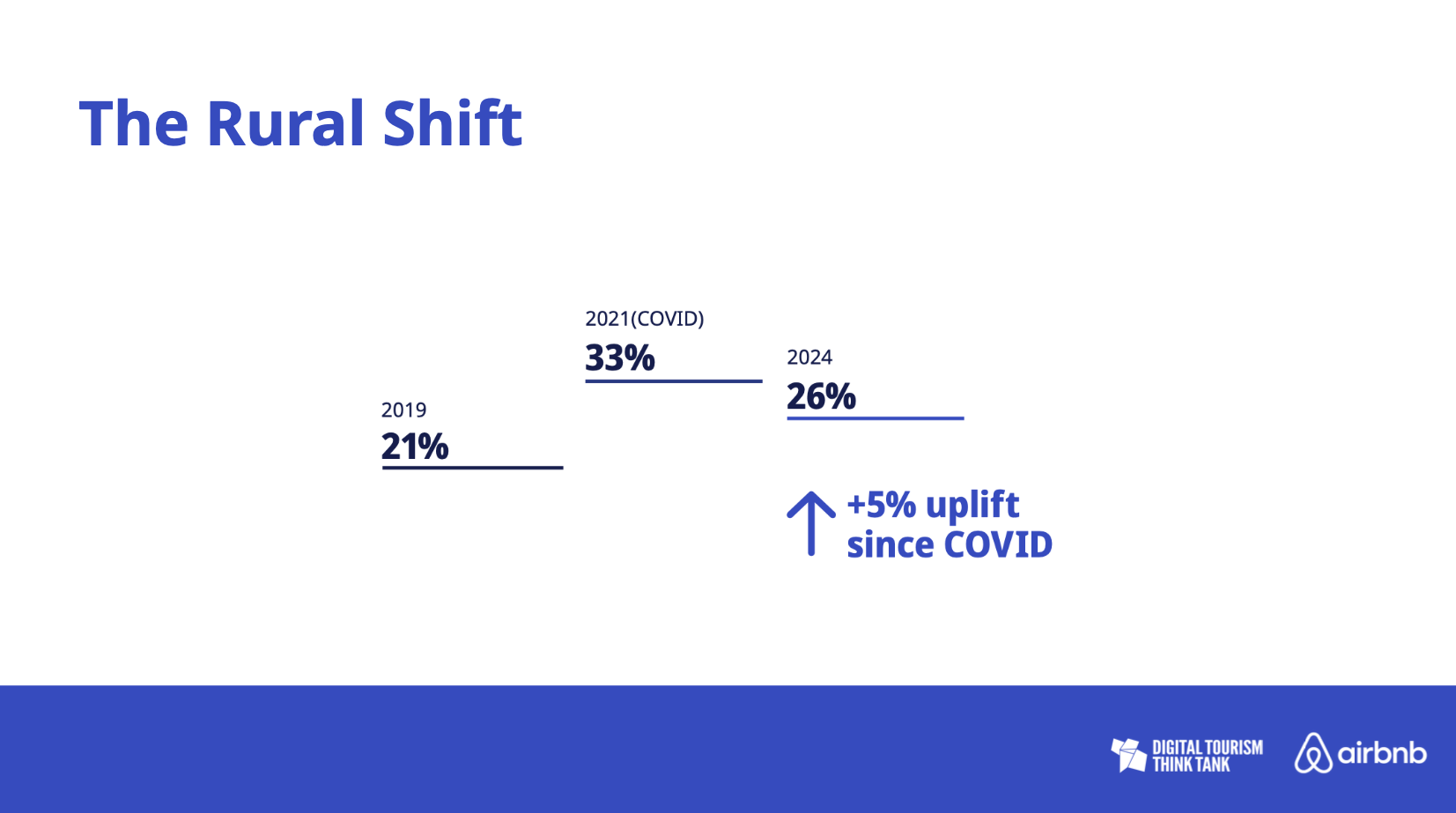
When international travel was at a standstill during the COVID-19 pandemic, the strong domestic foundation of rural tourism demonstrated considerable resilience. In 2019, rural areas accounted for 21% of tourism revenue across the eight European markets analysed (Belgium, France, Germany, Ireland, Italy, the Netherlands, Spain and the UK). This figure rocketed to 33% in 2021 as travellers sought space, nature and escape from crowded urban environments. The critical question was whether this behaviour would persist once restrictions were lifted.
The data provides a clear answer. By 2024, rural tourism's share had settled at 26%, representing a permanent five percentage point uplift from pre-pandemic levels. This represents a fundamental and lasting change in how Europeans choose to travel, supported by European Travel Commission research showing that 55% of intra-European travellers now actively seek "off-the-beaten-track" destinations.
The economic implications are substantial. Rural Airbnb hosts earned €4.06 billion in 2024, with host earnings growing by 162% and guest nights increasing by 88% compared to 2019. These figures represent real income flowing into communities that have traditionally been excluded from tourism's benefits.
Five Trends Rooted in Rural Experiences
The research crystallised five key trends that make rural tourism distinct and differentiated from its urban destinations:
Passion Tourism represents a departure from traditional market segmentation. Rather than targeting demographic groups, rural destinations can tap into the individual motivations that drive travel decisions. Aragon's dark skies, for instance, have driven an extraordinary 830% search growth ahead of the 2026 solar eclipse, demonstrating that rural areas possess their own unique, and as yet untapped, appeal.
The Great Rural Reset captures how rural areas are seizing opportunities to promote wellness for travellers who want to disconnect from the stresses of daily life. On Ireland's Wild Atlantic Way, for example, seaweed foraging has emerged as an intriguing tourism experience, with some businesses seeing 75% of visitors coming from international markets. This trend is transforming a traditional practice into a tourism experience that is experiential, transformative and distinctly local.
Authentic Luxury has been redefined. Modern luxury tourism is no longer about staying in five-star hotels. Instead, it is about genuine disconnection and qualitative experiences that are transformative for travellers. Rural areas, often dismissed for lacking conventional tourism infrastructure, possess precisely what this growing market segment seeks.
Cultural Heritage Tourism encompasses diverse historic experiences: ancient pilgrimage routes, medieval villages, traditional food trails and living agricultural traditions. The network of ancient pilgrim routes that spread across rural Europe now attracts travellers pursuing personal achievement and mindfulness rather than religious observance, opening these experiences to entirely new audiences.
Rural Microcations respond to shifting preferences for travel that is closer to home, perceived as more sustainable and easier to reach, while still delivering a genuine sense of escape. The pandemic accelerated this trend, but underlying preferences for shorter, more frequent breaks in natural settings appear to be enduring.
The Accommodation Gap
One of the research's most striking findings concerns the accommodation deficit in rural areas. Analysis of hotel chains in France revealed that 82% of chain hotel rooms are located in cities compared to just 4% in rural areas. This dramatic imbalance reflects investment decisions driven by concerns about return on investment and the perceived viability of rural markets.
Yet as Nick observed, this may not be entirely negative because chain hotels don't represent the most authentic experience. The gap has been filled by short-term rental hosts who go where hotels will not, providing accommodation capacity that is genuinely essential to rural visitor economies.
As Derek articulated, the typical rural host profile is predominantly women, often over fifty, whose children have moved out of the family home and left spare rooms available. These hosts are not professional property investors but local residents making the most of underutilised space. From a tourism perspective, they are the best ambassadors any region could possibly have. Whether guests seek it or not, they receive recommendations for local restaurants, cafés and activities. These hosts function as champions for their communities.
Inverse Seasonality
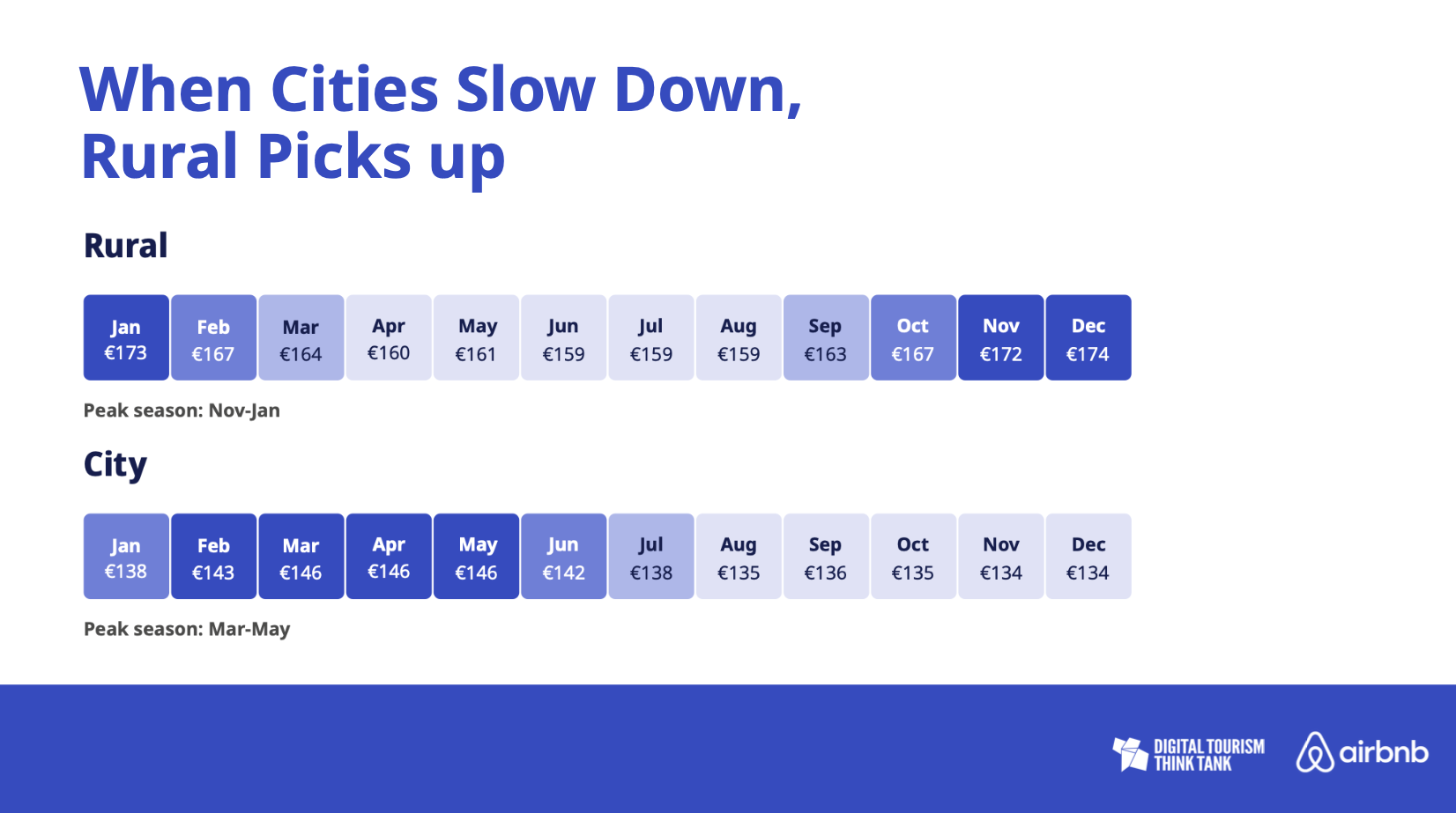
Perhaps the most intriguing finding concerns the seasonal pricing patterns of rural versus urban tourism. The data reveals an almost perfect inverse relationship: cities experience peak average daily rates (ADRs) from spring through summer, while rural areas peak during the winter months of November through January.
This complementarity transforms the overtourism conversation. Cities struggling with summer crowding could potentially redirect visitors during this peak season toward rural areas that have both capacity and affordability, particularly given the additional space rural accommodation provides for visitors. The ideal visitor journey, as Derek suggested, involves someone "landing at an airport, spending some time in the city, and then going to a rural area". This represents a symbiotic rather than competitive relationship between urban and rural destinations.
The data also reveals that rural travellers behave differently from their urban counterparts. Analysis of booking patterns shows that rural bookings occur with much longer lead times and at higher ADRs. These "intentional travellers" plan further ahead and spend more. For destinations seeking to shape visitor behaviour, this intentionality represents a significant opportunity.
Bridging the Rural-Urban Income Divide
Eurostat data revealed a clear income disparity between rural and urban Europe. Rural residents earn an average of €18,352 annually compared to €21,136 for their urban counterparts, a gap of approximately €2,800. With the average rural Airbnb host earning €5,251 annually from their hosting activity, this income not only closes the rural-urban gap but nearly doubles it, representing a 29% income lift for rural hosts. For most hosts, this represents occasional income from spare rooms or properties they do not occupy year-round, yet it provides a meaningful supplement.
This economic contribution matters beyond individual households. One of the primary drivers of rural depopulation is the perception of limited opportunity. If tourism can demonstrate that rural living offers viable economic pathways, it may help address demographic challenges that threaten the long-term viability of rural communities. The significant income boost that short-term rentals provide for rural residents challenges these assumptions about limited economic opportunities. This goes to show how vital it is that governments take rural tourism seriously and invest in its development, supported by both industry partners and local communities.
Supporting Rural Tourism Development
The development of rural tourism can be actively shaped through a wide range of practical interventions. Experience development proves essential for transforming perceptions of rural destinations from isolated locations with accessibility limitations into diverse, enriching destinations justifying extended stays. Strategic investment in rural tourism experiences addresses longstanding seasonality challenges, creating year-round economic opportunities whilst strengthening visitor appeal through coordinated regional approaches.
The research highlighted Fáilte Ireland's investment in surfing tourism along Ireland's northwest coast, where dedicated support over several years has demonstrably extended the shoulder season and increased visitor stay duration. This illustrates a core principle that rural destinations should play to their inherent strengths instead of replicating the traditional tourism development models of cities. "Don't try to pretend to be something; be who you are and make the most of it", as Derek summarised.
Derek also shared how Airbnb has established a Rural Tourism Fund to test what type of rural tourism initiatives attract travellers, allocating €100,000 across various projects in Ireland. One recipient is a dark skies park in Cork, receiving €10,000 to develop stargazing tourism despite Ireland's famously overcast weather. Similar initiatives, such as the Best of British Fund in the UK, are championing community-led tourism development, placing the focus on experiences as the core of the rural tourism offer.
The Policy Challenge
Conveying rural tourism's importance to policymakers emerged as a central challenge. As Derek observed, "there is so little data and analysis on rural tourism". The dispersed nature of rural tourism employment, while one of its greatest strengths for community resilience, also makes it harder to quantify and advocate for. This lack of consistent, comprehensive data means rural tourism rarely receives the spotlight it deserves. When investment in rural economies does occur, tourism is typically included as one component among many rather than being recognised as the primary growth sector it has become.
The fragmented nature of rural communities also compounds this challenge. Unlike cities with concentrated stakeholder groups and unified marketing organisations, rural tourism economies are dispersed across different communes and regions. Building regional coalitions becomes essential, recognising that what seems small to one community can be vitally important when seen in aggregate.
The timing of this research coincides with a technological shift that may prove transformative for rural tourism. As the digital connectivity gap that once disadvantaged rural destinations is narrowing, rural communities now have an opportunity to compete on a level playing field. AI is also fundamentally changing how travellers discover and plan trips. Where search algorithms historically favoured well-established urban destinations, AI interfaces can now surface recommendations based on individual passions rather than popularity alone. This means that villages and towns that invest in digital content and proactively support local tourism businesses in improving their digital presence will find themselves visible to the growing number of travellers actively seeking alternatives to crowded hotspots.
Key Takeaways
Recognise Rural Tourism as an Economic Powerhouse: Rural tourism’s economic impact far exceeds that of cities, making it a critical driver for rural communities. National and regional destinations must challenge the perception of rural tourism as a niche segment and instead position it as a strategic priority for economic development and job creation.
Destinations Should Play to Their Strengths: To attract visitors seeking a true sense of place, rural destinations must actively identify, embrace and promote their unique local identity. This starts with honest assessments of what makes destinations distinctive and then investing in preserving and showcasing authentic character.
Target Specific Audiences and Adapt to Their Needs: From adventure enthusiasts to wellness seekers, rural destinations succeed by identifying specific target audiences and developing experiences that meet what they seek. This requires understanding the behaviours and values of different visitor segments and investing in regular monitoring of consumer trends.
Short-Term Rentals are Essential for the Rural Visitor Economy: Hotels often struggle to justify the investment required for development in rural communities, creating an urgent need for alternative accommodation solutions. Rural destinations must recognise short-term rentals as essential infrastructure enabling flexible and scalable accommodation models.
Tailored Approaches are Needed for Unique Rural Characteristics: Rural destinations must resist applying existing frameworks and instead develop strategies suited to their own unique circumstances through strategic investment in obtaining specific data on local tourism performance and avoiding decisions based on assumptions.
Build Collaborative Regional Partnerships: Joint initiatives amongst rural communities for experience development and marketing enhance the appeal of small destinations struggling to achieve visibility. Rural destinations should identify natural partnerships based on geographic proximity and work together under broader regional banners.
Leverage Emerging Technologies to Compete Effectively: Increasing digital connectivity in rural areas is steadily closing the gap with cities. Rural destinations should prioritise improving digital infrastructure whilst developing capabilities to use emerging technologies such as AI, whilst building digital literacy amongst rural tourism businesses.
AI Offers a Solution to Increased Digital Visibility for Rural Destinations: AI is rapidly reshaping how travellers plan trips. For AI to relieve pressure on overcrowded urban centres, rural towns and villages must actively invest in building a strong digital presence and creating comprehensive online content, which will put lesser-known destinations on the map.