Rural Tourism Renaissance: Unlocking Europe's Untapped Rural Potential

Rural tourism has long occupied the margins of European tourism policy. Overshadowed by major city destinations, its economic contribution has remained largely unmeasured and, as a result, consistently undervalued.

Rural tourism has long occupied the margins of European tourism policy. Overshadowed by major city destinations, its economic contribution has remained largely unmeasured and, as a result, consistently undervalued. Unlike clearly defined urban geographies, rural regions encompass dispersed villages and remote communities, meaning tourism revenue spreads across multiple small settlements, none of which generates sufficient volume to trigger dedicated measurement. This data gap reflects a fundamental policy blind spot.

A research partnership between the Digital Tourism Think Tank and Airbnb set out to directly address that gap. To achieve this, we combined two distinct but complementary approaches. Primary analysis drew on Airbnb's search and booking data spanning 2018 to 2024 across eight European countries: Belgium, France, Germany, Ireland, Italy, the Netherlands, Spain and the United Kingdom. Working at the NUTS 2 regional level, we separated city, suburban and rural listings to isolate rural tourism activity specifically, applying Eurostat's definition of rural areas based on total population and population density. This analysis was supplemented by extensive secondary research drawing on national statistics, academic studies, government reports, industry analysis and destination-specific data.

Working closely with Airbnb's communications and policy teams across Europe, our Knowledge Team ensured the analysis addressed the specific concerns and opportunities relevant to each country analysed. This focused on building a picture of rural tourism's contribution to employment, household income and local economic growth, underscoring why tourism should be positioned as a clear response to the structural challenges many rural communities face. Complementing this analysis, we examined the full potential of emerging visitor motivations to consider evolving demand trends and how destinations are already responding to them.

Drawing on our expertise in digital innovation, we also underscored the technology potential for supporting rural tourism development, identifying the applications and approaches with the strongest evidence base for rural contexts. Alongside a review of effective policy interventions, this enabled our team to cluster different strategic approaches to pinpoint scalable pathways to economic and social development by supporting rural tourism's sustainable growth.

Bringing these varied perspectives together, our Knowledge Team produced actionable takeaways, giving destinations and policymakers a well-rounded roadmap for developing rural tourism. Available as both a full research report and a highlights summary, The Rural Tourism Renaissance delivers the detailed evidence base needed to unlock the full potential of Europe's rural tourism.

Rural Tourism's Outsized Economic Impact

What the research found was a clear identification of tourism's transformative potential in driving economic growth in rural communities. In 2024, rural Airbnb hosts across the eight countries analysed earned a total of €4.06 billion, demonstrating the significant income that tourism provides directly to rural communities. With more than half of the EU's most remote rural areas classified as socioeconomically weak, with ageing populations, outward migration of young people and limited access to essential services, tourism is consistently becoming an essential economic driver for the long-term viability of these communities.

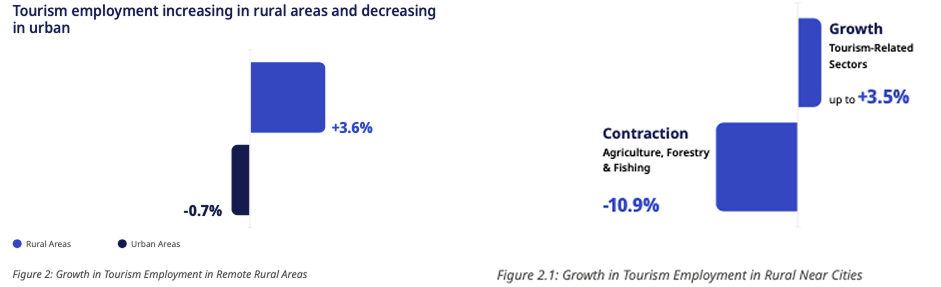
It has become apparent that traditional economic development models have largely failed rural destinations, and the decline of agriculture has deepened this structural disadvantage. Between 2000 and 2022, employment in agriculture, forestry and fishing fell by 8.7% in remote rural areas and by 10.9% in rural communities close to cities. Yet, tourism employment is moving in the opposite direction. Rural areas saw a 3.6% increase in employment in tourism-related sectors over the same period, while cities recorded a 0.7% decline. This represents a fundamental change in where job creation is happening across Europe's rural economies, underlining why tourism must now be treated as a strategic priority rather than a supplementary activity.

The accommodation picture is equally instructive. Traditional hotel development models are designed for urban contexts, where predictable, high-volume demand justifies the required investment. In rural areas, this investment model rarely applies. In France, for example, 82% of chain hotel rooms are concentrated in cities, with rural areas hosting just 4% of chain capacity. This pattern repeats across Europe. This means that rural areas face a chronic accommodation deficit simply because conventional supply models do not reach them.

Short-term rentals represent the most pragmatic response to this structural gap. By converting spare rooms and underused residential space into visitor accommodation, they allow supply to scale flexibly without significant investment. Around 40% of European rural households have spare capacity, with half of the countries analysed (Ireland, Spain, Belgium and the Netherlands) having more than 70% underused rural accommodation. This compares to an average of only 27% in cities.

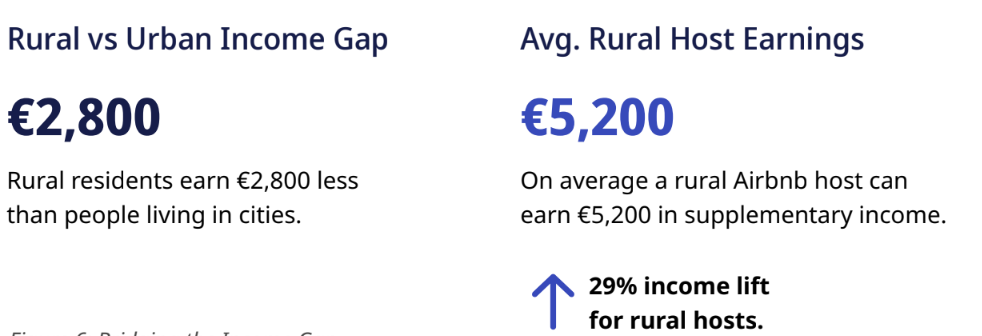
Tourism, channelled through flexible accommodation models, becomes a direct mechanism for closing the urban-rural income divide. The average rural Airbnb host across the eight countries analysed earned over €5,200 in supplementary income in 2024. For a typical rural resident earning €18,352 per year, nearly €2,800 less than their urban counterpart, that additional income represents a 29% uplift.

The rural tourism opportunity became clear to see in the aftermath of the COVID pandemic. Rural areas accounted for 33% of total tourism revenue across the eight countries analysed in 2021, up from 21% in 2019, as domestic travellers sought uncrowded destinations accessible by car. By 2024, that share had settled at 26%, still five percentage points above pre-pandemic levels. This shift towards rural destinations has seen occupancy rise by 5% over the same period, while declining by 9% in cities. These figures show the signs of a lasting change in how people choose to travel.

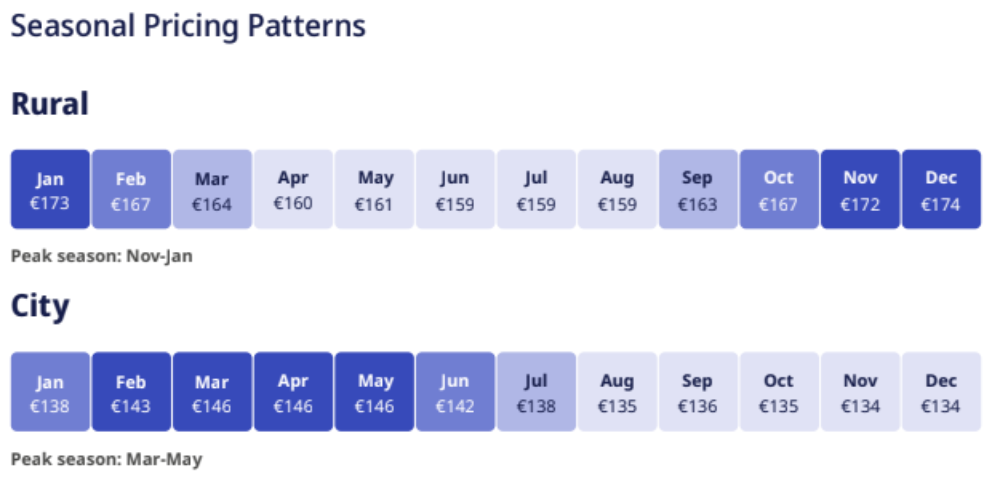
Crucially, the research found that with a longer lead time, rural travellers are highly intentional while offering better value per person. Surprisingly, however, rural accommodation pricing is strongest in winter, coinciding with a longer length of stay. This suggests how visitors seek quality experiences and place a high value on the additional space rural accommodation provides for spending quality time with friends and family.

Five Trends Reshaping Rural Tourism

Understanding where demand is heading is as important as understanding its current economic contribution to rural communities. Our research identified five distinct trends that are reshaping how visitors engage with rural areas, each opening practical opportunities for destinations to build year-round visitor economies. Alongside data analysis on the economic potential of each trend, our Knowledge Team gathered Airbnb host stories and business case studies to bring the trends to life at a community level.

Passion tourism describes the growing practice of organising travel around specific interests and hobbies, from astronomy and sports to literary and film tourism. Travellers in this segment are active in their planning and willing to travel to remote locations to pursue the experience they are seeking. For rural destinations, the model offers a powerful mechanism for distributing demand across seasons as passion tourism draws visitors who would not otherwise have visited and often encourages them to engage in repeat visits.

Digital detox travel reflects a broader cultural response to the saturation of technology in everyday life. Younger generations, in particular, are seeking genuine disconnection, drawn to landscapes, slower rhythms and the kind of embodied, nature-connected experience that rural settings naturally provide. Rural destinations possess exactly what this visitor group is looking for, and can develop a compelling offer around it without the capital-intensive infrastructure associated with conventional spa and resort tourism.

Provenance and authenticity tourism centres on the growing demand among travellers for food, drink and craft experiences rooted in genuine local heritage. Protected designation systems, traditional production methods and the stories behind regional products create forms of authenticity that are highly valued by visitors willing to pay premium rates and stay for longer. When managed effectively, this form of tourism supports conservation of the very traditions and landscapes that attract visitors, creating a virtuous relationship between heritage protection and economic return.

Cultural heritage tourism draws high-value visitors to pilgrimage routes, heritage trails and living cultural landscapes. What distinguishes this trend is the depth of visitor engagement it generates, with pilgrims, heritage tourists and recreational hikers staying longer, spending more on authentic local experiences and motivated by achieving a sense of personal fulfilment. Routes connecting rural communities under a shared heritage narrative distribute economic benefits across wider geographies and give smaller villages a visibility and identity they would struggle to achieve independently.

Rural microcations represent the growing appetite for short, frequent leisure breaks within easy reach of urban centres. A microcation, defined as a trip lasting four nights or fewer, responds to twin pressures of urban burnout and growing awareness of the carbon footprint of long-haul travel. Rural destinations within two to three hours of major cities are well placed to serve this market, particularly where low-carbon activities, such as cycling and walking, are developed as accessible, well-signposted visitor experiences.

While each trend addresses a different motivation, they share the common thread of a growing preference for experiences grounded in a strong sense of place, each opening practical opportunities for destinations to build year-round visitor economies. Taken together, they point toward a structural realignment in travel motivations focused on building a more personal connection with destinations. Capturing these visitor segments at scale, however, depends on rural destinations being discoverable, and that is where technology is becoming a decisive factor.

Technology and Digitalisation in the Rural Context

Rural broadband coverage across Europe reached 92.2% for fixed services in 2023, with 5G networks covering 73.7% of rural areas. This represents a 22.7 percentage point increase in a single year. This shift is significant because digital connectivity has historically compounded the visibility disadvantage rural destinations already face. Search algorithms and AI systems have favoured urban destinations simply because more digital content exists about cities. Improving connectivity does not automatically solve that problem, but it creates the conditions in which rural destinations can begin to address it.

With 57% of travellers using generative AI for destination research, and 38% converting those recommendations into bookings, rural destinations that build a rich, detailed and accurate digital presence are well-positioned to appear in AI-generated itineraries alongside established city destinations. This requires content that goes beyond basic attraction listings to cover transport connections, seasonal activities, local food and drink, cultural context and the practical details of visiting remote areas. At the same time, AI is beginning to offer rural destinations tools for proactive conservation. AI-powered habitat monitoring and biodiversity mapping provide real-time ecological data that enable destinations to identify environmental stress before damage occurs and adjust visitor management strategies accordingly. Yet, while AI's potential for rural destinations is significant, other technologies are equally important in influencing visitor behaviour and improving visitor engagement.

For example, mobile applications with robust offline functionality address one of rural tourism's most persistent structural challenges in overcoming the gap between sporadic connectivity throughout the visitor experience. Where city visitors can rely on having a consistent signal, rural visitors navigating isolated trails may go hours without mobile coverage. Apps that cache route data and safety information for offline use are essential tools for effectively managing the visitor experience in countryside locations where there is no one to ask for advice or information.

Immersive storytelling through augmented reality and gamification opens new ways for destinations to deepen visitor engagement with heritage, landscape and local culture. In doing so, extended reality technologies allow destinations to layer narrative and context over real-world locations, creating participatory experiences that appeal particularly to younger, digitally native travellers. The most effective applications focus on making the visitor an active participant in the story, which naturally encourages longer dwell times and the kind of word-of-mouth advocacy that benefits smaller destinations most.

Digital intermediaries, and content creators in particular, have also become essential partners for rural destinations seeking to reach large audiences. Authentic creator-led content, developed by people whose values and interests align with a destination's genuine character, consistently outperforms promotional content in driving booking intent. For rural destinations, where marketing budgets are typically modest and the visitor proposition is built on authenticity, strategic partnerships with the right creators represent a high-return investment.

Data-driven visitor management platforms also give destinations the tools to balance visitor growth with environmental and community wellbeing. Systems that draw on real-time footfall data, weather forecasts and predictive analytics allow destination managers to distribute visitor flows before pressure builds at vulnerable sites, communicate alternative experiences to arriving visitors and protect the natural assets that make rural tourism viable in the first place. The presence of such systems often forms the basis for informed, place-specific policymaking, avoiding the pitfall of relying on assumptions.

The Rural Tourism Policy Imperative

Urban-designed policy frameworks have consistently disadvantaged rural destinations, and the structural challenges they face around scale, seasonality and connectivity require interventions specifically designed for their circumstances. The research identified five clear policy actions that enable rural destinations to develop sustainable tourism economies whilst preserving the authentic character that drives visitor demand.

Creating year-round visitor appeal through events is the first of these. Harvest festivals, seasonal celebrations, cultural events and outdoor activities rooted in local traditions can transform shoulder seasons into commercially viable periods. These types of events succeed most when they offer participatory experiences that immerse visitors in community life. Policymakers and destination managers should prioritise identifying which event formats align with their unique assets and build the local partnerships needed to deliver them consistently, creating a diverse set of reasons to visit throughout the year.

The most effective rural tourism strategies encourage investment in coordinated experience development to justify extended stays and repeat visits, strengthening regional identity. Route development is a proven mechanism for this. When neighbouring communities work together under a unified identity, they achieve a scale of visibility and a breadth of visitor proposition that helps transform perceptions of rural destinations from isolated locations to enriching destinations. Alongside route development, targeted business support for rural SMEs, including digital marketing capability, addresses the gap between authentic experience and widespread awareness.

Enabling rural entrepreneurship through infrastructure investment and smart regulation is the third strategic action. Infrastructure investment in rural areas has strong returns when it is guided by community consultation and visitor management priorities. Upgrades to signage, footpaths, visitor facilities and transport connections both improve the visitor experience and benefit the residents who depend on these services. Equally important is the regulatory environment. Financial incentives for rural entrepreneurship, including tax structures that reduce barriers to starting small hospitality and tourism businesses, generate the economic activity needed to build resilient, diversified local economies.

With rural tourism remaining largely invisible in national and regional statistics, implementing evidence-based tourism management through data and forecasting is essential. Destinations and policymakers cannot manage what they cannot measure. Systematic data collection on visitor numbers, spending patterns, origin markets and seasonal distribution, combined with regular performance reporting, creates the evidence base that justifies investment and enables timely course corrections. Beyond performance monitoring, the development of five-to-ten year strategic forecasts gives the foresight to build experiences and infrastructure that will remain competitive as markets shift.

Finally, building competitive advantages through collaborative regional marketing helps to pool resources, creating unified destination narratives that give visitors compelling reasons to visit. Extended-stay incentives, coordinated digital campaigns and shared branding across neighbouring communities supports with reaching broader audiences and avoids rural destinations competing against each other. To achieve this, partnerships need to be established based on geographic proximity, shared characteristics or complementary experience offers. The approach starts with establishing clear agreements about brand identity, messaging priorities and resource contributions, ensuring all destinations benefit equally from collective efforts.

The 8 Keys to Rural Renaissance

Central to the research's conclusions were eight fundamental pillars that represent the most promising pathway for rural communities to build prosperous futures:

  1. Recognise Rural Tourism as an Economic Powerhouse: Rural tourism's economic contribution substantially exceeds what official statistics capture, making it a critical driver of prosperity for communities that have been failed by other economic models. National and regional destinations must position rural tourism as a strategic development priority and invest in systematic measurement of its true value.
  2. Destinations Should Play to Their Strengths: The most successful rural destinations build their offer around what genuinely distinguishes them from competitors. Instead of following a one-size-fits-all style development approach, identifying and protecting authentic cultural heritage, natural landscapes and community-based experiences creates truly distinctive competitive advantages.
  3. Target Specific Audiences and Adapt to Their Needs: Rural destinations succeed when they move beyond generic marketing to understand the distinct preferences of specific visitor segments. Regular monitoring of consumer trends and visitor feedback allows destinations to keep their offer relevant as travel preferences evolve.
  4. Short-Term Rentals are Essential for the Rural Visitor Economy: With conventional hotel investment failing to reach most rural communities, flexible accommodation models are the primary mechanism through which rural destinations can build the capacity needed to welcome visitors at scale. Regulatory frameworks must recognise this role and be designed accordingly.
  5. Tailored Approaches are Needed for Unique Rural Characteristics: Generic development strategies consistently underperform in rural contexts because every destination faces its own specific combination of cultural assets, environmental constraints and infrastructural conditions. Evidence-based, locally informed strategies that involve communities in shaping their own futures consistently outperform top-down approaches.
  6. Build Collaborative Regional Partnerships: Small rural destinations cannot achieve the visibility or visitor volume they need by working in isolation. Regional collaboration enables coordinated route development, shared marketing investment and the creation of compelling multi-destination narratives that raise the profile of entire rural areas.
  7. Leverage Emerging Technologies to Compete Effectively: Improving digital connectivity in rural areas is rapidly closing the infrastructure gap with cities. Destinations must invest in using this connectivity strategically, building digital capabilities for enhancing visitor experiences. These improved technological capabilities prove essential for competing with urban destinations and meeting the expectations of digitally-native travellers.
  8. AI Offers a Solution to Increased Digital Visibility for Rural Destinations: As AI-powered travel planning becomes commonplace, rural destinations risk remaining invisible unless they invest in building comprehensive digital content. Transport connections, local culture, seasonal activities and authentic experiences must all be documented in ways that AI systems can find, interpret and recommend to the right visitors at the right moment.

Check out the report here: https://www.thinkdigital.travel/rural-renaissance-report

Rural tourism has long occupied the margins of European tourism policy. Overshadowed by major city destinations, its economic contribution has remained largely unmeasured and, as a result, consistently undervalued. Unlike clearly defined urban geographies, rural regions encompass dispersed villages and remote communities, meaning tourism revenue spreads across multiple small settlements, none of which generates sufficient volume to trigger dedicated measurement. This data gap reflects a fundamental policy blind spot.

A research partnership between the Digital Tourism Think Tank and Airbnb set out to directly address that gap. To achieve this, we combined two distinct but complementary approaches. Primary analysis drew on Airbnb's search and booking data spanning 2018 to 2024 across eight European countries: Belgium, France, Germany, Ireland, Italy, the Netherlands, Spain and the United Kingdom. Working at the NUTS 2 regional level, we separated city, suburban and rural listings to isolate rural tourism activity specifically, applying Eurostat's definition of rural areas based on total population and population density. This analysis was supplemented by extensive secondary research drawing on national statistics, academic studies, government reports, industry analysis and destination-specific data.

Working closely with Airbnb's communications and policy teams across Europe, our Knowledge Team ensured the analysis addressed the specific concerns and opportunities relevant to each country analysed. This focused on building a picture of rural tourism's contribution to employment, household income and local economic growth, underscoring why tourism should be positioned as a clear response to the structural challenges many rural communities face. Complementing this analysis, we examined the full potential of emerging visitor motivations to consider evolving demand trends and how destinations are already responding to them.

Drawing on our expertise in digital innovation, we also underscored the technology potential for supporting rural tourism development, identifying the applications and approaches with the strongest evidence base for rural contexts. Alongside a review of effective policy interventions, this enabled our team to cluster different strategic approaches to pinpoint scalable pathways to economic and social development by supporting rural tourism's sustainable growth.

Bringing these varied perspectives together, our Knowledge Team produced actionable takeaways, giving destinations and policymakers a well-rounded roadmap for developing rural tourism. Available as both a full research report and a highlights summary, The Rural Tourism Renaissance delivers the detailed evidence base needed to unlock the full potential of Europe's rural tourism.

Rural Tourism's Outsized Economic Impact

What the research found was a clear identification of tourism's transformative potential in driving economic growth in rural communities. In 2024, rural Airbnb hosts across the eight countries analysed earned a total of €4.06 billion, demonstrating the significant income that tourism provides directly to rural communities. With more than half of the EU's most remote rural areas classified as socioeconomically weak, with ageing populations, outward migration of young people and limited access to essential services, tourism is consistently becoming an essential economic driver for the long-term viability of these communities.

It has become apparent that traditional economic development models have largely failed rural destinations, and the decline of agriculture has deepened this structural disadvantage. Between 2000 and 2022, employment in agriculture, forestry and fishing fell by 8.7% in remote rural areas and by 10.9% in rural communities close to cities. Yet, tourism employment is moving in the opposite direction. Rural areas saw a 3.6% increase in employment in tourism-related sectors over the same period, while cities recorded a 0.7% decline. This represents a fundamental change in where job creation is happening across Europe's rural economies, underlining why tourism must now be treated as a strategic priority rather than a supplementary activity.

The accommodation picture is equally instructive. Traditional hotel development models are designed for urban contexts, where predictable, high-volume demand justifies the required investment. In rural areas, this investment model rarely applies. In France, for example, 82% of chain hotel rooms are concentrated in cities, with rural areas hosting just 4% of chain capacity. This pattern repeats across Europe. This means that rural areas face a chronic accommodation deficit simply because conventional supply models do not reach them.

Short-term rentals represent the most pragmatic response to this structural gap. By converting spare rooms and underused residential space into visitor accommodation, they allow supply to scale flexibly without significant investment. Around 40% of European rural households have spare capacity, with half of the countries analysed (Ireland, Spain, Belgium and the Netherlands) having more than 70% underused rural accommodation. This compares to an average of only 27% in cities.

Tourism, channelled through flexible accommodation models, becomes a direct mechanism for closing the urban-rural income divide. The average rural Airbnb host across the eight countries analysed earned over €5,200 in supplementary income in 2024. For a typical rural resident earning €18,352 per year, nearly €2,800 less than their urban counterpart, that additional income represents a 29% uplift.

The rural tourism opportunity became clear to see in the aftermath of the COVID pandemic. Rural areas accounted for 33% of total tourism revenue across the eight countries analysed in 2021, up from 21% in 2019, as domestic travellers sought uncrowded destinations accessible by car. By 2024, that share had settled at 26%, still five percentage points above pre-pandemic levels. This shift towards rural destinations has seen occupancy rise by 5% over the same period, while declining by 9% in cities. These figures show the signs of a lasting change in how people choose to travel.

Crucially, the research found that with a longer lead time, rural travellers are highly intentional while offering better value per person. Surprisingly, however, rural accommodation pricing is strongest in winter, coinciding with a longer length of stay. This suggests how visitors seek quality experiences and place a high value on the additional space rural accommodation provides for spending quality time with friends and family.

Five Trends Reshaping Rural Tourism

Understanding where demand is heading is as important as understanding its current economic contribution to rural communities. Our research identified five distinct trends that are reshaping how visitors engage with rural areas, each opening practical opportunities for destinations to build year-round visitor economies. Alongside data analysis on the economic potential of each trend, our Knowledge Team gathered Airbnb host stories and business case studies to bring the trends to life at a community level.

Passion tourism describes the growing practice of organising travel around specific interests and hobbies, from astronomy and sports to literary and film tourism. Travellers in this segment are active in their planning and willing to travel to remote locations to pursue the experience they are seeking. For rural destinations, the model offers a powerful mechanism for distributing demand across seasons as passion tourism draws visitors who would not otherwise have visited and often encourages them to engage in repeat visits.

Digital detox travel reflects a broader cultural response to the saturation of technology in everyday life. Younger generations, in particular, are seeking genuine disconnection, drawn to landscapes, slower rhythms and the kind of embodied, nature-connected experience that rural settings naturally provide. Rural destinations possess exactly what this visitor group is looking for, and can develop a compelling offer around it without the capital-intensive infrastructure associated with conventional spa and resort tourism.

Provenance and authenticity tourism centres on the growing demand among travellers for food, drink and craft experiences rooted in genuine local heritage. Protected designation systems, traditional production methods and the stories behind regional products create forms of authenticity that are highly valued by visitors willing to pay premium rates and stay for longer. When managed effectively, this form of tourism supports conservation of the very traditions and landscapes that attract visitors, creating a virtuous relationship between heritage protection and economic return.

Cultural heritage tourism draws high-value visitors to pilgrimage routes, heritage trails and living cultural landscapes. What distinguishes this trend is the depth of visitor engagement it generates, with pilgrims, heritage tourists and recreational hikers staying longer, spending more on authentic local experiences and motivated by achieving a sense of personal fulfilment. Routes connecting rural communities under a shared heritage narrative distribute economic benefits across wider geographies and give smaller villages a visibility and identity they would struggle to achieve independently.

Rural microcations represent the growing appetite for short, frequent leisure breaks within easy reach of urban centres. A microcation, defined as a trip lasting four nights or fewer, responds to twin pressures of urban burnout and growing awareness of the carbon footprint of long-haul travel. Rural destinations within two to three hours of major cities are well placed to serve this market, particularly where low-carbon activities, such as cycling and walking, are developed as accessible, well-signposted visitor experiences.

While each trend addresses a different motivation, they share the common thread of a growing preference for experiences grounded in a strong sense of place, each opening practical opportunities for destinations to build year-round visitor economies. Taken together, they point toward a structural realignment in travel motivations focused on building a more personal connection with destinations. Capturing these visitor segments at scale, however, depends on rural destinations being discoverable, and that is where technology is becoming a decisive factor.

Technology and Digitalisation in the Rural Context

Rural broadband coverage across Europe reached 92.2% for fixed services in 2023, with 5G networks covering 73.7% of rural areas. This represents a 22.7 percentage point increase in a single year. This shift is significant because digital connectivity has historically compounded the visibility disadvantage rural destinations already face. Search algorithms and AI systems have favoured urban destinations simply because more digital content exists about cities. Improving connectivity does not automatically solve that problem, but it creates the conditions in which rural destinations can begin to address it.

With 57% of travellers using generative AI for destination research, and 38% converting those recommendations into bookings, rural destinations that build a rich, detailed and accurate digital presence are well-positioned to appear in AI-generated itineraries alongside established city destinations. This requires content that goes beyond basic attraction listings to cover transport connections, seasonal activities, local food and drink, cultural context and the practical details of visiting remote areas. At the same time, AI is beginning to offer rural destinations tools for proactive conservation. AI-powered habitat monitoring and biodiversity mapping provide real-time ecological data that enable destinations to identify environmental stress before damage occurs and adjust visitor management strategies accordingly. Yet, while AI's potential for rural destinations is significant, other technologies are equally important in influencing visitor behaviour and improving visitor engagement.

For example, mobile applications with robust offline functionality address one of rural tourism's most persistent structural challenges in overcoming the gap between sporadic connectivity throughout the visitor experience. Where city visitors can rely on having a consistent signal, rural visitors navigating isolated trails may go hours without mobile coverage. Apps that cache route data and safety information for offline use are essential tools for effectively managing the visitor experience in countryside locations where there is no one to ask for advice or information.

Immersive storytelling through augmented reality and gamification opens new ways for destinations to deepen visitor engagement with heritage, landscape and local culture. In doing so, extended reality technologies allow destinations to layer narrative and context over real-world locations, creating participatory experiences that appeal particularly to younger, digitally native travellers. The most effective applications focus on making the visitor an active participant in the story, which naturally encourages longer dwell times and the kind of word-of-mouth advocacy that benefits smaller destinations most.

Digital intermediaries, and content creators in particular, have also become essential partners for rural destinations seeking to reach large audiences. Authentic creator-led content, developed by people whose values and interests align with a destination's genuine character, consistently outperforms promotional content in driving booking intent. For rural destinations, where marketing budgets are typically modest and the visitor proposition is built on authenticity, strategic partnerships with the right creators represent a high-return investment.

Data-driven visitor management platforms also give destinations the tools to balance visitor growth with environmental and community wellbeing. Systems that draw on real-time footfall data, weather forecasts and predictive analytics allow destination managers to distribute visitor flows before pressure builds at vulnerable sites, communicate alternative experiences to arriving visitors and protect the natural assets that make rural tourism viable in the first place. The presence of such systems often forms the basis for informed, place-specific policymaking, avoiding the pitfall of relying on assumptions.

The Rural Tourism Policy Imperative

Urban-designed policy frameworks have consistently disadvantaged rural destinations, and the structural challenges they face around scale, seasonality and connectivity require interventions specifically designed for their circumstances. The research identified five clear policy actions that enable rural destinations to develop sustainable tourism economies whilst preserving the authentic character that drives visitor demand.

Creating year-round visitor appeal through events is the first of these. Harvest festivals, seasonal celebrations, cultural events and outdoor activities rooted in local traditions can transform shoulder seasons into commercially viable periods. These types of events succeed most when they offer participatory experiences that immerse visitors in community life. Policymakers and destination managers should prioritise identifying which event formats align with their unique assets and build the local partnerships needed to deliver them consistently, creating a diverse set of reasons to visit throughout the year.

The most effective rural tourism strategies encourage investment in coordinated experience development to justify extended stays and repeat visits, strengthening regional identity. Route development is a proven mechanism for this. When neighbouring communities work together under a unified identity, they achieve a scale of visibility and a breadth of visitor proposition that helps transform perceptions of rural destinations from isolated locations to enriching destinations. Alongside route development, targeted business support for rural SMEs, including digital marketing capability, addresses the gap between authentic experience and widespread awareness.

Enabling rural entrepreneurship through infrastructure investment and smart regulation is the third strategic action. Infrastructure investment in rural areas has strong returns when it is guided by community consultation and visitor management priorities. Upgrades to signage, footpaths, visitor facilities and transport connections both improve the visitor experience and benefit the residents who depend on these services. Equally important is the regulatory environment. Financial incentives for rural entrepreneurship, including tax structures that reduce barriers to starting small hospitality and tourism businesses, generate the economic activity needed to build resilient, diversified local economies.

With rural tourism remaining largely invisible in national and regional statistics, implementing evidence-based tourism management through data and forecasting is essential. Destinations and policymakers cannot manage what they cannot measure. Systematic data collection on visitor numbers, spending patterns, origin markets and seasonal distribution, combined with regular performance reporting, creates the evidence base that justifies investment and enables timely course corrections. Beyond performance monitoring, the development of five-to-ten year strategic forecasts gives the foresight to build experiences and infrastructure that will remain competitive as markets shift.

Finally, building competitive advantages through collaborative regional marketing helps to pool resources, creating unified destination narratives that give visitors compelling reasons to visit. Extended-stay incentives, coordinated digital campaigns and shared branding across neighbouring communities supports with reaching broader audiences and avoids rural destinations competing against each other. To achieve this, partnerships need to be established based on geographic proximity, shared characteristics or complementary experience offers. The approach starts with establishing clear agreements about brand identity, messaging priorities and resource contributions, ensuring all destinations benefit equally from collective efforts.

The 8 Keys to Rural Renaissance

Central to the research's conclusions were eight fundamental pillars that represent the most promising pathway for rural communities to build prosperous futures:

  1. Recognise Rural Tourism as an Economic Powerhouse: Rural tourism's economic contribution substantially exceeds what official statistics capture, making it a critical driver of prosperity for communities that have been failed by other economic models. National and regional destinations must position rural tourism as a strategic development priority and invest in systematic measurement of its true value.
  2. Destinations Should Play to Their Strengths: The most successful rural destinations build their offer around what genuinely distinguishes them from competitors. Instead of following a one-size-fits-all style development approach, identifying and protecting authentic cultural heritage, natural landscapes and community-based experiences creates truly distinctive competitive advantages.
  3. Target Specific Audiences and Adapt to Their Needs: Rural destinations succeed when they move beyond generic marketing to understand the distinct preferences of specific visitor segments. Regular monitoring of consumer trends and visitor feedback allows destinations to keep their offer relevant as travel preferences evolve.
  4. Short-Term Rentals are Essential for the Rural Visitor Economy: With conventional hotel investment failing to reach most rural communities, flexible accommodation models are the primary mechanism through which rural destinations can build the capacity needed to welcome visitors at scale. Regulatory frameworks must recognise this role and be designed accordingly.
  5. Tailored Approaches are Needed for Unique Rural Characteristics: Generic development strategies consistently underperform in rural contexts because every destination faces its own specific combination of cultural assets, environmental constraints and infrastructural conditions. Evidence-based, locally informed strategies that involve communities in shaping their own futures consistently outperform top-down approaches.
  6. Build Collaborative Regional Partnerships: Small rural destinations cannot achieve the visibility or visitor volume they need by working in isolation. Regional collaboration enables coordinated route development, shared marketing investment and the creation of compelling multi-destination narratives that raise the profile of entire rural areas.
  7. Leverage Emerging Technologies to Compete Effectively: Improving digital connectivity in rural areas is rapidly closing the infrastructure gap with cities. Destinations must invest in using this connectivity strategically, building digital capabilities for enhancing visitor experiences. These improved technological capabilities prove essential for competing with urban destinations and meeting the expectations of digitally-native travellers.
  8. AI Offers a Solution to Increased Digital Visibility for Rural Destinations: As AI-powered travel planning becomes commonplace, rural destinations risk remaining invisible unless they invest in building comprehensive digital content. Transport connections, local culture, seasonal activities and authentic experiences must all be documented in ways that AI systems can find, interpret and recommend to the right visitors at the right moment.
Check out the report here: https://www.thinkdigital.travel/rural-renaissance-report