Branding
Building a Multi-Faceted Destination Brand
Iceland shows how integrated branding and creative marketing can shape demand, reduce seasonality and drive value across sectors.
Featuring
Business Iceland & Digital Tourism Think Tank
Iceland shows how integrated branding and creative marketing can shape demand, reduce seasonality and drive value across sectors.
The conventional wisdom in destination marketing assumes that successful campaigns serve the sole purpose of attracting visitors. Sveinn Birkir Björnsson, Senior Advisor at Business Iceland, shared how the DMO's integrated approach, managing tourism, trade promotion and investment attraction under one organisation, challenges this assumption. This integration emerged from the 2019 long-term strategy for Icelandic exports, developed in collaboration with over 300 stakeholders. This strategy identifies five growth industries: energy and green solutions, innovation and technology, art and creative industries, tourism, and food and fisheries.
The conventional wisdom in destination marketing assumes that successful campaigns serve the sole purpose of attracting visitors. Sveinn Birkir Björnsson, Senior Advisor at Business Iceland, shared how the DMO's integrated approach, managing tourism, trade promotion and investment attraction under one organisation, challenges this assumption. This integration emerged from the 2019 long-term strategy for Icelandic exports, developed in collaboration with over 300 stakeholders. This strategy identifies five growth industries: energy and green solutions, innovation and technology, art and creative industries, tourism, and food and fisheries.
The conventional wisdom in destination marketing assumes that successful campaigns serve the sole purpose of attracting visitors. Sveinn Birkir Björnsson, Senior Advisor at Business Iceland, shared how the DMO's integrated approach, managing tourism, trade promotion and investment attraction under one organisation, challenges this assumption. This integration emerged from the 2019 long-term strategy for Icelandic exports, developed in collaboration with over 300 stakeholders. This strategy identifies five growth industries: energy and green solutions, innovation and technology, art and creative industries, tourism, and food and fisheries.
The current perception of the Icelandic brand is largely nature-driven, which benefits tourism marketing. However, this association creates challenges for the other export sectors that the DMO supports. To overcome this, Business Iceland aspires to evolve the country's image to better reflect the broader mix of sectors that reflect Iceland's competitive strengths, aiming to support all sectors equally and communicate effectively with diverse audiences.
Business Iceland’s integrated structure creates opportunities for cross-sector amplification. Destination marketing serves as the only consumer marketing the organisation conducts, with other sectors operating primarily through B2B channels. Tourism campaigns, therefore, carry disproportionate weight in shaping overall perceptions of Iceland. This has been proven by the observable halo effects achieved by successful destination campaigns. Business Iceland has found that successful campaigns reaching large audiences through PR directly lift measurements for other sectors. With sustainability as a central concept that enables cross-sector coherence, Sveinn shares the natural alignment between green energy and sustainable tourism, for example.
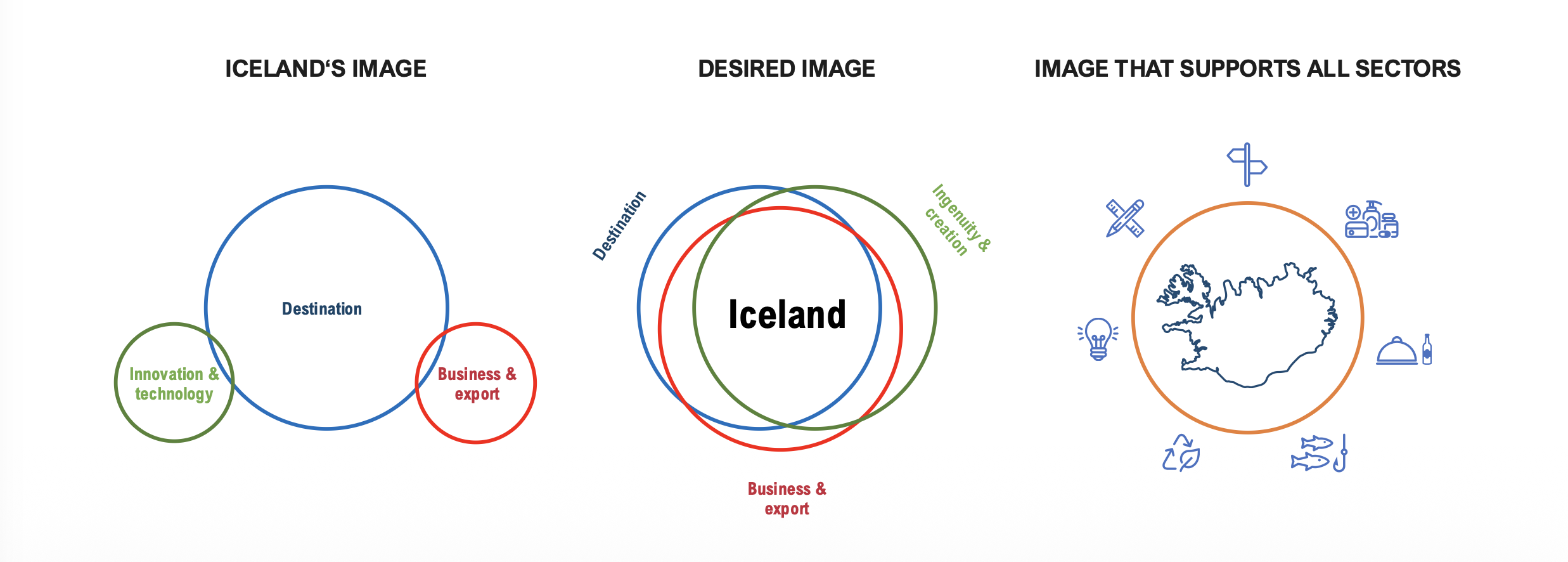
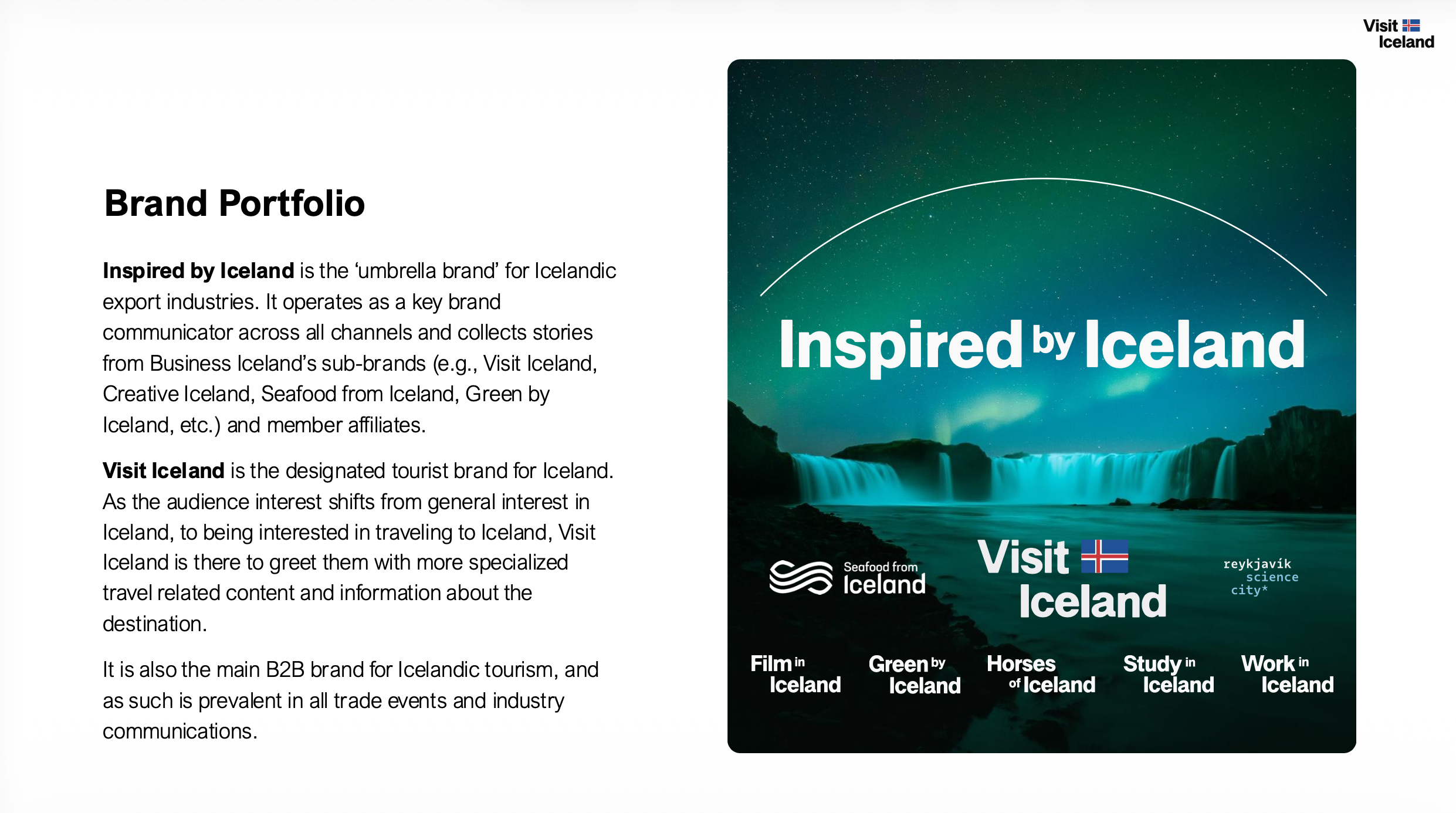
Business Iceland's brand architecture reflects this complexity of promoting a variety of sectors. “Inspired by Iceland” serves as the umbrella brand across all channels and sectors. Beneath it, sit dedicated brands for specific functions: Visit Iceland for tourism, Green by Iceland for sustainability initiatives and Seafood from Iceland for leveraging sustainable fisheries.
As consumer interest shifts from a general interest in Iceland to being interested in travelling to Iceland, Visit Iceland provides more specialised travel content about the country. While serving as the consumer tourism brand, it also acts as the main B2B brand for industry communications and trade events.
Business Iceland’s long-term objective for tourism development focuses on leveraging the country’s distinctive features and developing a sustainable industry that balances the economy, society, the environment and visitors. The goal, Sveinn emphasised, is “trying to maximise the value of the industry”. While Business Iceland functions as the branding agency raising awareness, Icelandic tourism companies play a vital role in driving sales activations.
The strategy translates into three strategic goals:
Iceland’s low season runs from September to May, with summer months representing peak demand. This might seem counterintuitive for a destination famous for viewing the Northern Lights, but it reflects years of strategic marketing effort.
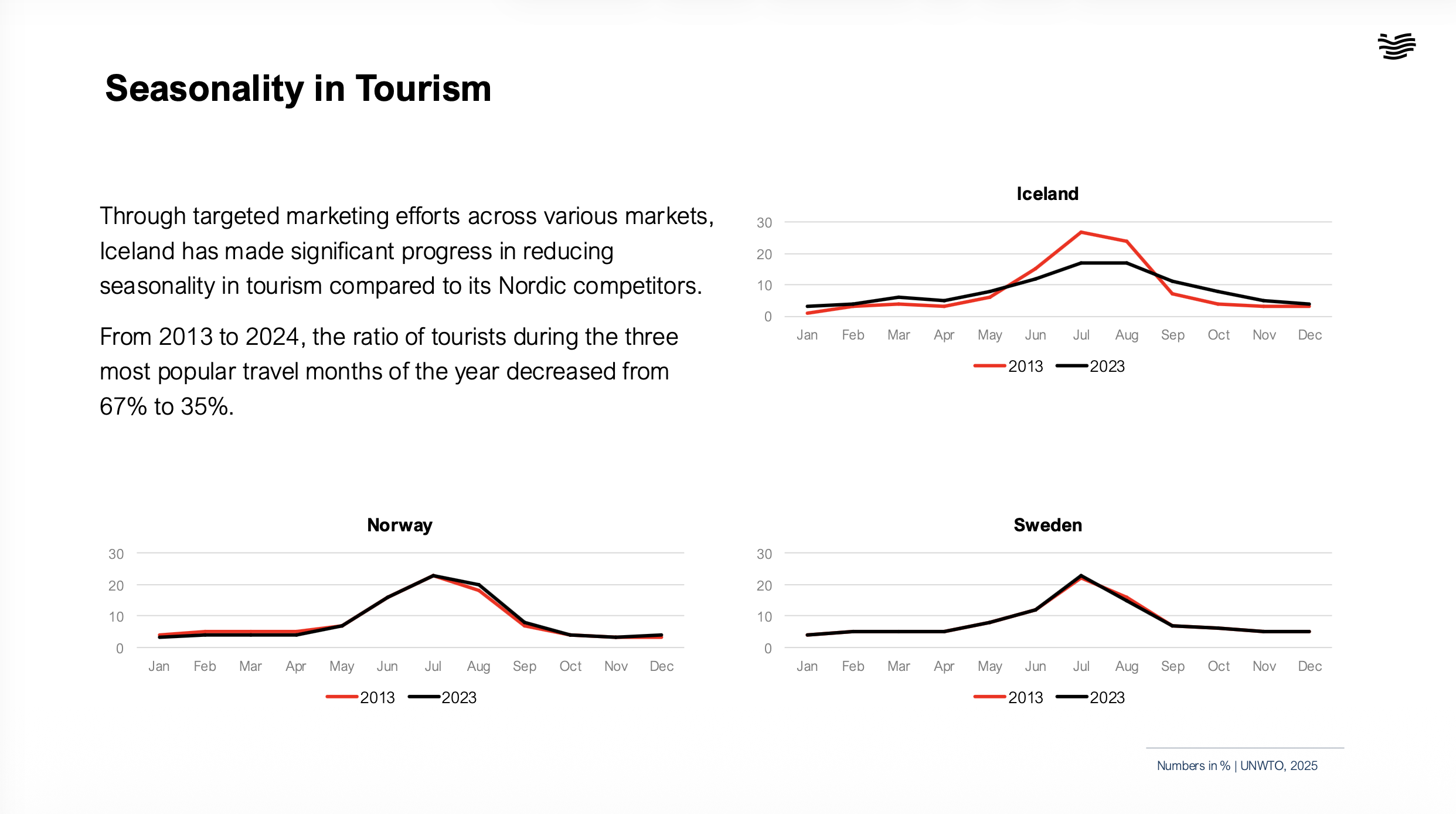
The data tells a compelling story. From 2013 to 2024, the proportion of tourists visiting during the three most popular months dropped from 67% to 35%. Comparing Iceland’s seasonality curve to Norway and Sweden reveals the scale of this achievement. While those competitors maintained relatively stable seasonal patterns, Iceland made significant progress in balancing visitor numbers throughout the year as a result of sustained marketing investment.
To achieve this clear shift in seasonality, Business Iceland's successful marketing approach relied on timing campaign launches appropriately. This meant that the DMO concentrated their campaigns during off-season booking windows. Such a strategic move also meant that while Business Iceland never explicitly promoted off-season travel in its marketing, the visuals represented seasons where demand had traditionally been lower. As Sveinn noted, “We have never used any sort of summer visuals in our marketing. It’s always winter or [autumn]”.
The most significant insight from Business Iceland’s recent experience came from an unplanned marketing absence. During the COVID-19 pandemic, Iceland invested more heavily in marketing than ever before. The result was that Iceland became one of the fastest-rebounding tourism destinations globally, quickly returning to pre-pandemic visitor numbers.
However, the success led to reduced government funding and destination marketing campaigns stopped entirely for three years. The consequences revealed just how much control destination marketing provides over visitor patterns and brand image. While Iceland still had a strong tourism performance in the summer, winter months were almost 10% below pre-COVID levels. This lack of ongoing promotion, therefore, contributed to a decline in off-season tourism, while Iceland lost competitive positioning in Northern Lights tourism to both Finland and Norway.
This experience reframes marketing’s function. For Sveinn, marketing is one of the few tools available to influence visitor behaviour. Without it, Iceland lost strategic control over how visitor numbers developed. Based on this knowledge, the “Meet the Auroras” campaign in 2025 represented Business Iceland’s return to consumer marketing for tourism. The campaign introduced AURORAS (Alliance of Ultra Reliable Observers Ready for Aurora Spotting), a quirky trio of Northern Lights enthusiasts who guide visitors through Iceland’s winter offerings. The approach maintains the humour and personality that had characterised Iceland’s most successful campaigns.
Iceland’s small scale relative to competing destinations shapes its marketing philosophy. Sveinn articulated, “we can most likely never outspend you, but we can try to outthink you”. Iceland’s mindset manifests in campaigns designed to generate organic reach and media coverage through creative concepts rather than paid media weight.
The Icelandverse campaign exemplifies this approach. When Mark Zuckerberg announced the Metaverse in 2021, Iceland produced a parody in under three weeks. As Sveinn observed, the campaign demonstrates “excellent project management” as much as creative flair. The ability to move from concept to finished video so quickly enabled Iceland to capitalise on a cultural moment that would no longer be relevant by the time a traditional production timeline concluded. This proved crucial in enabling the DMO to capitalise on media interest and maximise reach.
Similarly, the “OutHorse Your Email” campaign responded to post-pandemic anxieties about work-life balance. The insight was that people felt perpetually connected to work, with the lines between personal and professional lives blurring after years of remote working. The humorous solution was Icelandic horses trained to respond to emails while visitors actually disconnected.

Senior Advisor
Business Iceland

Founder & CEO
Digital Tourism Think Tank