Marketing
Exploring New Perspectives: Balancing Consistency with Nuance
Visit Portugal uses emotional storytelling and creative metaphors to balance tourism growth across regions and attract high-value visitors.
Featuring
Visit Portugal
Visit Portugal uses emotional storytelling and creative metaphors to balance tourism growth across regions and attract high-value visitors.
In Portugal, the tourism sector reached record levels in 2024, contributing 9.7% of GDP with 29.7 million visitors, 76.1 million overnight stays and €27 billion in revenue. Yet these headline figures mask a geographical imbalance. The concentration of tourism in Lisbon, Porto and the Algarve creates both overtourism pressures in popular areas and missed economic opportunities in the country's interior regions. With this context, the question becomes not simply how to market more effectively, but how to fundamentally reshape visitor behaviour. Paula Ganhão, Project Manager at Visit Portugal, presented the DMO's approach to tackling this challenge, revealing how creative storytelling can serve strategic destination management objectives whilst building a consistent brand identity.
In Portugal, the tourism sector reached record levels in 2024, contributing 9.7% of GDP with 29.7 million visitors, 76.1 million overnight stays and €27 billion in revenue. Yet these headline figures mask a geographical imbalance. The concentration of tourism in Lisbon, Porto and the Algarve creates both overtourism pressures in popular areas and missed economic opportunities in the country's interior regions. With this context, the question becomes not simply how to market more effectively, but how to fundamentally reshape visitor behaviour. Paula Ganhão, Project Manager at Visit Portugal, presented the DMO's approach to tackling this challenge, revealing how creative storytelling can serve strategic destination management objectives whilst building a consistent brand identity.
In Portugal, the tourism sector reached record levels in 2024, contributing 9.7% of GDP with 29.7 million visitors, 76.1 million overnight stays and €27 billion in revenue. Yet these headline figures mask a geographical imbalance. The concentration of tourism in Lisbon, Porto and the Algarve creates both overtourism pressures in popular areas and missed economic opportunities in the country's interior regions. With this context, the question becomes not simply how to market more effectively, but how to fundamentally reshape visitor behaviour. Paula Ganhão, Project Manager at Visit Portugal, presented the DMO's approach to tackling this challenge, revealing how creative storytelling can serve strategic destination management objectives whilst building a consistent brand identity.
The COVID-19 pandemic accelerated changes in how people approach travel, creating both challenges and opportunities for destination marketers. Visit Portugal's research identifies five key shifts in traveller expectations:
These shifts align naturally with Portugal's strengths, but capitalising on them requires clear audience segmentation and targeted creative approaches. Visit Portugal's target audience framework reflects this strategic thinking. The DMO focuses on premium lifestyle travellers, cultural and heritage enthusiasts, nature and adventure seekers, wine and gastronomy devotees, LGBTQ+ travellers and niche but high-value segments, such as literary tourism. This segmentation enables precision in both message development and media deployment, allowing campaigns to resonate with specific motivations whilst maintaining overall brand consistency.
At the heart of Visit Portugal's approach lies a simple question: how can we show Portugal not by what we have, but by what we make people feel? This reframing shifts the creative direction from pure promotion to emotional storytelling. Rather than cataloguing monuments, beaches and restaurants, campaigns focus on evoking the feelings visitors experience when engaging with Portuguese culture, cuisine and landscapes. The creative direction blends visual identity with cultural expression, sharing experiences that evoke emotion, whilst featuring real places, real people and real traditions.
This philosophy has manifested across all of Visit Portugal's campaigns, each targeting different aspects of Portugal's tourism offer whilst maintaining consistent brand values. Working with creative agency Dentsu Creative, Visit Portugal develops campaigns that are deliberately diverse in theme and execution, yet unified in their emphasis on authenticity, warmth and cultural depth. The partnership operates on the principle of seeking something original and creative rather than following prescriptive briefs, allowing for genuinely distinctive work that cuts through competitive destination marketing noise.
Perhaps most significantly, Visit Portugal's goal is not to increase the number of tourists but to attract high-quality, high-value visitors who contribute economically whilst respecting destinations and communities. This strategic shift away from mass tourism reflects growing awareness that sustainable destination management requires selectivity in visitor promotion, not simply maximum throughput. This philosophy shapes campaign targeting, creative development and partnership selection.
Portuguese cuisine occupies an interesting position in the global culinary landscape. Visitors consistently enjoy the food once they arrive, rating it highly in their overall experience. Yet, Portugal does not command the same culinary destination status as Italy, Spain or France, where food serves as a primary travel motivator. The Unwritten Recipe campaign aims to change this perception, positioning gastronomy as a key attraction that connects past, present and future through authentic flavours.
The campaign's creative approach uses the metaphor of an unwritten recipe passed through generations, with five 'ingredients' that characterise both Portuguese cuisine and the broader visitor experience: freshness, authenticity, creativity, sustainability and generosity. Each ingredient extends beyond food to encompass Portugal's cultural values: the freshness of coastal produce mirrors the country's natural diversity; authenticity reflects culinary traditions maintained across generations; creativity appears in contemporary reinterpretations of classic dishes; sustainability speaks to Portugal's relationship with its land and sea; and generosity embodies the warmth and hospitality visitors encounter.
The campaign structure includes a flagship video, alongside shorter cutdowns focusing on the individual ingredients. Keywords guiding the creative include warmth, simplicity, hospitality and a slower, meaningful rhythm of life. With approximately €2.49 million in advertising spend, the campaign generated 957 million impressions, reached 168 million people and drove 799,000 website sessions with an average duration exceeding two minutes.
The Portugal Music Festival Headliners campaign represents Visit Portugal's most creatively ambitious work, using the metaphor of a music festival to position the entire country as a lineup of unmissable acts. The concept treats Portuguese tourism as headline performers, with fictional bands representing different destination attributes. Fields of Infinity evokes the country's natural landscapes; Full Table Nation speaks to gastronomy; Random Castles highlights heritage; The Art Attacks represents cultural offerings, with additional acts covering the country's weather, oceans, diversity and wellness experiences.
Beyond creative distinction, the campaign serves a precise strategic function in supporting regional development. Music festivals in Portugal typically occur outside the major tourist centres, taking place in areas that need more visitors and more economic stimulus. By associating the entire territory with festival energy and discovery, the campaign encourages travellers to explore more broadly. The festival metaphor also resonates more strongly with younger, experience-seeking audiences to create memorable associations with the country.
With €379,000 in advertising investment, it achieved 132 million impressions and reached 33.2 million people. Website sessions reached 149,000, with an average duration of just under two minutes. These metrics validate the creative approach's ability to capture attention and drive engagement with a relatively modest budget.
The This is Art campaign serves as Visit Portugal's current hero platform, used across exhibition stands at more than 30 international trade fairs. The concept proposes that art in Portugal extends beyond museums and galleries to encompass everyday life. Food can be art. Landscapes can be art. Traditions can be art. Every region becomes a creative stage, from crafts to design, from music to contemporary cultural expressions. This positioning targets culturally engaged travellers seeking authenticity and diversity, moving beyond conventional tourism messaging to establish Portugal as a destination where creativity permeates daily experience.
The creative execution pairs different art forms with tourism products: architecture with festivals, craft art with wine, modern art with gastronomy, religious art with wellness and urban art with surfing. This unexpected pairing approach reinforces the campaign's central thesis that art defies conventional boundaries and can be discovered throughout Portugal's diverse regions. The campaign's goals centre on positioning Portugal as a living cultural space where art shapes everyday life, emphasising diversity and appealing to travellers who value creativity and authenticity.
With €1.58 million in advertising spend, the campaign generated 604 million impressions and reached 104 million people. Notably, website sessions showed strong engagement with an average duration of almost three minutes, suggesting the creative approach successfully attracts visitors genuinely interested in exploring Portugal's cultural depth.
Launched in November 2025, Portugal Means Business extends Visit Portugal's portfolio into the meetings, incentives, conferences and exhibitions (MICE) sector. The campaign responds to the growing bleisure trend, where business travellers extend trips to include leisure experiences. Portugal's positioning centres on the proposition 'Work well, but live better', establishing the country as a MICE destination where efficiency meets quality of life.
The creative execution follows an executive through a business day in Portugal, where each agenda item carries double meaning: the board meeting becomes a fresh morning surf, the market overview involves sampling new flavours and networking involves relaxation in nature. The campaign reinforces strategic attributes including innovation, accessibility, sustainability and lifestyle, positioning Portugal as a destination that enhances business events. This represents portfolio diversification for Visit Portugal, extending the organisation's reach into a high-value segment where per-visitor spending typically exceeds leisure tourism.
Visit Portugal's 2025 performance demonstrates how strong creative work and strategic media deployment can maintain effectiveness even when budgets contract significantly. While the organisation typically invests over €10 million annually in international campaigns, strict government procurement rules forced a three-month pause during the summer, reducing actual spend to €6.43 million. Despite this 40% reduction, cumulative campaign performance remained strong, with 2.49 billion impressions, 177 million people reached, 7.77 million ad clicks and 3.09 million website sessions averaging two and a half minutes.
The organisation's funding model provides unique stability. Visit Portugal oversees the licensing of casinos and collects their taxes, generating approximately €200 million annually, which funds tourism promotion activities. This independent revenue stream insulates marketing investment from general government budget pressures. The structure enables strategic continuity even when procurement processes create temporary disruptions.
Visit Portugal's team structure also reflects strategic prioritisation of paid media. The international communication team comprises ten employees focused on paid campaigns, alongside three working on organic content. This ratio acknowledges that paid media reaches larger audiences and generates stronger returns, whilst organic content builds community and supports brand presence between campaigns. Investment in emerging platforms like Meta Threads also signals awareness that channel effectiveness evolves continuously.
Beyond paid advertising, Visit Portugal cultivates strategic media partnerships that extend reach and enhance brand positioning. A collaboration with Vogue produced seven different covers representing Portugal's seven tourism regions, creating premium editorial content that reached fashion-conscious, high-spending audiences. For World Expo 2025 in Osaka, Visit Portugal also created a Japanese-language Vogue edition distributed to pavilion visitors, combining editorial credibility with event-specific targeting.
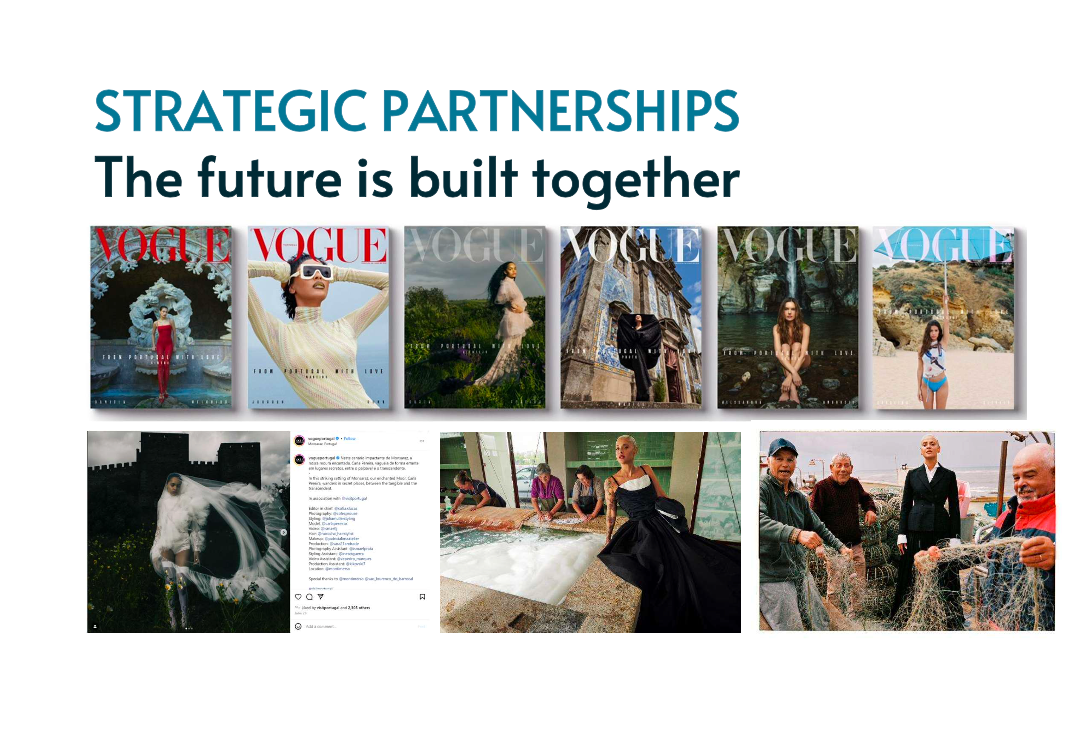
Additional partnerships with National Geographic, Bloomberg, Monocle and Travel Weekly provide ongoing editorial platforms aligned with specific audience segments. These collaborations recognise that destination marketing increasingly requires earned media credibility alongside paid reach. The partnership approach also supports Visit Portugal's collaborative model, working with regional tourism entities, private sector operators and local communities to ensure visitors encounter consistent experiences that match promotional messaging.

Project Manager
Visit Portugal


