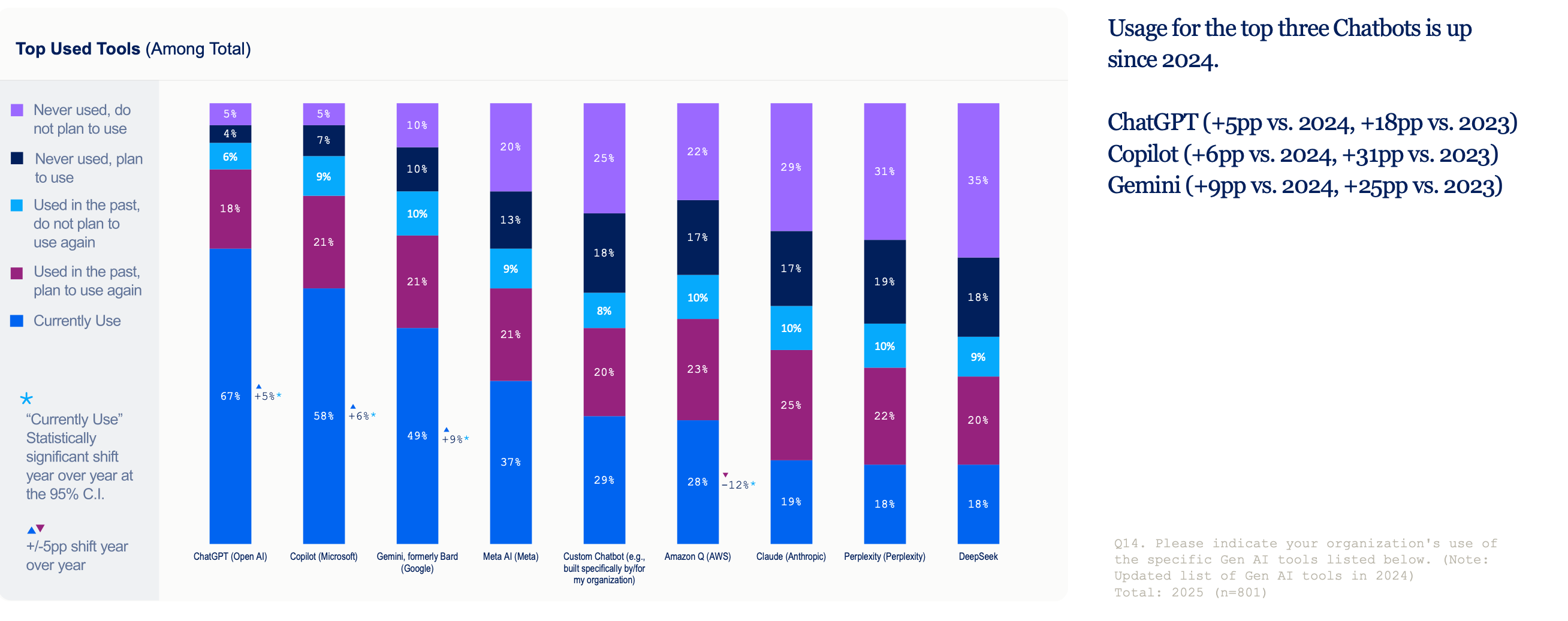
The use of generative AI is increasingly becoming embedded into routine workflows, with research from October 2025 emphasising the dominance of OpenAI (67%), Microsoft (58%) and Google (49%) for business adoption.
The use of generative AI is increasingly becoming embedded into routine workflows, with research from October 2025 emphasising the dominance of OpenAI (67%), Microsoft (58%) and Google (49%) for business adoption. As AI is increasingly embedded into organisational culture, OpenAI's data shows how the number of businesses using its services has doubled in the past year. Two years of rapid transformation have left organisations scrambling to keep up with each new development and just as one piece of the puzzle falls into place, another changes the picture again.
While experimentation has been the mainstay of how destinations have approached AI integration, attention is now shifting to the more challenging questions around governance, leadership and the disclosure mechanisms that allow people to trust what AI produces. This matters from three perspectives:
Inside organisations, where teams need to be able to rely on the integrity of each other's work.
Across the industry, where partners and agencies depend on being able to verify how AI has shaped a shared output.
External communication, where travellers and stakeholders form judgements about a destination based on content whose origin is increasingly difficult to identify.
This was the focus of a recent LinkedIn Live session featuring Nick Hall in conversation with Sérgio Guerreiro, Director of Strategy and Knowledge Management at Turismo de Portugal and Chair of the OECD Tourism Committee, and Tania Sultana, Head of Research at the Malta Tourism Authority and Chair of the European Travel Commission's Market Intelligence Group. The discussion focused on how building effective protocols, frameworks and shared standards can enable trust to develop.
Adapting on Two Fronts
Travellers are using AI to plan, compare and decide on trips in ways that did not exist eighteen months ago, starting with a conversational prompt instead of a search query. They compare destinations through summarised responses and expect personalised itineraries that match how they like to travel. That shift is changing the surfaces a destination needs to be present on and the way content needs to be written and structured to be discoverable.
From an organisational perspective, AI enables data analytics to operate at a depth and speed that was previously out of reach. For example, Turismo de Portugal now processes news flows from around the world to generate near-instant market intelligence about consumer sentiment. At the same time, DMOs also have a key role in supporting adoption at a national level among small and medium-sized businesses, with Turismo de Portugal having a parallel innovation branch that works with AI startups to support a safe transition for the wider sector.
While earlier digital shifts changed the tools available to destinations, AI is simultaneously changing what travellers expect and what organisations are capable of achieving. Sitting still is no longer a credible position, even for organisations that have historically taken a cautious approach to digital change. In adding capability without taking over the tourism experience, Sérgio describes AI as "transparent technology", sitting in the background, helping with personalisation, translation, targeting and productivity, enabling the human touch to remain the competitive advantage of the sector.
A Tool for Competition
Used effectively, AI is becoming a tool for strengthening competition, helping destinations and businesses build stronger relationships with travellers, capture attention earlier in the planning journey and shape more of the discovery process. Sérgio raises the point that competition tools need rules, with values sitting alongside the data when those tools are deployed.
This has direct implications for disclosure. If a report is produced entirely with AI and presented as the work of an individual, that omission alters the recipient's understanding of what they are reading. The same applies to imagery used by a destination, content shared on social channels or recommendations served to travellers through an LLM. The end user, whether a boss, a partner or a visitor, has a reasonable claim on knowing how AI has been involved. Disclosure is a way of making AI's role visible to whoever is on the receiving end, with enough context for them to decide how much weight to give it.
What that requires is a shift in perception. There is still a lingering assumption that admitting AI was used is admitting to something negative, particularly in creative work. However, the picture is more nuanced. AI is letting teams produce work that would have been too costly, too slow or beyond their internal skill set in the past. That expands what a destination can do. Disclosure puts the contribution in plain view and opens the way for more creative uses of AI, including hybrid approaches where creatives work alongside AI to push their own work further. None of this conflicts with the principle of authenticity, provided AI's role is visible.
AI Authenticity
However, some lingering concerns remain about authenticity and the impact of AI-generated content. Sérgio pointed to a recent image of Amsterdam in winter with tulips in bloom, a scene that is not possible but which circulated widely and could shape someone's perception of a destination. This means that people are now starting to question whether what they see online has been produced by AI, even when it has not. A social experiment on X in May made the point neatly, when a user posted one of Claude Monet's Water Lilies, flagged it with X's 'Made with AI' label and asked for critiques of why it fell short of a Monet, drawing a flood of confident takedowns of a canvas from one of the most celebrated series in Impressionism.
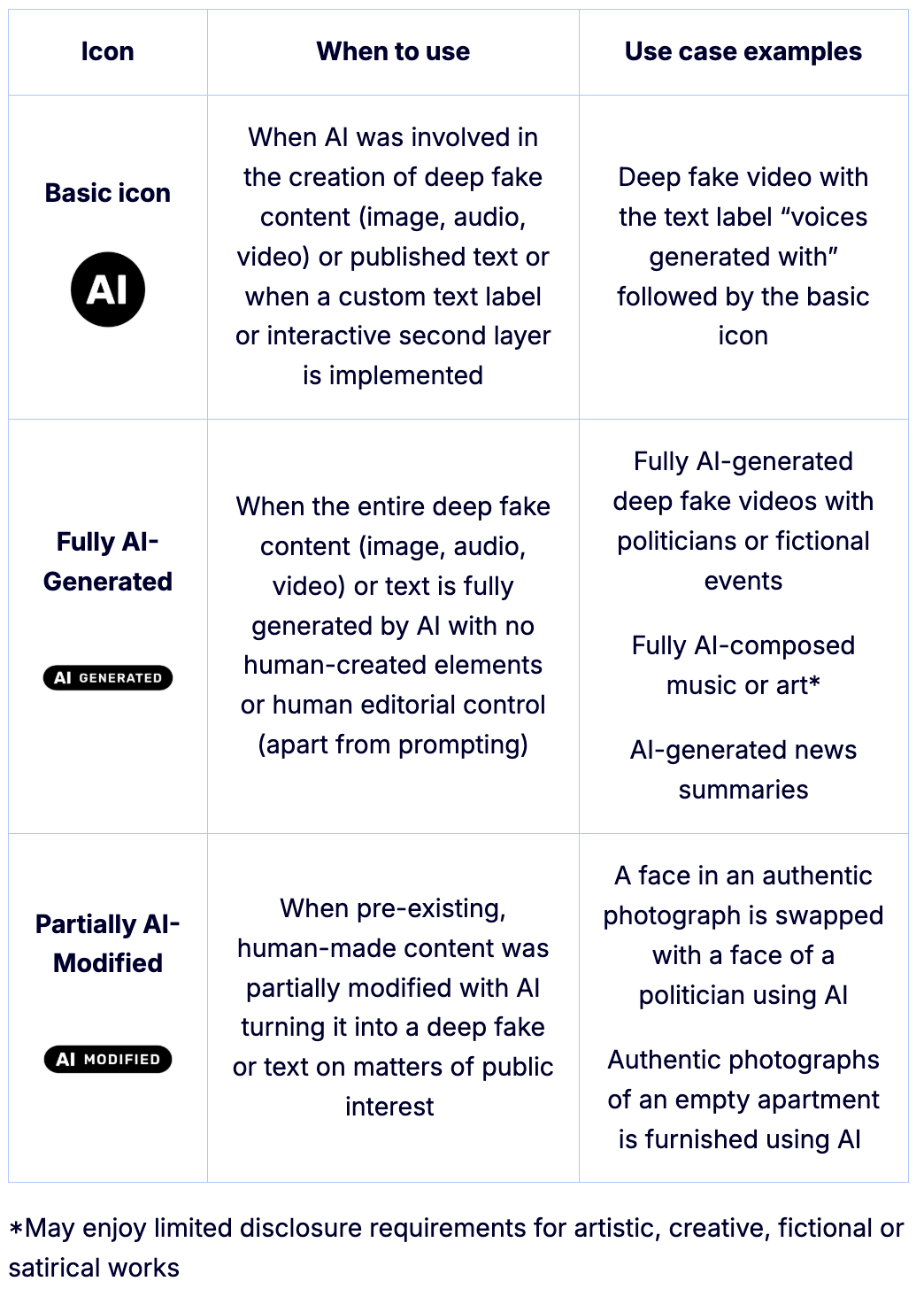
With no shared signal to guide them on whether a picture or video is synthetic or misleading, the audience is left to work out for themselves what to believe. While the EU AI Act mandates disclosure of AI-generated or manipulated images by businesses, with a set of standardised icons developed to enhance trust, the use of AI for personal, non-professional activity is specifically excluded from this legislation. With over 1.5 billion images generated weekly in ChatGPT, the AI slop that has saturated the internet in recent months will inevitably continue, with the impact on destination perception remaining outside the control of a DMO.
This is the trust gap that governance has to close. Tania noted how travellers had already drifted from official destination websites towards peer-to-peer recommendations over the past few years. Yet, those peer-to-peer channels are now subject to uncertainty about what is human and what is artificial. The result is an audience that is less sure than ever about what to believe, which weakens the position of every voice in the discovery process, including a destination's own.
Tania frames authenticity at two levels. There is the back-office work of building tools and processes that are demonstrably sound, where standards, methodologies and disclosure are part of how teams operate. At the same time, there is also the outward-facing work of how a destination communicates with travellers, where the authenticity of voice, image and story has to be defended in an environment of growing scepticism. Both layers need attention and they reinforce each other when they are handled well.
The public communications layer also has a creative dimension that needs protecting. Photographers, artists and writers earn a livelihood from their talent. AI-generated imagery and content put pressure on that economy. Disclosure and transparency are part of how a destination can keep recognising creative contributors fairly, while still using AI to make modifications where it brings benefit. As Nick highlights, this brings an opportunity for DMOs to "double down on authenticity and creativity, whilst also doubling down on AI where it makes sense". For example, Turismo de Portugal has built campaigns around celebrated authors, framing them as voices through which the country should be experienced. That kind of promotion becomes more valuable in a world where audiences assume content is synthetic by default.
Sustainability Cuts Both Ways
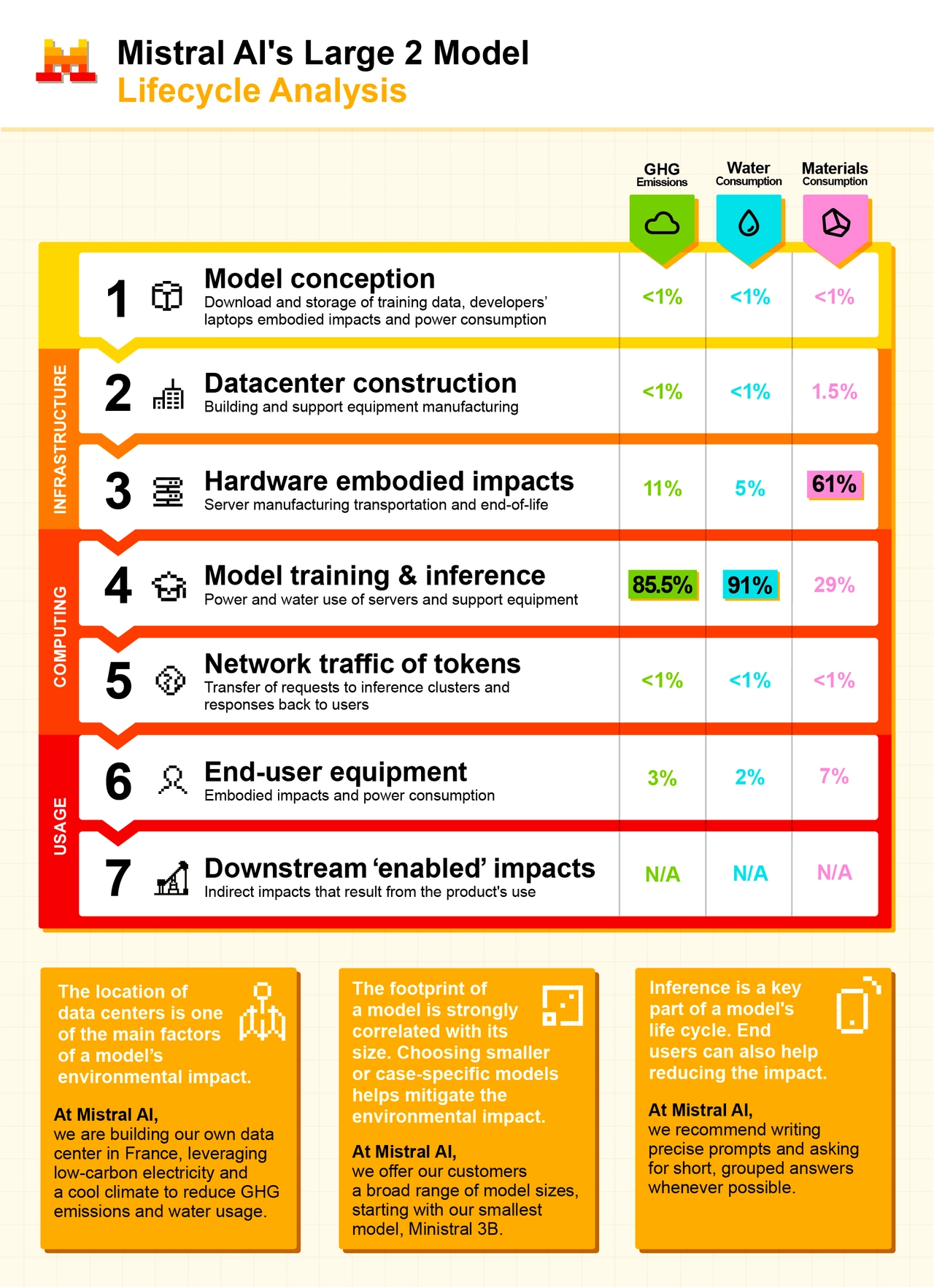
The environmental impact of AI is also a recurring concern among DMOs that hold formal sustainability commitments. Image and video models, in particular, are energy-intensive, which creates an apparent conflict between a destination's marketing aspirations and its environmental commitments.
Sérgio expects this sustainability concern to return to the top of the corporate agenda as the EU's Corporate Sustainability Reporting Directive expands to cover a wider set of businesses. In the case of Turismo de Portugal, the DMO already reports its environmental impact, measuring everything from international travel to journalist visits and trade fair attendance. However, the current trajectory implies that the environmental impact of AI use will soon become an additional factor to report once estimates of actual usage become easier to establish at a granular level.
Nevertheless, there is a counterweight that has been underweighted in the current conversation. AI is also opening up new capacity to address the structural sustainability questions destinations have struggled with for years, including seasonality, regional dispersal and overtourism in specific hotspots. AI's ability to analyse data quickly means that work that would once have taken six to twelve months of human modelling can now be completed in days, enhancing strategy development and supporting the prototyping of innovative solutions. That speed unlocks experimentation on the kinds of problems that have resisted more traditional approaches.
Beyond Tactical AI Use
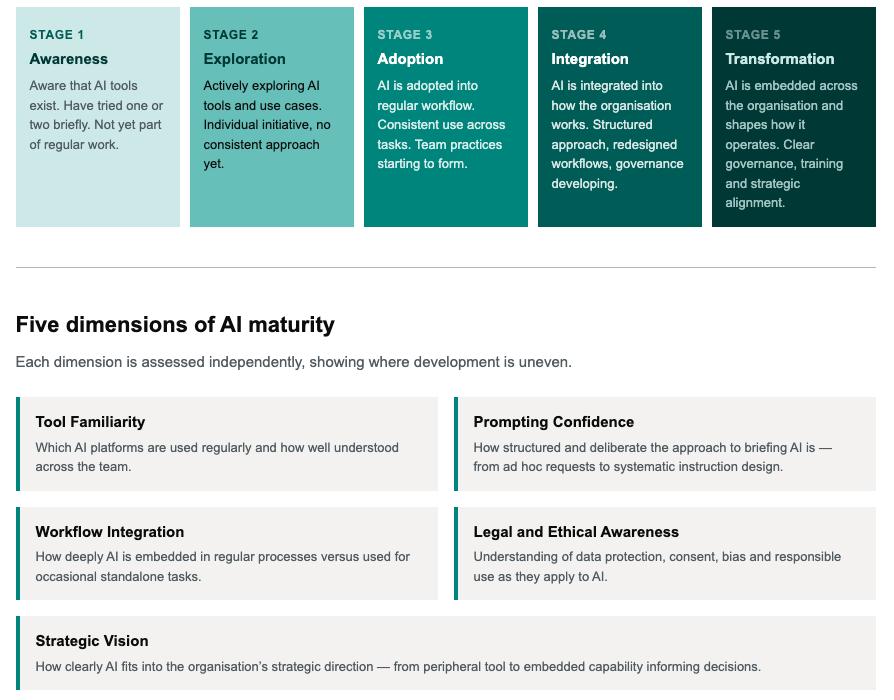
While AI offers new opportunities for destination management and marketing, AI maturity assessments across the sector tell a consistent story. When teams are taken through a structured self-assessment, the average score sits around two or three out of five. That signals tactical and isolated use, where individuals experiment with tools in their own time and on their own initiative, with little connection to organisational strategy. Strategic use, where AI is integrated into how a team operates and is measured against business outcomes, remains the exception.
The pattern also appears in shadow use. Sérgio referenced research suggesting that 80-90% of people use AI at work, while only 10% tell their managers. That gap leaves organisations exposed to risks they cannot see, including data being shared with third-party platforms outside any governance framework. It also prevents leadership from learning from the use that is already happening, because the people doing the work do not feel safe enough to share what they are doing.
A common pattern is for a majority of conscientious employees to hold back from using AI in ways that would benefit their teams because they are uncertain about what is permitted, which tools are safe and how to handle sensitive data. This reflects an instinct founded upon responsibility, but also represents a missed opportunity. Less cautious colleagues, meanwhile, go ahead anyway and use AI to make their lives easier, which compounds the risk of potential data leaks.
The shift destinations need to make is from tactical application to creating an enabling environment, where governance is focused on what is permitted rather than emphasising restrictions. Enabling environments make it clear which tools are allowed, which use cases are encouraged, where the boundaries sit and how to disclose what has been done. They lift the responsible majority into more capable use, while bringing shadow use into the open.
Malta's Sandbox Approach
Being one of the first countries to publish an AI strategy back in 2019, Malta has worked with these questions at a national level for longer than most. The Malta Digital Innovation Authority (MDIA) has taken the lead in building the right protocols, funding the Malta Tourism Authority's €600,000 AI platform. This platform was built inside a sandbox framework, giving a controlled and secure environment from the outset.
The sandbox environment was useful because it brought together multiple stakeholders in a way that allowed expertise to flow in both directions. Data engineers and AI specialists need to understand tourism to deliver useful solutions, while tourism experts, in turn, need to understand enough of the technical work to direct it well. Working closely with different entities also surfaced questions about intellectual property, such as the data from the National Statistics Office that is available on the platform.
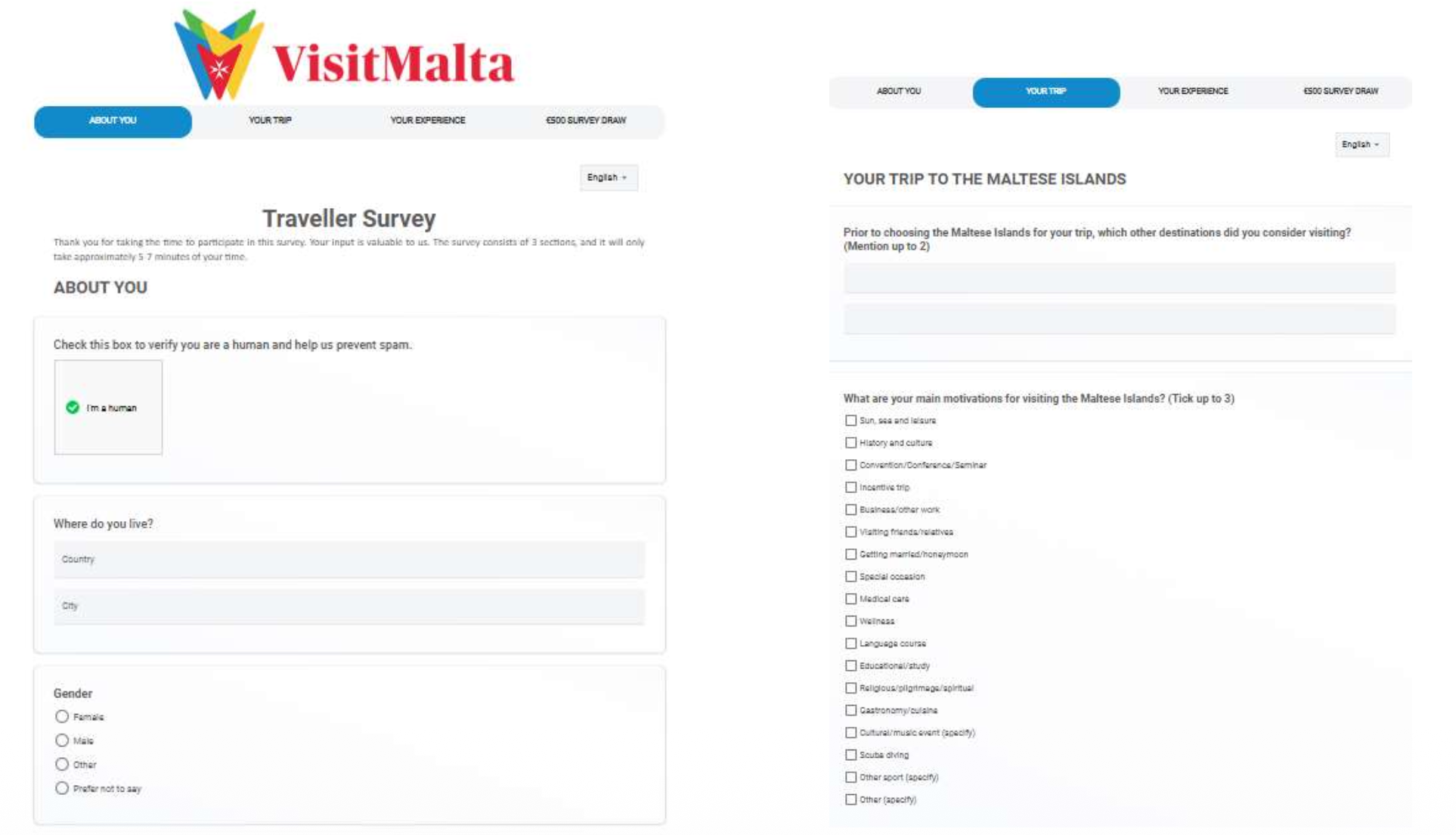
Another practical example came from the visitor survey, which had been based on written surveys for years and underpinned much of the strategic decision-making. When the survey became digital, response rates dropped. To lift completion, the Malta Tourism Authority introduced a reward incentive, which required an email address, which in turn brought GDPR into scope. Working through this with the DMO's data protection officer was an important step in keeping the project compliant. These complex considerations emphasise why a clear governance approach is not optional, with Tania concluding that AI needs vigilance and a willingness to reach out for the right legal and technical advice at the right time.
While governance is an essential component for creating strong foundations, boosting AI skills is a complementary requirement for it to be used well. MDIA is now working with OpenAI as part of its AI for All national AI literacy programme, with the aim of equipping citizens to use and benefit from the technology.
Perspectives on Capability
Both Tania and Sérgio landed on capability as the deciding factor in building confidence and trust in AI. Tania's view is that people need to understand what AI can do for them, without needing to become an AI expert. This was an understanding she personally built through one-to-one meetings with data engineers, walking them through the routine processes that had been costing time and asking which of them could be automated. In doing so, coding tourist comments by hand has been replaced with natural language processing that handles sentiment analysis automatically, which frees up time for analytical and strategic work.
The underlying disposition Tania advocates is humility, focusing on the need to sit down, dedicate the time, be patient and admit when you do not know something. Pretending to already understand and fear of making mistakes are the biggest barriers to learning.
On the other hand, Sérgio's view is that AI adoption, as a transformation that touches strategy, culture, capability and process, must have a response that is integrated and led from the top. This means a piecemeal approach will never be a long-term solution. Setting the conditions that ensure employees are protected and feel protected is a responsibility that is shared between senior leadership and human resources departments.
From there, Sérgio identifies three blocks of work:
Vision, which means being clear about why an organisation is using AI and what it expects to gain.
Capability, which means investing in training, skills development and matching tools to daily tasks.
Data, which means strengthening the robustness and governance of underlying datasets to avoid AI exposing fragilities founded upon inaccurate or missing information.
This duality of bottom-up and top-down approaches highlights the complexity of AI adoption. Building trust relies on the underlying logic that people who feel safe will communicate what they are doing, with appropriate structures required to enable this. The DTTT AI Transparency Framework provides a structured mechanism to start that work.
Oops! Something went wrong while submitting the form.
The use of generative AI is increasingly becoming embedded into routine workflows, with research from October 2025 emphasising the dominance of OpenAI (67%), Microsoft (58%) and Google (49%) for business adoption. As AI is increasingly embedded into organisational culture, OpenAI's data shows how the number of businesses using its services has doubled in the past year. Two years of rapid transformation have left organisations scrambling to keep up with each new development and just as one piece of the puzzle falls into place, another changes the picture again.
While experimentation has been the mainstay of how destinations have approached AI integration, attention is now shifting to the more challenging questions around governance, leadership and the disclosure mechanisms that allow people to trust what AI produces. This matters from three perspectives:
Inside organisations, where teams need to be able to rely on the integrity of each other's work.
Across the industry, where partners and agencies depend on being able to verify how AI has shaped a shared output.
External communication, where travellers and stakeholders form judgements about a destination based on content whose origin is increasingly difficult to identify.
This was the focus of a recent LinkedIn Live session featuring Nick Hall in conversation with Sérgio Guerreiro, Director of Strategy and Knowledge Management at Turismo de Portugal and Chair of the OECD Tourism Committee, and Tania Sultana, Head of Research at the Malta Tourism Authority and Chair of the European Travel Commission's Market Intelligence Group. The discussion focused on how building effective protocols, frameworks and shared standards can enable trust to develop.
Adapting on Two Fronts
Travellers are using AI to plan, compare and decide on trips in ways that did not exist eighteen months ago, starting with a conversational prompt instead of a search query. They compare destinations through summarised responses and expect personalised itineraries that match how they like to travel. That shift is changing the surfaces a destination needs to be present on and the way content needs to be written and structured to be discoverable.
From an organisational perspective, AI enables data analytics to operate at a depth and speed that was previously out of reach. For example, Turismo de Portugal now processes news flows from around the world to generate near-instant market intelligence about consumer sentiment. At the same time, DMOs also have a key role in supporting adoption at a national level among small and medium-sized businesses, with Turismo de Portugal having a parallel innovation branch that works with AI startups to support a safe transition for the wider sector.
While earlier digital shifts changed the tools available to destinations, AI is simultaneously changing what travellers expect and what organisations are capable of achieving. Sitting still is no longer a credible position, even for organisations that have historically taken a cautious approach to digital change. In adding capability without taking over the tourism experience, Sérgio describes AI as "transparent technology", sitting in the background, helping with personalisation, translation, targeting and productivity, enabling the human touch to remain the competitive advantage of the sector.
A Tool for Competition
Used effectively, AI is becoming a tool for strengthening competition, helping destinations and businesses build stronger relationships with travellers, capture attention earlier in the planning journey and shape more of the discovery process. Sérgio raises the point that competition tools need rules, with values sitting alongside the data when those tools are deployed.
This has direct implications for disclosure. If a report is produced entirely with AI and presented as the work of an individual, that omission alters the recipient's understanding of what they are reading. The same applies to imagery used by a destination, content shared on social channels or recommendations served to travellers through an LLM. The end user, whether a boss, a partner or a visitor, has a reasonable claim on knowing how AI has been involved. Disclosure is a way of making AI's role visible to whoever is on the receiving end, with enough context for them to decide how much weight to give it.
What that requires is a shift in perception. There is still a lingering assumption that admitting AI was used is admitting to something negative, particularly in creative work. However, the picture is more nuanced. AI is letting teams produce work that would have been too costly, too slow or beyond their internal skill set in the past. That expands what a destination can do. Disclosure puts the contribution in plain view and opens the way for more creative uses of AI, including hybrid approaches where creatives work alongside AI to push their own work further. None of this conflicts with the principle of authenticity, provided AI's role is visible.
AI Authenticity
However, some lingering concerns remain about authenticity and the impact of AI-generated content. Sérgio pointed to a recent image of Amsterdam in winter with tulips in bloom, a scene that is not possible but which circulated widely and could shape someone's perception of a destination. This means that people are now starting to question whether what they see online has been produced by AI, even when it has not. A social experiment on X in May made the point neatly, when a user posted one of Claude Monet's Water Lilies, flagged it with X's 'Made with AI' label and asked for critiques of why it fell short of a Monet, drawing a flood of confident takedowns of a canvas from one of the most celebrated series in Impressionism.
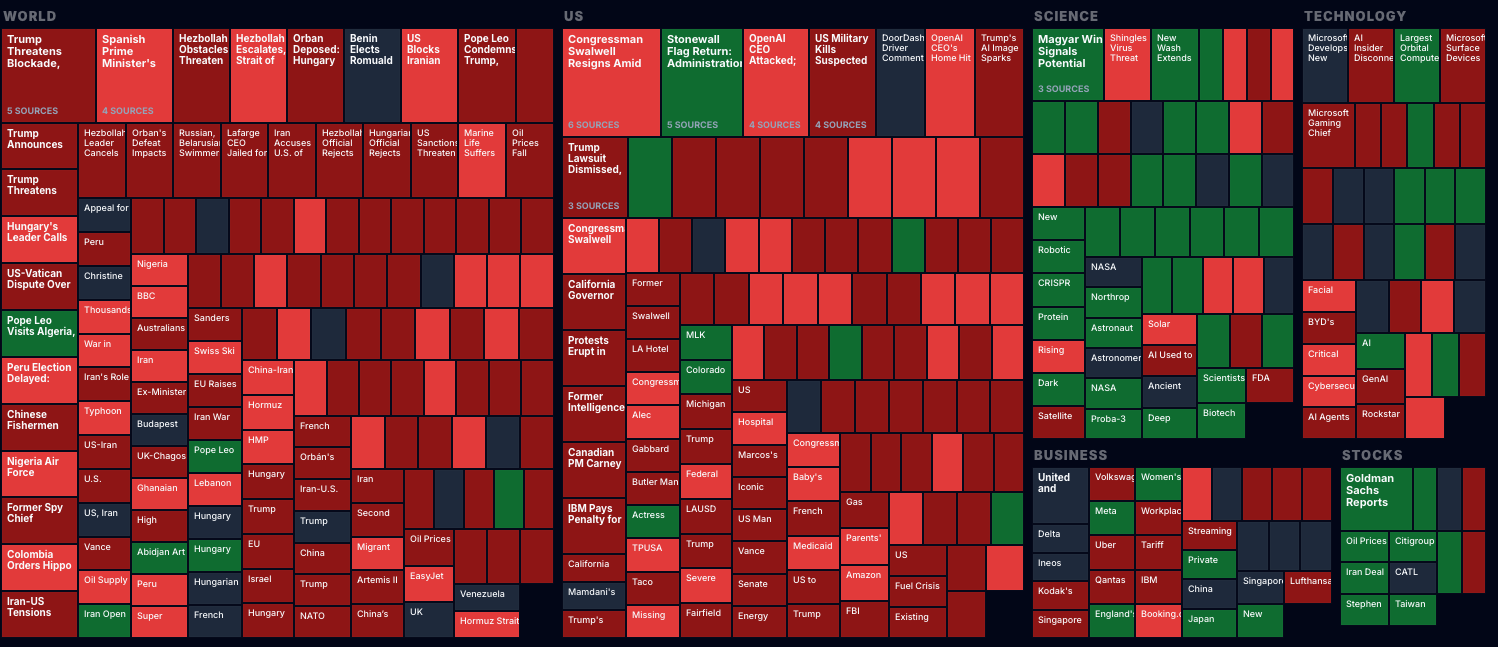
With no shared signal to guide them on whether a picture or video is synthetic or misleading, the audience is left to work out for themselves what to believe. While the EU AI Act mandates disclosure of AI-generated or manipulated images by businesses, with a set of standardised icons developed to enhance trust, the use of AI for personal, non-professional activity is specifically excluded from this legislation. With over 1.5 billion images generated weekly in ChatGPT, the AI slop that has saturated the internet in recent months will inevitably continue, with the impact on destination perception remaining outside the control of a DMO.
This is the trust gap that governance has to close. Tania noted how travellers had already drifted from official destination websites towards peer-to-peer recommendations over the past few years. Yet, those peer-to-peer channels are now subject to uncertainty about what is human and what is artificial. The result is an audience that is less sure than ever about what to believe, which weakens the position of every voice in the discovery process, including a destination's own.
Tania frames authenticity at two levels. There is the back-office work of building tools and processes that are demonstrably sound, where standards, methodologies and disclosure are part of how teams operate. At the same time, there is also the outward-facing work of how a destination communicates with travellers, where the authenticity of voice, image and story has to be defended in an environment of growing scepticism. Both layers need attention and they reinforce each other when they are handled well.
The public communications layer also has a creative dimension that needs protecting. Photographers, artists and writers earn a livelihood from their talent. AI-generated imagery and content put pressure on that economy. Disclosure and transparency are part of how a destination can keep recognising creative contributors fairly, while still using AI to make modifications where it brings benefit. As Nick highlights, this brings an opportunity for DMOs to "double down on authenticity and creativity, whilst also doubling down on AI where it makes sense". For example, Turismo de Portugal has built campaigns around celebrated authors, framing them as voices through which the country should be experienced. That kind of promotion becomes more valuable in a world where audiences assume content is synthetic by default.
Sustainability Cuts Both Ways
The environmental impact of AI is also a recurring concern among DMOs that hold formal sustainability commitments. Image and video models, in particular, are energy-intensive, which creates an apparent conflict between a destination's marketing aspirations and its environmental commitments.
Sérgio expects this sustainability concern to return to the top of the corporate agenda as the EU's Corporate Sustainability Reporting Directive expands to cover a wider set of businesses. In the case of Turismo de Portugal, the DMO already reports its environmental impact, measuring everything from international travel to journalist visits and trade fair attendance. However, the current trajectory implies that the environmental impact of AI use will soon become an additional factor to report once estimates of actual usage become easier to establish at a granular level.
Nevertheless, there is a counterweight that has been underweighted in the current conversation. AI is also opening up new capacity to address the structural sustainability questions destinations have struggled with for years, including seasonality, regional dispersal and overtourism in specific hotspots. AI's ability to analyse data quickly means that work that would once have taken six to twelve months of human modelling can now be completed in days, enhancing strategy development and supporting the prototyping of innovative solutions. That speed unlocks experimentation on the kinds of problems that have resisted more traditional approaches.
Beyond Tactical AI Use
While AI offers new opportunities for destination management and marketing, AI maturity assessments across the sector tell a consistent story. When teams are taken through a structured self-assessment, the average score sits around two or three out of five. That signals tactical and isolated use, where individuals experiment with tools in their own time and on their own initiative, with little connection to organisational strategy. Strategic use, where AI is integrated into how a team operates and is measured against business outcomes, remains the exception.
The pattern also appears in shadow use. Sérgio referenced research suggesting that 80-90% of people use AI at work, while only 10% tell their managers. That gap leaves organisations exposed to risks they cannot see, including data being shared with third-party platforms outside any governance framework. It also prevents leadership from learning from the use that is already happening, because the people doing the work do not feel safe enough to share what they are doing.
A common pattern is for a majority of conscientious employees to hold back from using AI in ways that would benefit their teams because they are uncertain about what is permitted, which tools are safe and how to handle sensitive data. This reflects an instinct founded upon responsibility, but also represents a missed opportunity. Less cautious colleagues, meanwhile, go ahead anyway and use AI to make their lives easier, which compounds the risk of potential data leaks.
The shift destinations need to make is from tactical application to creating an enabling environment, where governance is focused on what is permitted rather than emphasising restrictions. Enabling environments make it clear which tools are allowed, which use cases are encouraged, where the boundaries sit and how to disclose what has been done. They lift the responsible majority into more capable use, while bringing shadow use into the open.
Malta's Sandbox Approach
Being one of the first countries to publish an AI strategy back in 2019, Malta has worked with these questions at a national level for longer than most. The Malta Digital Innovation Authority (MDIA) has taken the lead in building the right protocols, funding the Malta Tourism Authority's €600,000 AI platform. This platform was built inside a sandbox framework, giving a controlled and secure environment from the outset.
The sandbox environment was useful because it brought together multiple stakeholders in a way that allowed expertise to flow in both directions. Data engineers and AI specialists need to understand tourism to deliver useful solutions, while tourism experts, in turn, need to understand enough of the technical work to direct it well. Working closely with different entities also surfaced questions about intellectual property, such as the data from the National Statistics Office that is available on the platform.
Another practical example came from the visitor survey, which had been based on written surveys for years and underpinned much of the strategic decision-making. When the survey became digital, response rates dropped. To lift completion, the Malta Tourism Authority introduced a reward incentive, which required an email address, which in turn brought GDPR into scope. Working through this with the DMO's data protection officer was an important step in keeping the project compliant. These complex considerations emphasise why a clear governance approach is not optional, with Tania concluding that AI needs vigilance and a willingness to reach out for the right legal and technical advice at the right time.
While governance is an essential component for creating strong foundations, boosting AI skills is a complementary requirement for it to be used well. MDIA is now working with OpenAI as part of its AI for All national AI literacy programme, with the aim of equipping citizens to use and benefit from the technology.
Perspectives on Capability
Both Tania and Sérgio landed on capability as the deciding factor in building confidence and trust in AI. Tania's view is that people need to understand what AI can do for them, without needing to become an AI expert. This was an understanding she personally built through one-to-one meetings with data engineers, walking them through the routine processes that had been costing time and asking which of them could be automated. In doing so, coding tourist comments by hand has been replaced with natural language processing that handles sentiment analysis automatically, which frees up time for analytical and strategic work.
The underlying disposition Tania advocates is humility, focusing on the need to sit down, dedicate the time, be patient and admit when you do not know something. Pretending to already understand and fear of making mistakes are the biggest barriers to learning.
On the other hand, Sérgio's view is that AI adoption, as a transformation that touches strategy, culture, capability and process, must have a response that is integrated and led from the top. This means a piecemeal approach will never be a long-term solution. Setting the conditions that ensure employees are protected and feel protected is a responsibility that is shared between senior leadership and human resources departments.
From there, Sérgio identifies three blocks of work:
Vision, which means being clear about why an organisation is using AI and what it expects to gain.
Capability, which means investing in training, skills development and matching tools to daily tasks.
Data, which means strengthening the robustness and governance of underlying datasets to avoid AI exposing fragilities founded upon inaccurate or missing information.
This duality of bottom-up and top-down approaches highlights the complexity of AI adoption. Building trust relies on the underlying logic that people who feel safe will communicate what they are doing, with appropriate structures required to enable this. The DTTT AI Transparency Framework provides a structured mechanism to start that work.
Continue reading...
Get access to 100s of case studies, workshop templates, industry leading events and more.




.svg)