Destination Marketing Partnerships: Insights from the Quarter Café LVEP Roundtable
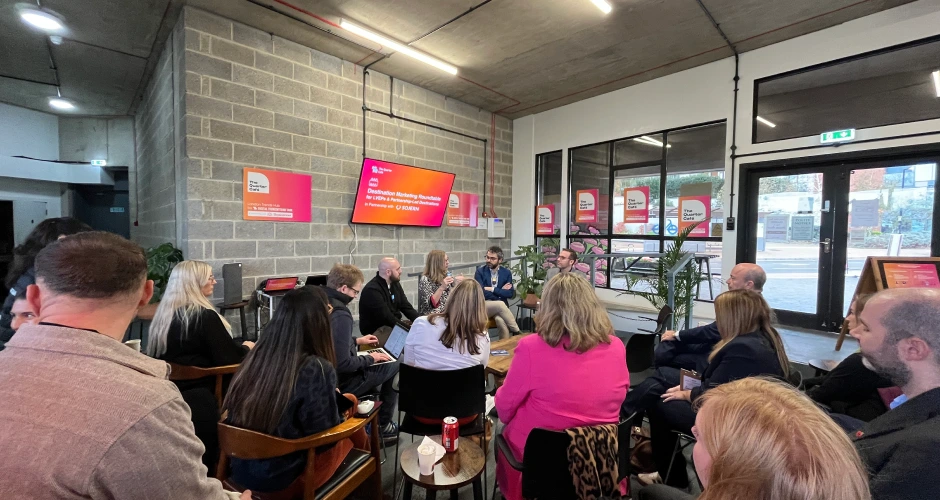
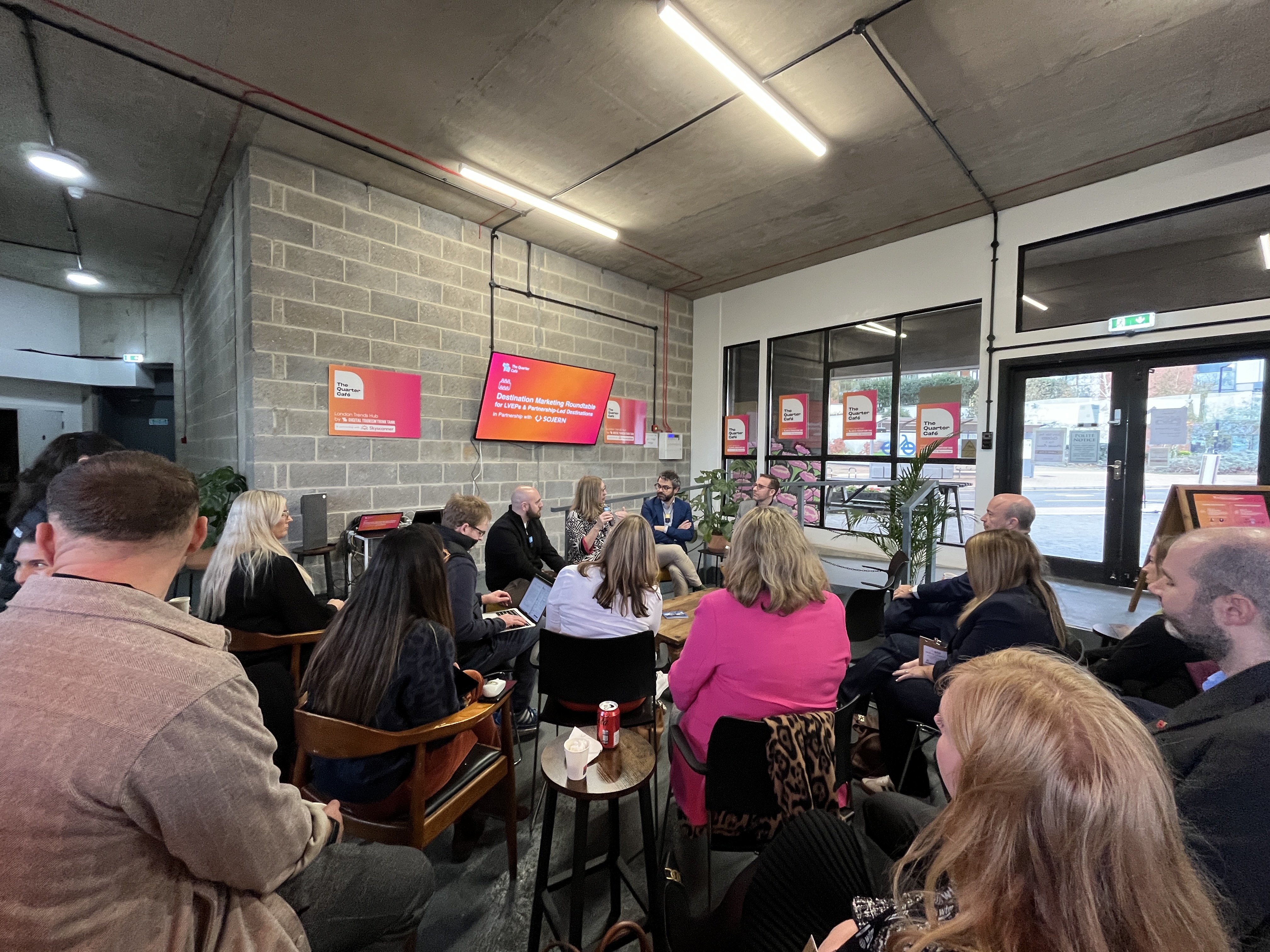
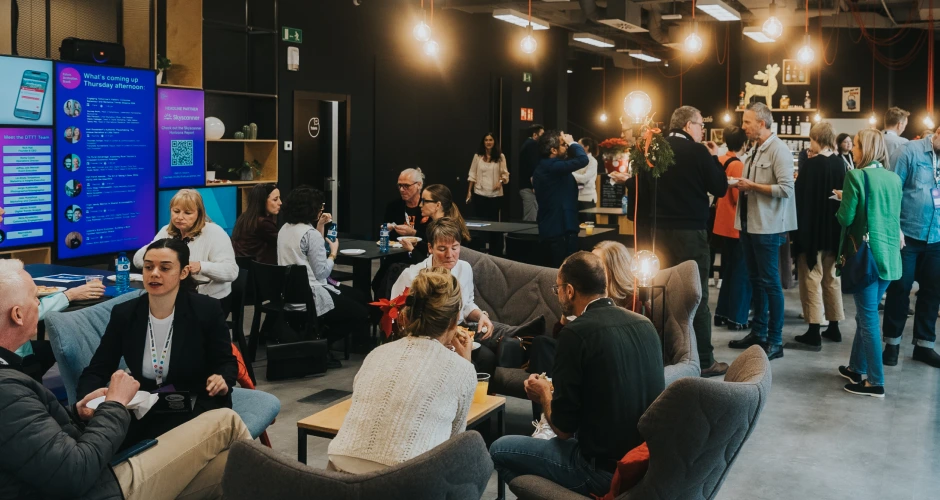
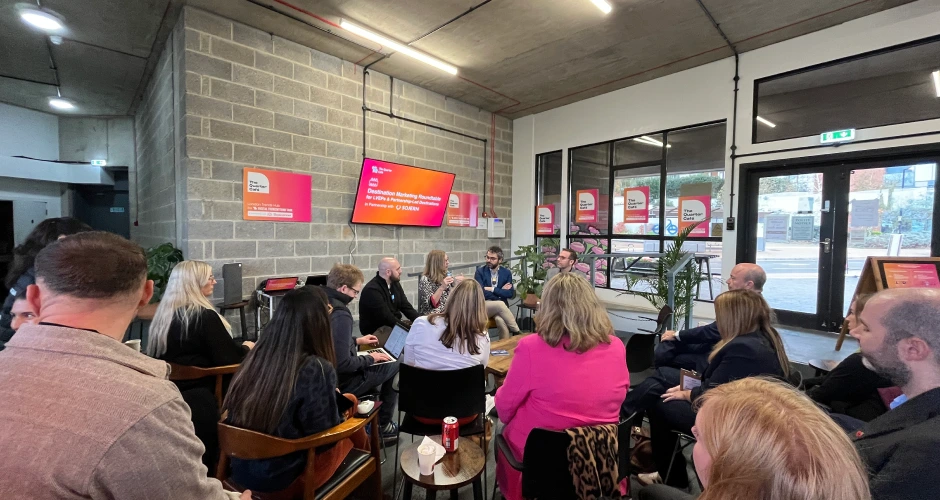
The roundtable discussion at our Quarter Café London Trends Hub on 4th November brought together destination marketing leaders to discuss the evolving landscape of tourism partnerships in the UK.
DTTT Knowledge Team
08 Nov 2025
In this piece
The roundtable discussion at our Quarter Café London Trends Hub on 4th November brought together destination marketing leaders to discuss the evolving landscape of tourism partnerships in the UK. Nick Hall, Founder & CEO of DTTT, andLuca Romozzi, Commercial Director for Europe at Sojern, joined Gill Haigh, Managing Director at Cumbria Tourism, and Liam Hartzenberg, Head of Marketing at Marketing Cheshire, to explore how destinations are adapting their strategies to build strong industry partnerships.
The LVEP Model
Understanding the destination partnership model in the UK requires examining the structural changes that have reshaped how destinations work together. Emerging from a recognition that previous partnership structures were too complex, the de Bois review established a three-tier structure that has reframed how regional destinations interact with each other at a national level.
VisitBritain facilitates discussions about the future of tourism in the country and coordinates national promotion initiatives.
Destination Development Partnerships (DDPs) set regional priorities and receive government funding to achieve these strategic objectives.
Local Visitor Economy Partnerships (LVEPs) deliver robust destination management to support and grow local visitor economies.
Whilst some LVEPs face funding challenges, the model has succeeded in enhancing coordination and building a collaborative spirit between destinations. This framework has enabled a step forward in achieving transparent two-way engagement between destinations, with regional DMOs having stronger opportunities to contribute to the development of the UK's national tourism strategy and build alignment on narratives for marketing campaigns. Such actions help to boost the visibility of all regions of the country, playing a vital role in encouraging visitors to travel beyond London.
The launch of the Starring Great Britain campaign in January 2025 acted as the first nationwide marketing activation under the new LVEP structure. The campaign leverages Britain's reputation as a world-leading destination for film and TV productions, using iconic film locations to inspire travel. By connecting audiences' favourite on-screen moments with the real places where they were filmed, the campaign aimed to convert cultural interest into visitor bookings whilst supporting the UK's creative industries.
The participation of LVEPs in amplifying the campaign played an essential role in maximising reach and engagement. While maintaining distinctive local identities, LVEPs developed digital and PR content that highlighted prominent film locations in their region. Working with partners, these LVEPs also shared guidance to help build bookable itineraries with the travel trade. This collaborative approach ensured the campaign benefits local communities whilst maintaining consistency with national messaging.
This new framework provides the foundation for destinations to tackle more complex challenges. By strengthening partnership-led approaches, DMOs are in a stronger position to prioritise fundamental questions about how tourism develops within their regions – questions that require coordinated approaches between multiple stakeholders.
The Attract and Disperse Model
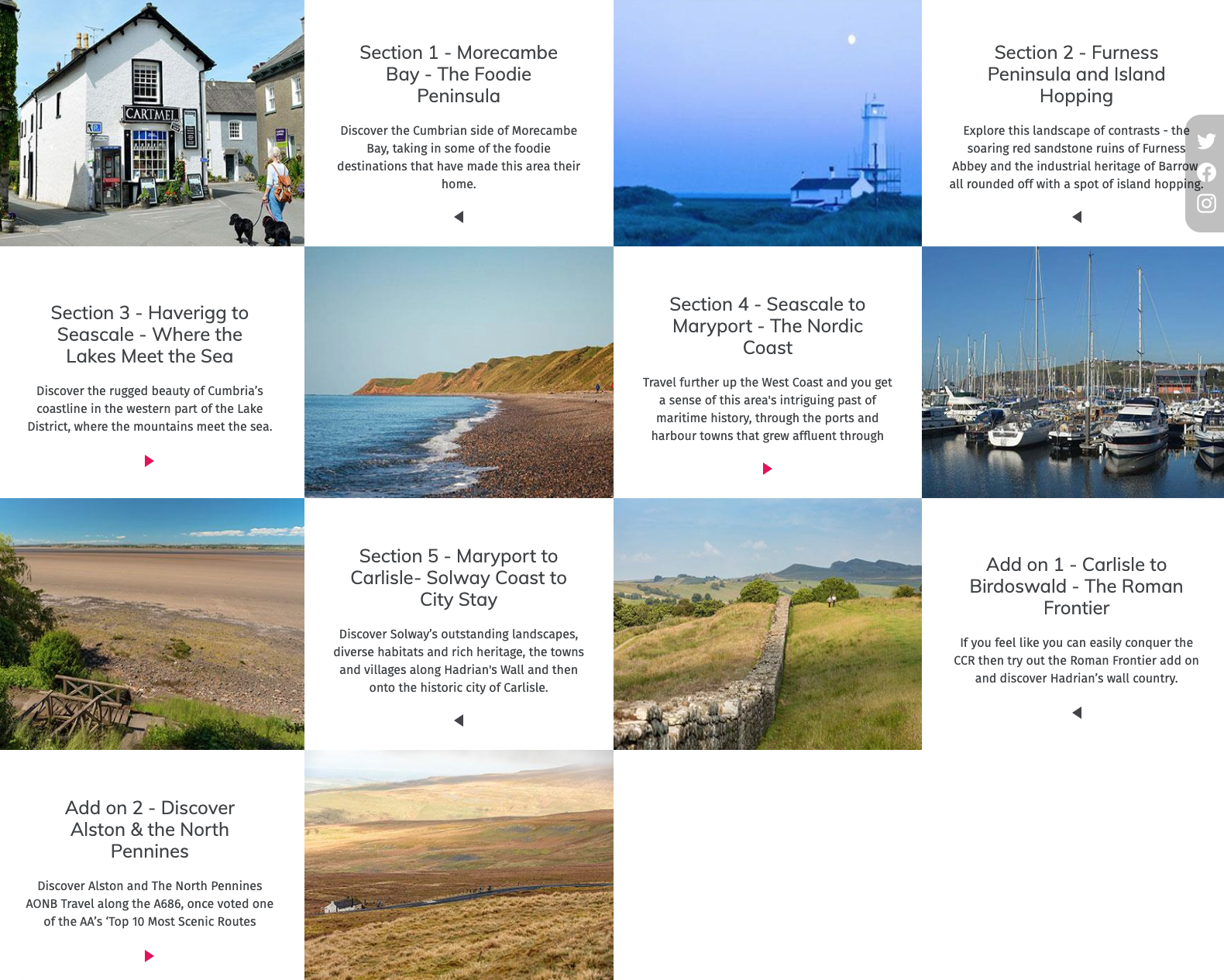
DMOs face a persistent challenge in managing visitor flows in ways that benefit both popular locations and lesser-known areas. Cumbria Tourism exemplifies both the challenge and the response. The Lake District draws visitors from across the UK and internationally. During peak periods, some locations experience significant pressure that affects both visitor experience and community wellbeing. The DMO's answer centres on developing the Cumbria Coastal Route – a 200-mile multi-user route designed for train-hopping, cycling, walking, horse riding and camping.
The ambition positions the coastal route alongside comparable long-distance touring routes: Ireland's Wild Atlantic Way, Scotland's North Coast 500 and Norway's Hardanger Scenic Route. The Cumbria Coastal Route aims to showcase the region's coastal attractions, natural beauty and cultural heritage to boost visitor numbers in less-visited areas and bring economic benefits to coastal communities, particularly outside the peak summer months.
Yet this approach for spreading tourism also creates some tensions. With Cumbria Tourism's membership base predominantly located in central Lake District, when the DMO invests staff time, marketing budget and political capital in coastal development, central Lake District members question why their subscriptions fund activities that could draw visitors away from their businesses. This effectively demonstrates the pressing need many DMOs face in balancing members' immediate needs with long-term regional benefits.
Making the case for driving visitor dispersal rests on demonstrating that reducing pressure on popular sites ultimately benefits those locations too, in the form of better visitor experiences and more sustainable tourism patterns. However, effectively encouraging visitors to explore less-visited areas will only be successful if those locations have compelling, bookable experiences that visitors can discover, evaluate and book.
Closing the Fulfilment Gap
The conversation around bookable products reveals a disconnect between ambition and commercial reality. Marketing campaigns can inspire interest in new destinations, but without tangible experiences to purchase, that inspiration dissipates before conversion happens.
VisitBritain's push for widespread bookability through the TXGB platform aims to create a consistent national framework, where visitors can discover and book attractions, accommodation and experiences across the country. The fundamental principle behind this unified system is to consolidate every bookable experience into one place. This user-centred design approach prioritises a seamless experience, which, in return, encourages longer stays by removing friction from the planning journey.
While this is an ambitious aspiration, implementation has faced significant resistance from businesses, highlighting fundamental questions about who should own the booking journey and the role of DMOs in driving conversion. Another challenge is that visitors want unique, differentiated experiences rather than standard admission tickets. Luca offered a perspective that reframes the challenge, acknowledging that the visitor funnel has never been linear. Mobile technology has made it even more fragmented.
Google's concept of the "messy middle" better describes how travellers actually make decisions. Awareness creates a trigger – the moment someone decides they want to visit somewhere or do something. Between that trigger and booking sits evaluation and planning, a complex process where travellers compare options across multiple platforms. Expecting a destination website to deliver everything from inspiration through to booking creates unrealistic expectations.
Destinations should focus on creating the initial trigger and working with partners who can deliver the booking experience. This recognition points to a fundamental need for stronger relationships with industry partners who can deliver fulfilment.
Building Strong Industry Partnerships
The bookable product challenge makes clear that destinations cannot succeed alone. Attractions must create compelling experiences, accommodation providers must offer quality stays and transport operators must provide convenient access. DMOs need industry partners fully engaged and willing to invest their own resources in collective goals. Building these relationships requires sustained engagement and face-to-face conversations.
As Gill noted, Cumbria Tourism's strongest partnerships emerge when targeting overseas visitors as businesses recognise they cannot succeed alone. Recovering that business requires collective effort, creating natural alignment between destination marketing and commercial interests. However, establishing these partnerships requires clear communication and realistic expectations. There is a dual responsibility for destinations to make partnership easy and valuable, but stakeholders must also invest time in understanding and engaging with collaborative opportunities. Both sides need to learn from each other.
Cumbria Tourism's involvement in skills development, recruitment support and community infrastructure strengthens the DMO’s relationships with local councils and businesses, creating trust that translates into support when funding opportunities arise. This positioning as an essential partner in regional development means that when funding becomes available, established relationships mean partners want to invest as they trust that results will be delivered. This requires shifting perspective from a focus on delivering campaigns to multi-year development projects.
Marketing Cheshire's exploration of a film office demonstrates similar thinking. Attracting film and television production generates immediate economic impact from crews and casts, but also creates lasting promotional value and community pride when locations appear on screen. While Marketing Cheshire's pending transition to a combined authority structure had delayed decisions about place branding and strategic direction, this new direction now offers opportunities to establish clearer governance and potentially secure more stable funding through entities like Business Improvement Districts (BIDs).
Co-Investment and Reach
Diversifying funding sources remains essential. No destination can rely on a single funding stream. Each activity needs measurable outcomes that justify budget allocation. This accountability, whilst demanding, strengthens the case for continued investment by demonstrating clear value.
Luca emphasised that the traditional expectation of co-op campaigns – where everyone participates in one campaign with identical objectives – no longer serves destinations or their partners effectively. Modern measurement frameworks, data capabilities and technology now allow destinations to create flexible programmes where partners select involvement based on their specific goals, with tailored metrics for each organisation.
The partnership between Marketing Cheshire and Sojern, alongside Avanti West Coast and Transport for Wales, demonstrates how multiple partners with different objectives can work together effectively when the campaign structure respects those differences:
Avanti West Coast wanted to drive revenue.
Transport for Wales prioritised engagement and brand awareness.
Marketing Cheshire needed to demonstrate economic impact for the region.
Attractions wanted footfall.
Rather than compromising to find a middle ground, the campaign’s media plan was split based on these different objectives. This was essential for the campaign’s success. Sojern's technology tracked users who saw the campaign and subsequently searched for Chester or the wider region, proving the campaign's influence on travel consideration, even when conversion ultimately occurred through Avanti's website.
For Marketing Cheshire, the shift to economic impact reporting has proved crucial. Previously, conversations with potential partners focused on impressions and reach. While these numbers sound impressive, they don't directly connect to business outcomes. Having economic impact data helps demonstrate that participation in marketing campaigns generates genuine returns. This evidence changes the nature of partnership discussions. Businesses now approach Marketing Cheshire wanting to understand exactly how campaigns will benefit them, what investment is required and what returns they can expect.
This shows how trust takes time to build. Establishing a track record means that when opportunities emerge, partners want to work with DMOs because they are confident that results will be delivered. This approach also naturally leads towards always-on campaigns. When campaigns run continuously, destinations can track performance improvements year-on-year, test different approaches with various partners and demonstrate incremental returns that build confidence for increased investment.
At a national level, Visit Britain's Great Gateway Innovation Fund exemplifies how strategic funding enables regional collaboration at scale. The fund provides financial assistance to DDPs, LVEPs and other regional DMOs to deliver marketing activity in France and the United States. The fund operates on a match-funding basis, requiring regional partners to contribute alongside Visit Britain's investment. This structure ensures commitment from all parties whilst amplifying the reach of limited regional budgets. For Marketing Cheshire and Liverpool City Region, this created opportunities to work as a northwest collective. The model recognises that both top-down and bottom-up approaches are necessary. Bottom-up partnerships emerge from identifying shared challenges and opportunities, whilst top-down funding provides the catalyst and resources to act on those opportunities at scale.
DTTT Take
Success in the current environment requires destinations to think differently about campaign structure and measurement. The path forward centres on working smarter through partnerships, measuring more effectively and focusing resources on creating those crucial trigger moments that inspire travel, whilst trusting partners to deliver the rest of the journey.
Create flexible co-operative structures that respect different partner objectives: Traditional campaigns forcing all partners into identical metrics no longer serve destinations effectively. DMOs must design programmes where partners select involvement based on their specific goals, with tailored measurement for each organisation. This segmentation enables more partners to participate whilst increasing overall investment.
Shift from campaign bursts to always-on activations: Continuous campaign activity provides the consistent data flow needed to understand performance, adjust tactics in real-time and demonstrate year-on-year improvements. Always-on approaches allow partners to start with modest investment, see measurable results and scale up participation based on demonstrated returns.
Establish measurement frameworks before signing media plans: Technology and data capabilities allow tracking impact across multiple objectives simultaneously, but only if measurement frameworks are designed properly from the start. DMOs must move beyond impression metrics to economic impact reporting that demonstrates genuine returns for partners.
Build partnerships through demonstrated delivery: Trust takes time to build and requires consistent delivery over multiple years. Destinations that invest in relationship building early create foundations for future collaboration when opportunities arise.