Finding Common Ground: Why Tourism’s Next Step Forward Requires a Shared Approach
Sustainable tourism requires genuine collaboration between residents, businesses and authorities. Success comes from moving beyond statements to embedded partnerships that give communities real ownership of their destination's future.
DTTT Knowledge Team
30 Mar 2026
In this piece
Residents, businesses, cultural institutions and public authorities all have a stake in how a place develops, how it is experienced and how it is looked after. That shared responsibility sits at the heart of sustainable tourism, extending well beyond environmental concerns to include resident wellbeing, cultural preservation and economic distribution in the communities that host visitors.
Turning that shared responsibility into active, sustained commitment is where things get harder. Most destinations have signed up to frameworks, published strategies and stated their intentions clearly. The structures needed to follow through, however, have not developed at the same pace.
The Fragmentation of Sustainable Development
Tourism destinations are not single entities. They are made up of organisations with different mandates and scales. A DMO focused on marketing and destination management, a community interest company delivering heritage-led tourism, a municipal authority managing infrastructure and a chamber of commerce representing local businesses may all be working in the same place while competing for funding, visibility and influence. When the relationship between these bodies is defined more by overlap than by shared purpose, the result is duplication of effort or initiatives that pull in different directions.
A similar dynamic plays out at a wider level. Sustainability in tourism is a broad agenda, yet many of the coalitions and frameworks that have emerged around it focus on a single dimension. Environmental commitments sit with one group, social impact with another and economic resilience with a third. There is plenty of dialogue around building shared frameworks, but far less clarity on who is best placed to act on specific priorities.
The Glasgow Declaration on Climate Action in Tourism, launched at COP26 in 2021, brought over 900 signatories together around five pathways: measure, decarbonise, regenerate, collaborate and finance. It was a significant step in aligning the sector around shared climate ambitions. Yet, a 2025 study in the Journal of Sustainable Tourism reviewed 38 climate pledges made across five major tourism declarations and found that 25 had seen limited progress in delivery. The gap has less to do with ambition than with the reality that many of the businesses expected to deliver on these commitments operate with small teams and limited resources, within an interconnected value chain where no single organisation controls the outcome.
The destinations that are making progress tend to share the common trait of having moved beyond statements of intent towards deeply embedded collaboration strategies. This is essential because communities carry a destination's identity, shape the visitor experience and feel the impact of tourism more directly than anyone else involved. Planning tourism development and marketing without the active involvement of residents often results in disengagement or growing resistance. Neither outcome serves the sector well.
How Trust is Built
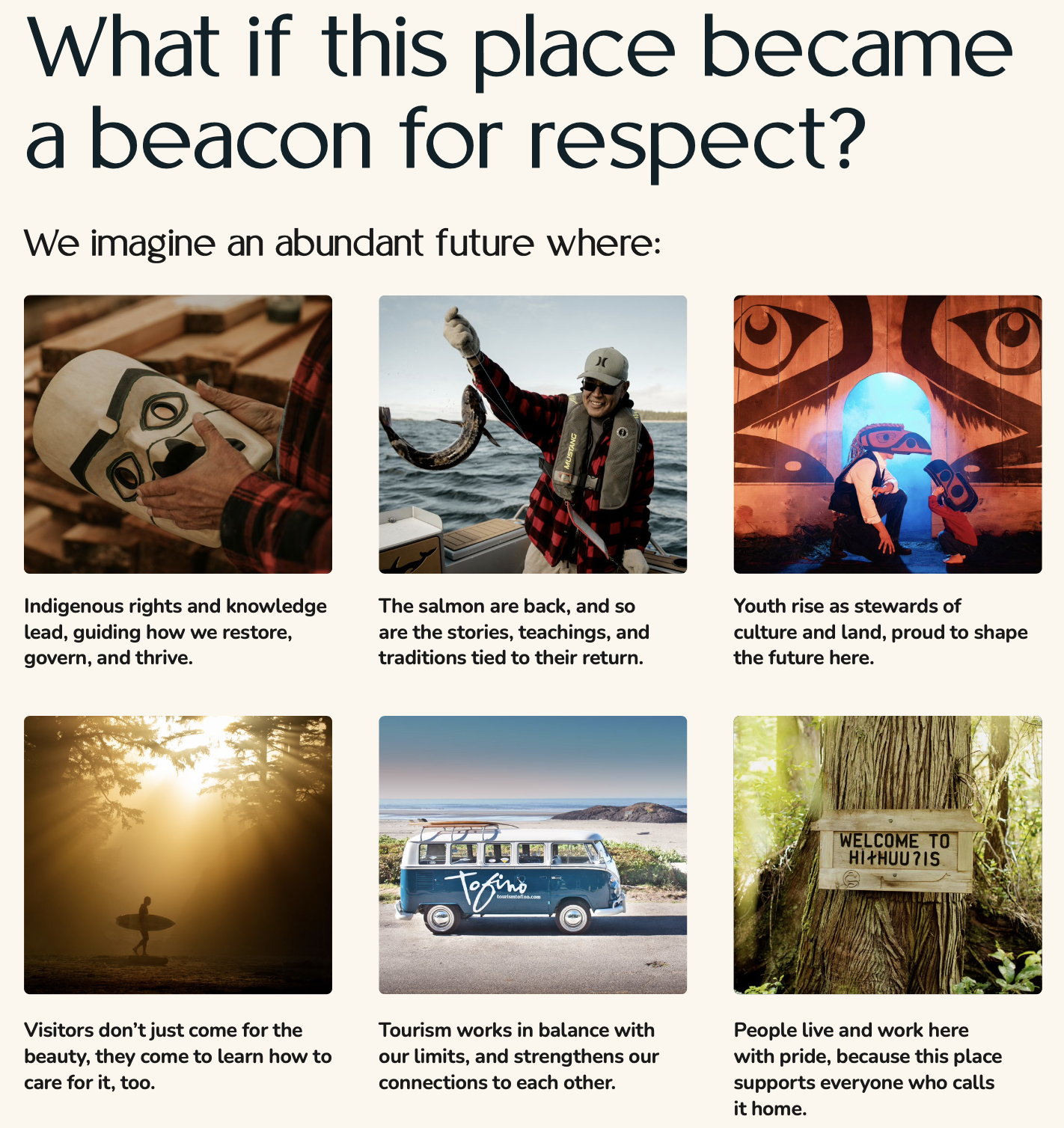
In Tofino, Canada, the local municipality, Tla-o-qui-aht First Nation, Tourism Tofino and the Tofino Chamber of Commerce have built a strong partnership over several years, formalised through a renewed Memorandum of Understanding in 2025. That partnership produced a Destination Stewardship Plan, shaped through resident workshops, surveys, open houses and direct conversations with the community.
What stands out is both the time horizon and the depth of community involvement. Rather than being assembled as a single project, the collaboration grew gradually through sustained engagement and mutual respect. The final stewardship plan, named 'ʔiisaak (a Nuu-chah-nulth word meaning respect), was led by the First Nation and grounded in community values. The community shaped what stewardship means for the destination from the start, directing where revenue is reinvested and defining what success looks like. That level of shared ownership creates strong and lasting accountability, with a clear focus on achieving shared priorities.
Düsseldorf offers a different approach to actively creating the conditions for stakeholder alignment. Visit Düsseldorf's approach to promoting the city's Little Tokyo quarter, home to the largest Japanese community in Germany, centres on stepping back from the narrative and bringing businesses together. A quarterly Little Tokyo Roundtable now connects restaurant owners, cultural figures, creative professionals and tourism stakeholders around shared priorities. Rather than the DMO telling the story alone, it has created a structure where the community directs the strategic communication approach. This demonstrates that when a DMO positions itself as a facilitator, it creates space for the kind of collaborative ownership that sustains itself beyond any single campaign or funding cycle.
The OECD's 2025 policy paper on building strong and resilient tourism destinations reinforces this point. Destinations with coordinated governance structures that incorporate private sector and community stakeholders are better positioned to manage tourism sustainably. Tailored, forward-looking destination plans that align with both national strategies and local needs produce stronger outcomes than template approaches applied uniformly.
Collaboration Across Borders
Some of the most interesting progress is happening where collaboration crosses administrative boundaries altogether. Destinations that share natural or cultural assets often find that the lines drawn on maps bear little relationship to how visitors experience a place or how challenges actually present themselves. Organisations that might otherwise compete for the same audience consistently find they achieve significantly more by collaborating around a unified offer.
The Nordic countries have taken this further than most. In 2025, the Nordic Council of Ministers adopted a new Nordic Tourism Plan for 2025-2030, positioning the region as a single destination with shared values. Built around sustainability, innovation and cross-border coordination, the plan is overseen by a Nordic Tourism Working Group, which promotes joint approaches to managing visitor flows and scaling digital solutions across borders rather than duplicating pilot projects in each country.
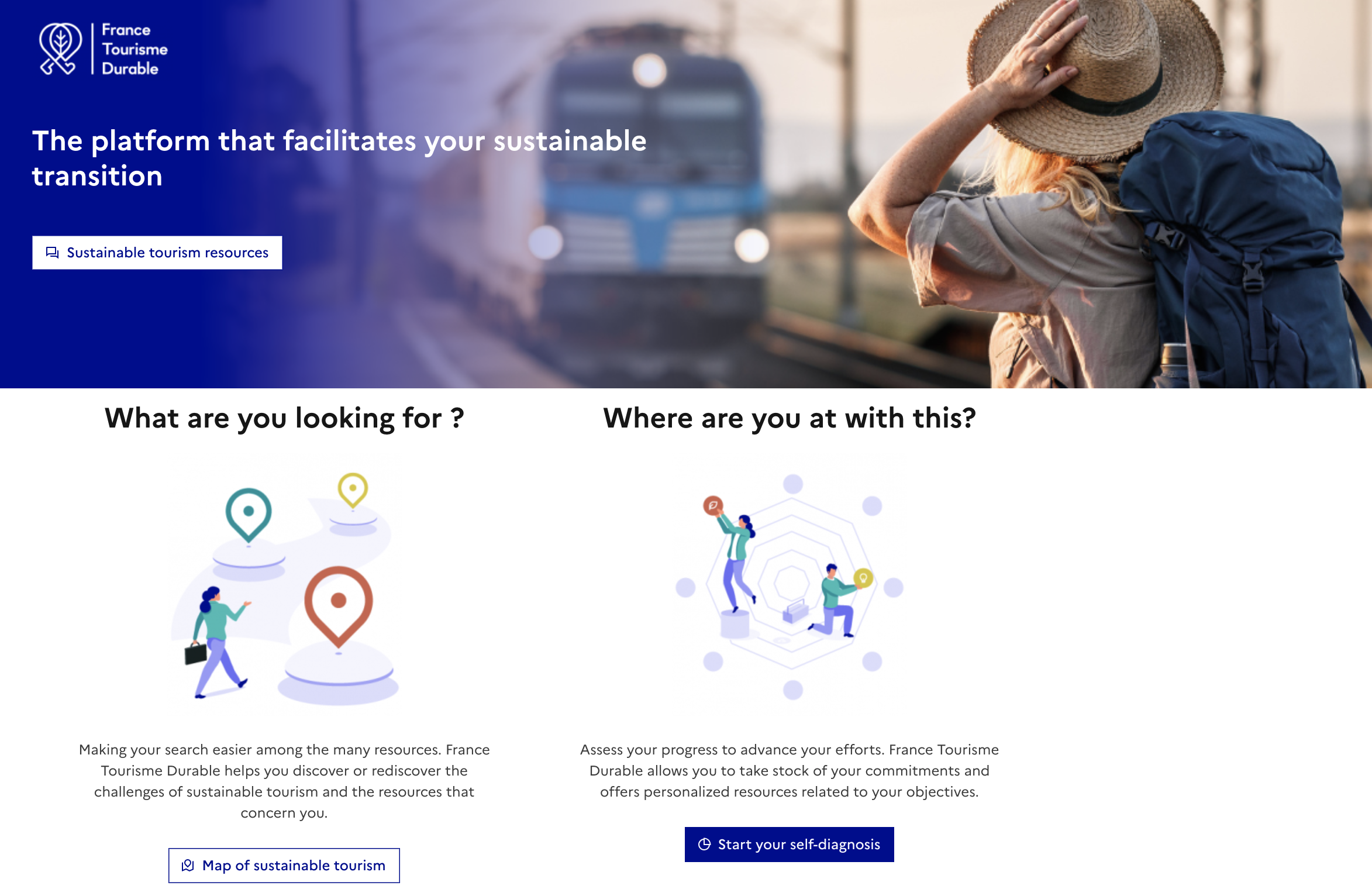
Digital innovation is increasingly making such coordination highly practical. The France Tourisme Durable platform, developed by Atout France, offers tourism professionals across the country a shared digital infrastructure for self-assessment, resource sharing and tracking progress on sustainability commitments. The national network provides a unified common ground to prevent individual destinations from having to develop bespoke tools.
Hackathons are also emerging as a collaborative format in their own right, connecting entrepreneurs, students and technology specialists with tourism professionals. The Austrian National Tourism Office has invested in this approach to transform collaboration into a dynamic process producing tangible outputs. Supportingthe Tourism Technology Festival in partnership with Mastercard and Austria's regional DMOs, over 200 participants are brought together annually to develop practical solutions to destination challenges. Similarly, Innodays connects companies and talent to develop prototypes.
Aligning Across Governance Levels
Expanding the collaborative circle inherently increases what a destination can ultimately achieve. Yet, effective collaboration depends on more than agreement among organisations within a destination or across borders. It also requires alignment across differing levels of governance. National strategies set direction. Regional bodies coordinate delivery. Local organisations and businesses do the work on the ground. When these tiers operate in isolation, even well-designed initiatives can lose traction.
The destinations that sustain progress tend to be those where national ambitions are translated into regional plans that account for local context and where local priorities feed back into national thinking. That kind of vertical alignment is as important as the horizontal collaboration between organisations at the same administrative level. Without it, local partners are left implementing strategies they had no part in shaping and national bodies lack the ground-level insight to know whether their frameworks are working.
What does it take for a destination's stakeholders to build together towards the same goal? CAMPUS 2026 is designed as a space to work through that question. Taking place from 30 September to 3 October in the Turku Archipelago, Finland, CAMPUS brings together destinations and industry for hands-on engagement with sustainability and shared progress in its environmental, socio-cultural and economic dimensions.