
For DMOs serious about their long-term future, sustainability cannot remain a standalone initiative. It needs to be embedded into planning, operations and how success itself is defined.
Across Europe and beyond, destinations are rethinking their relationship with growth, prompted in part by communities asking more questions about who benefits from tourism and at what cost. At the same time, measurement frameworks are starting to evolve, accounting for environmental health, social wellbeing and economic distribution, alongside arrivals and spend. The direction is clear, but the pace and depth of change remain uneven.
Tourism success has been primarily measured through volume, often focusing on attracting more visitors, more bed nights and higher spending. These metrics served their purpose, but they were designed for a different era. They assumed that growth was always desirable and that more always meant better. That assumption deserves to be questioned.
Higher visitor numbers do not automatically translate into proportional benefits for residents or local economies, but they bring pressure on communities, infrastructure and the natural environment. Yet, many destinations continue to set growth targets as if volume were still the objective.
Setting narrow arrival targets can limit how the industry thinks. When success is defined as a percentage increase in visitors, the conversation stays fixed on promotion. It can crowd out the bigger questions about who benefits and what kind of tourism a destination actually wants. Some national and regional strategies have started to shift from promotion to management, but the default mindset often remains volume-focused.
There is also a structural issue. Most destination strategies are written on five or ten-year cycles, locked in at the start. When a disruptive technology or major shift arrives mid-cycle, it often gets treated as an add-on rather than integrated into the strategy's core.
One alternative is to treat strategy development as a continuous process, building in regular review points and updating assumptions as conditions change. With this approach, scenario planning becomes an ongoing discipline rather than resulting in a one-off publication. Destinations that take this approach may find themselves more resilient and better positioned to act on emerging opportunities.
AI and other emerging technologies are already reshaping how destinations can plan, allocate resources and make decisions. For many DMOs, however, the challenge is not awareness but capacity. Limited budgets, small teams and competing priorities make adoption difficult.
One application with direct relevance to destination strategy is horizon scanning, detecting early signs of change, from indicators of emerging trends to potential disruptions. This has traditionally been resource-intensive work. However, AI can now automate much of gathering, filtering and pattern recognition, allowing destination strategists to focus on interpretation and judgment. A recent survey by the OECD and World Economic Forum found that two-thirds of foresight professionals already use AI in this way, primarily for synthesising data and clustering themes. The implication for destination planning means strategic reviews that once took months can now be conducted far more regularly, making it easier to update assumptions as conditions change rather than waiting for the next planning cycle.
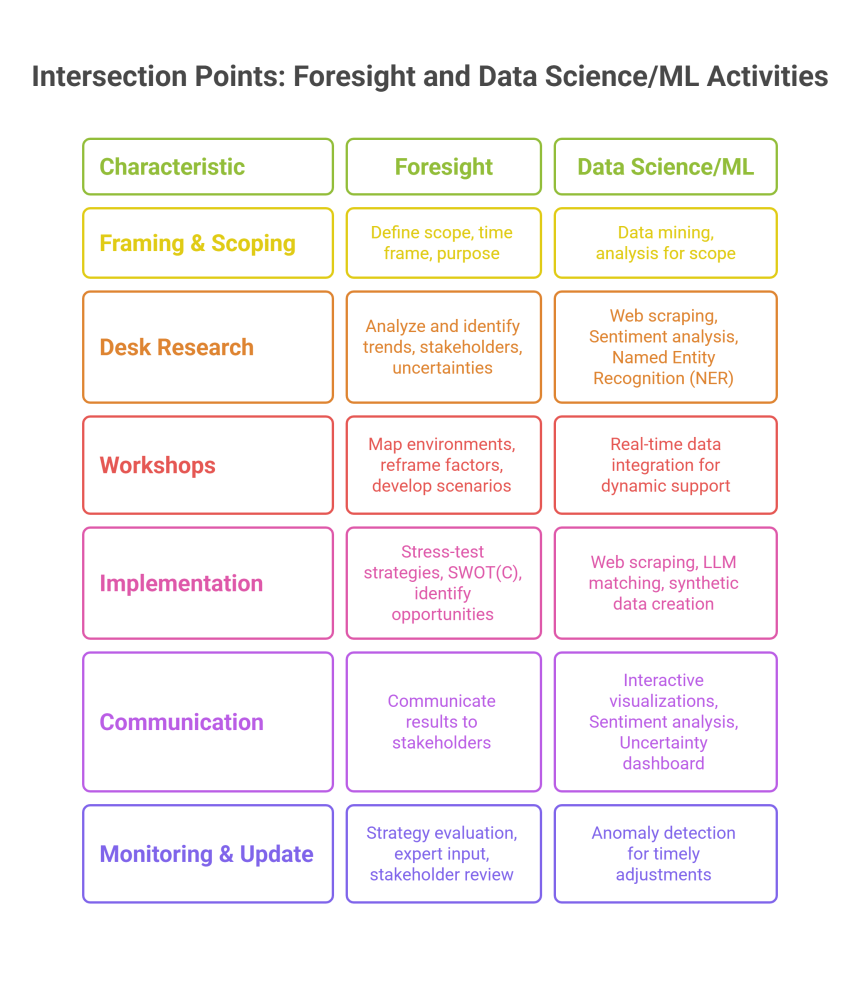
Other technologies offer complementary insights for destinations. Digital twins, for example, are virtual replicas of physical places that enable scenario simulation, allowing DMOs to test interventions before committing resources. They are becoming standard tools for planning and managing mega events, playing a vital role in determining crowd management plans. Yet, leading destinations, such as Helsinki, are already realising the potential more broadly across a range of different applications.
While technological advancements have brought significant progress to sustainable destination management, without strategic clarity, their potential may not be fully achieved. The tourism sector has traditionally had an inward focus, but some of the most interesting thinking on responsible technology adoption is happening in other sectors. The Netherlands AI Coalition, for example, brings together governments, businesses, research institutions and civil society to accelerate AI development across multiple industries. Cross-sector collaboration of this kind offers fresh perspectives for the tourism sector, bringing a wider variety of considerations and best practice examples into the strategic planning process.
The DMOs best positioned for what comes next will be those that develop the capacity to anticipate change. This is where having foresight becomes essential in building the flexibility to navigate uncertainty with intent.
Destination Canada has already put this thinking into practice. Its Wealth and Wellbeing Index measures tourism’s contribution across six components: economy, employment, enablement, engagement, environment and experience. With more than 100 indicators, it assesses tourism’s role in community wellbeing, cultural preservation and environmental stewardship. Other countries are now exploring similar approaches.

At a global level, the UN Statistical Commission adopted the Statistical Framework for Measuring the Sustainability of Tourism, spanning more than 700 indicators across economic, social and environmental dimensions. With a common language, the framework allows destinations to benchmark against one another, report credibly to stakeholders and shift the conversation from outputs to outcomes.
Strategic foresight offers a way to work through these questions with rigour. It helps distinguish between possible, plausible and preferable futures and supports decision-making that is grounded in long-term thinking. At its core, foresight asks a simple but important question: what future do we actually want for our destination and what would it take to get there?
That question sits at the heart of CAMPUS 2026. Taking place from 30 September to 3 October in the Turku Archipelago, Finland, participants will step outside their usual routine and engage with these ideas alongside peers and industry partners. Hands-on learning and practical engagement drive inspirational ideas, with the destination itself as the setting.
Research, frameworks and field notes on destination transformation. No noise.

Industry research, open frameworks and field-tested practice on how destinations lead through AI, sustainability and brand. Since 2012.