Training AI on Visual Styles: How DMOs Can Use AI Without Losing Authenticity
AI-generated imagery presents a big authenticity concern. For destinations, this is a particularly important consideration, given the need to clearly communicate a sense of place, lived experience and cultural identity.
DTTT Knowledge Team
10 Feb 2026
In this piece
AI-generated imagery presents a big authenticity concern. For destinations, this is a particularly important consideration, given the need to clearly communicate a sense of place, lived experience and cultural identity. While rapid improvement of image generation tools means that producing a photorealistic picture of a beach, a bustling market square or a mountain trail now takes seconds, there is a meaningful difference between an image that looks real and one that feels real.
Travellers are increasingly able to sense the gap. When DMOs fill their channels with visuals that appear polished but carry no connection to a real place, the result is not inspirational or positive. This is because the credibility of a destination brand is built over years, but it can be damaged quickly when audiences feel they are being shown something that does not exist.
The growing backlash against distorted AI-generated visuals in destination marketing also reflects a broader shift in how people relate to digital content. When every destination can produce the same style of hyper-clean sunset or perfect streetscape, the sense of being unique and preserving a destination's identity is gone. AI-generated imagery is risky as it fails to represent a specific place by actively eroding the distinctiveness that destination marketing exists to communicate.
However, dismissing AI entirely is not realistic or strategic in the long run. The tools are here and they are improving rapidly. The question facing DMOs right now is how to use AI in a way that supports authenticity. This requires a shift in thinking away from using AI to create images of places towards using it to interpret and extend a destination's existing visual identity.
Training AI on a Visual Style
Where the shift becomes practical is in how a DMO defines what it asks AI to do. Instead of asking AI to create a picture of your coastline or old town, a smarter way is to teach AI the visual rules that make your brand unique. This includes working with your colour choices, illustration styles, textures and tones, so AI stays within your brand’s creative limits instead of creating its own version of your destination. When those boundaries are well defined, AI can produce visually consistent outputs across different formats. When they are vague, it drifts towards the same generic imagery that damages trust.
This approach makes a big difference in practice. When a DMO has clear brand guidelines, it can use its own photos and apply AI to transform them into illustration styles for purposes, including newsletter headers, social media posts or editorial reports. The photos remain genuine because they come from the destination itself. The only thing that changes is how the images are visually styled.
This also means that people need to guide the process even more. AI can create different options, but it can’t decide if those options fit the brand, suit the audience or match the destination’s identity. The team in charge must carefully choose and approve the results. This is why spending time on a clear creative brief is just as important as picking the right AI tool.
What This Means for DMOs in Practice
Knowing the difference between creating content about a place and creating content that matches a place's unique look is helpful, but it only matters when DMOs understand how it fits into their own work. The focus should not be on the AI tool itself, but on the brand's existing assets. DMOs thinking about this approach should start by adding a style guide to their brand rules. This guide should go beyond logos and colours to clearly explain the visual style they want AI to follow, such as what fits the brand, what doesn’t and when people need to step in to make decisions.
There are three main ways this approach can be used in practice:
Existing photos can be turned into creative illustrations for social media and newsletters.
Once a destination's visual style has been established through AI training, that consistent graphic approach can be applied to produce new marketing materials for different markets and channels, without requiring a full design team to manually replicate the style for each version.
Using AI to explore ideas and moods before investing in final designs.
In all these cases, the starting point is the photos the brand owns and clear style rules, not asking AI to make something completely new from scratch. Destinations that are already trying these methods provide useful lessons. The campaigns described below each used AI visuals in different ways, but they all avoided asking AI to generate generic photographs.
DMO Best Practice Spotlight
The Jordan Tourism Board launched its #ExperienceJordAIn campaign with the goal of showing the difference between AI-generated images and real-life experiences. The campaign invited travellers to describe their dream destination using simple prompts. Over time, the focus moved from imagining places to actually experiencing them, making it clear that real experiences won't be replaced by technology. The AI-generated images were used to tell a story, not to replace real photos of Jordan. Instead, they encouraged people to visit and explore the country for themselves.
The Vienna Tourist Board took a more playful route with its UnArtificial Art campaign. Recognising that AI image tools draw heavily from existing creative archives, the campaign used AI-generated images of cats reimagined in the styles of artists like Klimt and Schiele. Rather than obscuring this relationship, the campaign leaned into it, encouraging audiences to visit the original masterpieces housed in Vienna's museums. This is a useful example of how AI-generated illustration can serve as a bridge to real-world cultural engagement. By being transparent about what AI borrows from, Vienna turned a potential authenticity concern into a reason to visit.
Lithuania Travel's "Lithuania: an experience to share" campaign is a great example of how DMOs can use their own photos to guide creative work. Designers worked with Midjourney, using many photos of Lithuania's landscapes and cities. Instead of naming exact places, they asked Midjourney to create images with a surreal, artistic style that still felt very Lithuanian. The posters created were abstract and emotionally powerful, clearly not trying to look like real photos. This teamwork between human designers and AI shows what can be achieved when destinations use their own images as a starting point and turn them into something creative, while keeping a real connection to place.
The examples show what becomes possible when AI is used thoughtfully, but each of them also touches on questions that DMOs need to address before adopting this approach. Vienna's campaign, for instance, worked precisely because it acknowledged the creative credit AI owes to existing artists. Not every campaign handles this as carefully. When AI is trained to replicate a named artist's style without permission, often the result is not a creative adaptation but plagiarism.
This applies whether the output is used commercially or shared on social media and it is one of the clearest ethical lines DMOs need to draw. When a DMO adapts its own photography into an illustrative style, the source asset is owned and the creative treatment is a legitimate extension of the brand. When the source is an image of an artist's work or a culturally significant artefact, the situation becomes more complicated and having the right copyright permissions is important.
For DMOs creating their own approach, it is important to be clear about where every asset in an AI process comes from. This includes both the original images and any style references used to shape the final result. This is both a legal matter and a sign of respect for the cultural impact of a piece of work.
Building trust in this area means DMOs should see transparency and good management as strengths. They need clear policies about approved sources, how AI can be used, when to disclose its use and who is responsible. Human approval should always be required. It is also important to be honest with audiences about where AI has been used and where it has not.
As AI tools improve, the temptation to use them as a shortcut will increase. The destinations that gain the most are those that understand AI requires careful thought. Strong brand guidelines, clear ethics and human judgement are what make the difference between AI images that support a destination’s story and those that harm it.
How to Put this Into Practice?
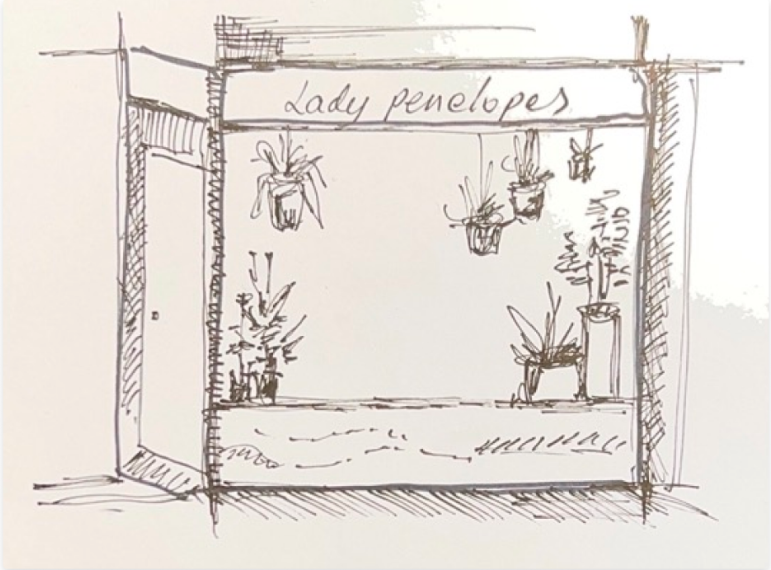
In our workshops, we have been exploring how to teach AI a particular visual style and use it to create destination images. We started with a simple question: could we take hand-drawn sketches from local businesses and turn them into a consistent set of digital illustrations that show a clear destination identity? The answer was yes, but only because we made careful creative choices at every stage.
The first step was to teach AI a specific illustration style instead of asking it to create one from scratch. We began by providing ChatGPT with a reference image featuring a basic flat illustration style, with clear lines and bold blocks of colour, as this was the style we wanted to use consistently across all images. To test if AI could maintain this style, we started with a simple task of creating a flower using the same visual approach.
AI Generated Image
Once the style was set, we introduced the original sketches and the colour palette together. We had asked local businesses in Canterbury to create hand-drawn sketches of their shopfronts. Using one prompt, we provided the sketch we wanted to transform along with a colour guide of the colours of Kent, which is a carefully chosen palette inspired by the county's landmarks, landscapes and cultural references, such as the White Cliffs of Dover, Canterbury Cathedral, Cherry Orchard, Oast House and Kentish Ale.
With both the sketches and colour palette given, ChatGPT interpreted each drawing in the flat illustration style it had learned, while giving it a look that felt distinctly Kentish. The result was a polished digital version of each sketch that kept the detail of the original while applying a consistent style and a place-specific colour scheme across the whole collection.
AI Generated Image
Throughout this process, it became clear how much human input was still needed. Over several rounds, we corrected images where extra elements had been added, adjusted layouts where figures or paths were in the wrong place and balanced the colours in each picture. No image was perfect on the first try. Every illustration needed review, feedback and several rounds of revision. However, this is not a drawback, as the value of this method lies in combining AI's ability with human creativity and judgement.
AI-generated imagery presents a big authenticity concern. For destinations, this is a particularly important consideration, given the need to clearly communicate a sense of place, lived experience and cultural identity. While rapid improvement of image generation tools means that producing a photorealistic picture of a beach, a bustling market square or a mountain trail now takes seconds, there is a meaningful difference between an image that looks real and one that feels real.
Travellers are increasingly able to sense the gap. When DMOs fill their channels with visuals that appear polished but carry no connection to a real place, the result is not inspirational or positive. This is because the credibility of a destination brand is built over years, but it can be damaged quickly when audiences feel they are being shown something that does not exist.
Continue reading...
Get access to 100s of case studies, workshop templates, industry leading events and more.
AI-generated imagery presents a big authenticity concern. For destinations, this is a particularly important consideration, given the need to clearly communicate a sense of place, lived experience and cultural identity. While rapid improvement of image generation tools means that producing a photorealistic picture of a beach, a bustling market square or a mountain trail now takes seconds, there is a meaningful difference between an image that looks real and one that feels real.
Travellers are increasingly able to sense the gap. When DMOs fill their channels with visuals that appear polished but carry no connection to a real place, the result is not inspirational or positive. This is because the credibility of a destination brand is built over years, but it can be damaged quickly when audiences feel they are being shown something that does not exist.
Restricted Access
This content is not available with your membership plan.